
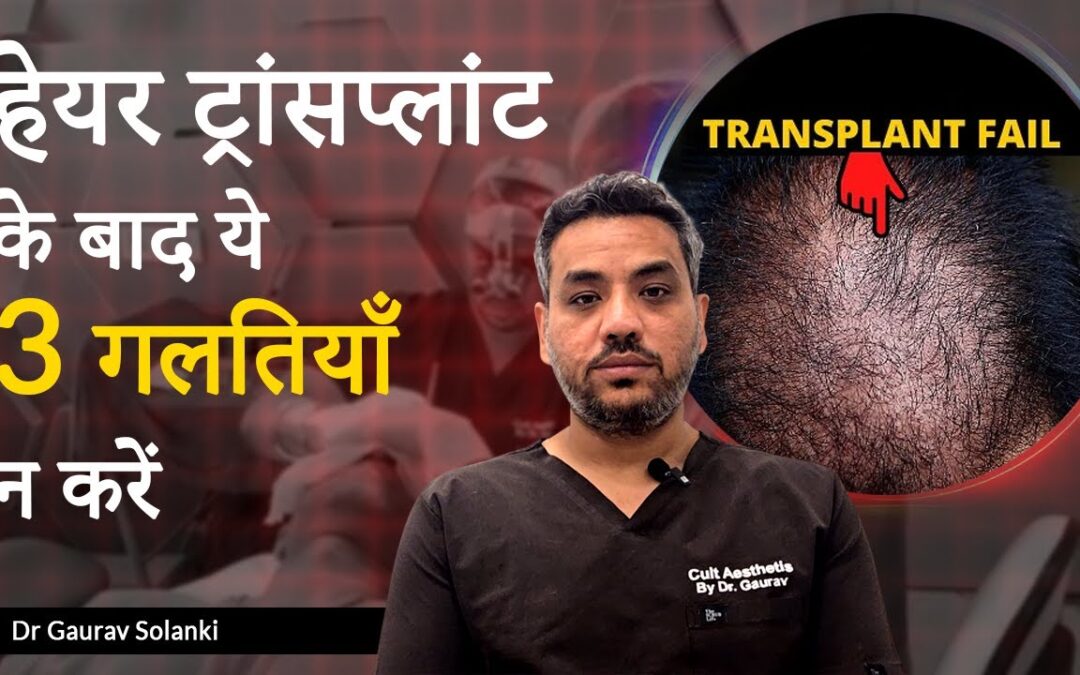
We provide crucial post-operative advice for patients who have recently undergone a hair transplant or are planning to do so. Hair Transplant Surgeon highlights three common mistakes that patients often make immediately after the surgery,which can jeopardize the success of the transplant and lead to hair graft loss. These mistakes include accidentally bumping or scratching the scalp, not using prescribed medications and lotions on time,and failing to protect the transplanted area from sun, dust,and sweat. We emphasize the importance of careful handling of the scalp, especially during the first 10 days after surgery,to ensure the grafts remain intact and heal properly. Patients are advised to avoid wearing the surgical cap while sleeping to prevent grafts from sticking to the cap and being pulled out.Additionally, touching or frequently checking the transplanted area is discouraged to avoid dislodging the grafts. Instead, patients should gently apply saline drops every two-hours for the first three days and only start mild touching after the third day when washing the hair. Our aim is to educate patients on how to maximize the success of their hair transplant by avoiding these critical errors and following the doctor’s instructions carefully.
Highlights
- Avoid bumping or scratching the scalp to prevent graft dislodgement and bleeding.
- Use prescribed medications and lotions on time to support healing and hair growth.
- Protect the transplanted area from sun,dust, and sweat to avoid infection and damage.
- Remove the surgical cap before sleeping to prevent grafts from sticking and coming out.
- Do not frequently touch or check the transplanted area to avoid disturbing grafts.
- Apply saline drops gently every two hours for the first three days to keep the area moist.
- Begin mild touching only after the third day post-surgery, especially after washing hair.
Key Insights
- Immediate post-operative care is critical:The first ten days after surgery are the most vulnerable period for the transplanted grafts. Any mechanical trauma such as rubbing against car seats or scratching can cause graft loss and bleeding,which compromises the overall success of the. Patients must be extremely cautious during routine activities like sitting or getting out of a car.
- Timely medication adherence enhances recovery: Using prescribed lotions and medications on schedule helps reduce inflammation, prevent infection, and promote faster healing.Neglecting this regimen can delay recovery and negatively impact graft survival. This highlights the importance of patient compliance with post-operative instructions.
- Environmental protection is essential: Exposure to direct sunlight, dust, and sweat can irritate the sensitive/transplanted area, increasing the risk of infection and graft damage.Patients should avoid outdoor exposure without adequate protection during the initial healing phase.
- Surgical cap usage requires caution: While the surgical cap protects the scalp immediately after surgery, wearing it during sleep can cause the grafts to stick to the fabric and be pulled out accidentally.Removing the cap before sleeping is a simple yet vital step to safeguard the grafts.
- Minimizing physical contact with the grafts prevents complications:Patients’ natural tendency to frequently check or touch the transplanted area can inadvertently dislodge grafts. Educating patients to avoid this behavior reduces the risk of graft failure and ensures better outcomes.
- Saline drops maintain moisture without damage: Applying saline drops every two hours keeps the transplanted area hydrated and clean without the risk of mechanical trauma. This gentle care supports the healing process during the critical first three dayspost-transplant.
- Gradual reintroduction of scalp care: After the initial healing phase, mild touching and washing can resume, which helps patients regain normal scalp hygiene without compromising graft stability. This staged approach balances care and caution effectively.
Overall, We underscores the importance of disciplined post-operative care and patient education to achieve optimal hair transplant results.By avoiding these common mistakes,patients can significantly improve graft survival, reduce complications, and enjoy a successful hair restoration journey.