
Corrective Hair Transplant in Gurgaon: Real Results From Fixing Failed Transplants
Before and after a corrective hair transplant at Cult Aesthetics, Sector 46, Gurugram.
Quick answer. A corrective hair transplant fixes a procedure that was done badly the first time. That means softening a hairline drawn too low or too straight, breaking up the pluggy “doll’s hair” look, filling patchy zones where grafts never grew, and hiding scars left behind. At Cult Aesthetics in Gurgaon, Dr. Gaurav Solanki has documented more than 50 of these repair cases. Many of them came from patients who were let down by a cheaper clinic somewhere else.
If you are reading this, there is a fair chance you already had a hair transplant and you are not happy with it. Maybe the hairline sits wrong. Maybe the grafts in front look like little tufts instead of real hair. Maybe a whole patch just never filled in, or the back of your head healed with a scar you can see through short hair. You spent the money once. Now you are worried about spending it again on the same disappointment.
That worry is reasonable, and this page is built to answer it honestly. Below you will find what a corrective transplant can and cannot do, the real cost in Gurgaon, and 14 video cases of failed transplants that were repaired here. No stock photos. No filters. Just the actual work.
What a corrective hair transplant actually fixes
“Corrective” is a broad word, so let us be specific. Almost every repair case that walks into the clinic falls into one of these five problems, and often a patient has two or three of them at once.
1. A hairline in the wrong place. The single most common mistake. A hairline drawn too low, too straight, or too far forward for the patient’s age. It looks fine at 27 and strange at 45, because real hairlines recede and a painted-on line does not.
2. The pluggy look. When grafts with three or four hairs are placed right at the front edge instead of single hairs, you get visible clumps. People used to call it doll’s hair or hair plugs. It is a dead giveaway that work was done, and it is very fixable.
3. Patchy density and dead zones. Areas where the grafts simply did not survive, usually because they were out of the body too long or handled roughly during a rushed, high-volume procedure. You end up with thin see-through patches next to denser ones.
4. Visible donor scarring. Over-harvesting the back and sides leaves a moth-eaten donor area or, in older strip cases, a linear scar. A good repair plan protects whatever donor hair is left and camouflages the damage.
5. Wrong angle and direction. Hair that points straight out of the scalp instead of lying flat, or grows in the wrong direction, never styles naturally. This happens when incisions are made without attention to the natural exit angle.
Dr. Solanki sorts every new case into these buckets during the first consultation, because each one needs a different repair. There is no single “correction surgery.” There is a plan built around exactly what went wrong.
Why do so many hair transplants need fixing in the first place?
This is worth saying plainly, because it is the reason this page exists. A lot of bad transplants are not bad luck. They are the predictable result of how the first clinic worked.
The big one is the factory model. A clinic books too many patients in a day, and the surgeon marks the hairline and then leaves. Untrained technicians do most of the extraction and planting. When one person is responsible for six heads before lunch, grafts sit too long, angles get sloppy, and the donor area gets stripped to hit a graft count that was promised in a brochure.
The cheap overseas package is the other big one. Patients fly out for a headline price, get 4,000 grafts implanted by staff they never meet again, and come home with nobody to follow up. When it grows in wrong a year later, there is no surgeon to go back to. We see a steady stream of these, which is why one of the videos below is a New Zealand patient talking honestly about a transplant he got abroad.
The grafts that were already placed cannot be un-placed. What a corrective plan can do is soften a harsh hairline, fill the gaps that read as pluggy, rebalance density, and protect the donor area that is left. The honest limit is that donor area. If it was over-harvested the first time, the repair options are smaller, and you deserve to hear that before you pay anyone.
Watch real failed transplants we repaired
Talk is cheap in this industry, so here is the proof. This is the complete Failed & Repaired Hair Transplants playlist from Dr. Gaurav’s @cultaesthetics YouTube channel. Fourteen real corrective cases, including patients who came in after one or even two failed surgeries elsewhere. Press play to move through all of them, or scroll down for individual cases with notes.
Each clip below is one documented patient. Watch a few that sound like your own situation.
Crown and hairline rebuilt after a failed transplant. Our most-watched repair case. A botched crown and an unnatural front line corrected into a result that finally looks like his own hair.
Repaired after two failed surgeries. A young patient who had already been through two procedures elsewhere before the correction was planned here. Proof that even twice-failed cases are often salvageable.
“Lost the money and the hair, then fixed it.” The story so many patients live: paid for a transplant, got a poor result, then came to Dr. Gaurav for the correction that should have happened the first time.
The 4 ways a transplant fails. Dr. Gaurav explains the four situations he sees most often and how each one is corrected. Watch this first if you are trying to understand what went wrong with yours.
The truth about a cheap overseas transplant. A New Zealand patient on what really happened with his low-cost transplant abroad, and why he travelled to Gurgaon to have it sorted out.
Why hairline position decides everything. The design lesson behind almost every botched job. Get the position and shape wrong and no amount of grafts will look natural.
Another documented correction, with cost. A second repair case walked through start to finish, including a frank talk about what a correction like this costs.
Correction at 48. A Delhi patient who assumed it was too late to fix his earlier work. The transformation says otherwise.
Strong growth by six months. Repairs take time, but this patient was already seeing a real change at the half-year mark.
A big 4,800 graft reconstruction. A larger case showing how advanced loss is rebuilt when the donor area still has enough to give.
On-camera makeover at 40. A patient whose work puts him in front of a camera, so the result had to be invisible up close.
A bad transplant, put right. A straightforward look at a poor result corrected, with the cost of the repair discussed openly.
Why patients fly in for correction. The reasons people from the UK, US, Canada and the Gulf choose Gurgaon when they need a transplant fixed.
International patients, in their own words. An honest sit-down with overseas patients about flying to India for their procedure and how it actually went.
New repair cases are added to this playlist as they reach the one-year mark, so it keeps growing. If you want to send a clip to your family before deciding, every one of these is public on the channel.
Is this a second sitting or a corrective transplant? They are not the same
People mix these two up all the time, and clinics sometimes blur the line on purpose. Here is the difference in plain terms.
A second sitting is when your first transplant worked, it just was not dense enough, so you go back for more grafts on top of a good foundation. A corrective transplant is when the first procedure was done wrong and the result has to be repaired, not just topped up. One is an upgrade. The other is a rescue.
| Second sitting | Corrective transplant | |
|---|---|---|
| Reason | Add more density to a good result | Repair a result that went wrong |
| Difficulty | Moderate | High, needs specialist planning |
| Donor area | Usually healthy | Often already depleted, must be rationed |
| Scar work | Rarely needed | Frequently part of the plan |
| Time to final result | About 12 months | 12 to 18 months |
Why does it matter? Because a corrective case needs a surgeon who plans around damage and a finite donor supply. If someone quotes you a flat per-graft price for a repair without examining your donor area first, walk away.
What can and cannot be fixed, honestly
Most pages like this promise you the world. This one will not, because the honest version actually builds more trust than the hype.
Here is what usually can be fixed: a hairline that is too low or too sharp, pluggy front grafts, uneven density, wrong-angle hair, and the look of a visible scar. These are the bread and butter of corrective work, and the videos above are full of them.
Here is the real constraint: your donor area. Every follicle moved in a repair has to come from the back and sides of your scalp, and that supply is fixed for life. If your first clinic over-harvested it chasing a big graft number, there may not be enough left to do everything you want. In that case the right plan is to prioritise the front third, which frames your face, and be realistic about the crown. Anyone who promises full density on a stripped donor area is setting you up for a third disappointment.
This is also why Dr. Gaurav sometimes says no. If a correction would do more harm than good, or if the donor reserve cannot support a stable result, he will tell you that to your face. According to the peer-reviewed literature on hair restoration and repair surgery, revision cases demand more advanced extraction and placement than first-time procedures, which is exactly why the assessment matters so much.
How Dr. Gaurav Solanki plans a corrective case
A repair starts long before anyone picks up an instrument. The first appointment is mostly looking and talking.
It begins with trichoscopy, a magnified scalp exam that shows how much usable donor hair is genuinely left and how the previous grafts are sitting. The old work gets photographed and graded. Then Dr. Gaurav maps out what can be moved, what can be camouflaged, and what is better left alone. You see the plan drawn out, with the graft count justified zone by zone, before you commit to anything.
The surgery itself uses FUE (Follicular Unit Extraction), which takes single follicular units without a strip scar, so the limited donor area is treated carefully. Single-hair grafts go to the leading edge to kill the pluggy look. Density is gradated so it is soft at the front and fuller behind, the way real hair grows. Every hairline is marked by Dr. Gaurav himself on the day, never handed to a technician.
This is the part that separates a real correction from another rushed job: the planning, the honesty, and the fact that one experienced surgeon owns the whole result.
Corrective hair transplant cost in Gurgaon
Cost depends on how much needs repairing and how many grafts the plan calls for. As a rough guide, smaller corrections of around 500 to 1,000 grafts start near Rs 25,000 at Cult Aesthetics. Bigger reconstructions that need 2,000 grafts or more are priced higher, based on the actual plan.
A few things stay constant. Pricing is transparent with no hidden add-ons. EMI options are available if you would rather spread the cost. And you get the exact number after a consultation, not from a brochure, because no honest surgeon can price a repair without seeing your scalp first. Call +91 99904 49555 for a free assessment.
One note worth knowing: repairs often need more skill than a first transplant, so across the industry they tend to cost more per graft than a straightforward case. The value here is that the work is done once, properly, by the surgeon himself.
Flying in for a correction? International and NRI patients
A good share of repair patients come from outside India. People travel from the UK, the Gulf, Canada, New Zealand and Australia, often because the transplant that went wrong was a cheap overseas package in the first place.
For these patients the clinic runs video consultations before you book a flight, helps with airport pickup and nearby stays, and plans the procedure so it can usually be completed in a single visit. The savings against UK or US pricing are large, commonly in the range of 60 to 70 percent, but the real reason people come is to have one named surgeon take responsibility for the fix. The NRI hair transplant guide covers travel and aftercare in detail.
What patients say: 542 Google reviews, rated 4.8
Cult Aesthetics holds a 4.8 star rating across 542 Google reviews. You can read every one of them on the clinic’s Google Business profile. A few from patients treated personally by Dr. Gaurav are below.
“I was nervous before my hair transplant, but Dr Gaurav Solanki and the team made me feel comfortable throughout. The procedure was painless, recovery was smooth and the results are outstanding. It doesn’t even look like I had a transplant, it looks completely natural.”
“Got my hair transplant done at Cult Aesthetics Gurgaon by Dr. Gaurav Solanki and I am extremely happy with the result. The team was very professional and the result looks absolutely natural. Best decision I made.”
“What a fantastic result. My existing hair has become better because of PRP and GFC too. All the clinic staff are polite and cooperative. I came all the way from Fatehabad, Haryana to Dr Gaurav and am extremely satisfied.”
Read all 542 reviews on Google →
Browse documented corrective case studies
Beyond the videos, individual repair cases are written up in the results gallery. A couple of recent corrective procedures to start with:
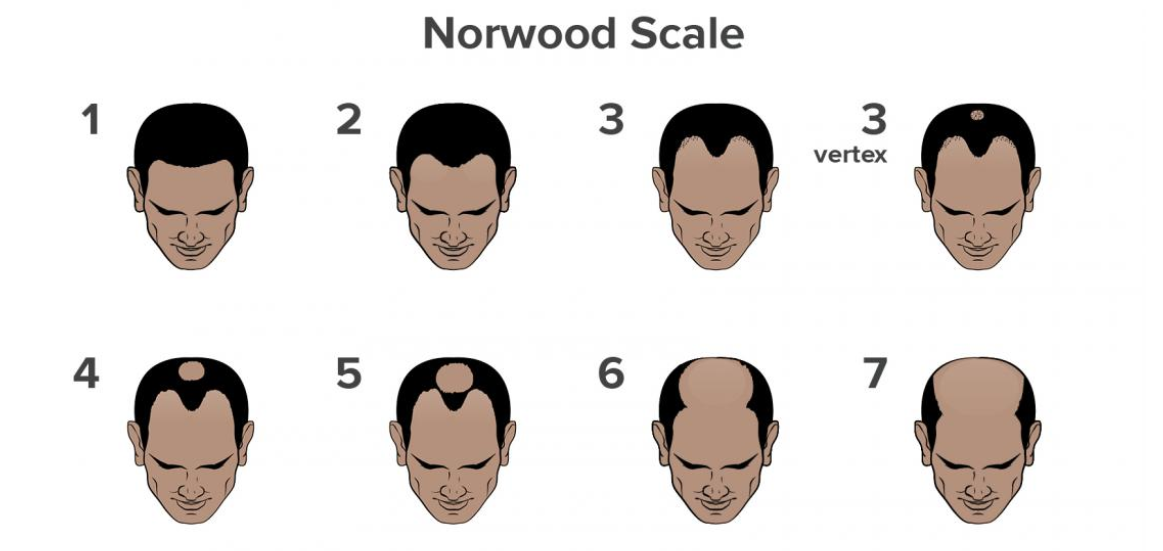
You can also view the full galleries by case number or by Norwood grade: Grade 1 and 2, Grade 3 and 4, and Grade 5 and 6. The Norwood scale is the standard way baldness is graded when a transplant is planned.
Frequently asked questions about corrective hair transplants
Can a failed hair transplant really be fixed?
In most cases, yes. A failed transplant can usually be corrected with FUE, whether the problem is an unnatural hairline, pluggy grafts, patchy growth or scarring. The honest limit is your donor area. If it still has enough healthy follicles, the repair options are good. If it was heavily over-harvested the first time, the plan focuses on the areas that matter most. A consultation is the only way to know which situation you are in.
How much does a corrective hair transplant cost in Gurgaon?
Smaller corrections start from around Rs 25,000 for roughly 500 to 1,000 grafts. Larger repairs are priced on the graft count and complexity of the plan. Because repairs vary so much from person to person, you get a firm number after a free assessment rather than a fixed rate. Call +91 99904 49555 to arrange one.
How long does it take to see corrective results?
New growth usually starts at three to four months. Real density shows by eight to ten months. The final result settles between 12 and 18 months, which is a little longer than a first-time transplant because the scalp has already been operated on once.
Is a corrective transplant more painful than the first one?
No. It is done under local anaesthesia, the same as a primary procedure, so the comfort level is similar. The surgery itself may take a bit longer depending on how much needs repairing, and you get clear aftercare instructions to keep recovery smooth.
Why do hair transplants fail so often at cheap clinics?
Usually because of volume. High-throughput clinics book too many patients a day and hand most of the surgery to technicians, so grafts are out of the body too long, angles are rushed, and the donor area is stripped to hit a promised number. Cheap overseas packages add another problem: there is no surgeon to follow up with when the result grows in wrong a year later.
Can a hairline that was placed too low be raised?
Yes, this is one of the more common corrections. The line can be softened and reshaped, individual misplaced grafts can be removed or redirected, and single-hair grafts are used at the edge to make it look natural for your age. The goal is a hairline that suits the face you have now and will still suit it in twenty years.
I had two failed surgeries already. Is it too late?
Not necessarily. One of the video cases above is a patient who came in after two failed procedures and still got a natural result. What matters is not how many attempts you have had, but how much usable donor hair remains. That is the first thing the assessment checks.
Is Cult Aesthetics a good place for a corrective transplant?
It is one of the more experienced corrective centres in Delhi NCR, with over 50 documented repair cases, 14 of them on public video, and a 4.8 star rating across 542 Google reviews. Every procedure is planned and performed by Dr. Gaurav Solanki himself rather than delegated to technicians, which is exactly what a repair needs.
Get an honest second opinion on your transplant
Free assessment, in person at Sector 46 or over video. Send a photo and Dr. Gaurav will tell you what can realistically be fixed.
Talk to Dr. Solanki on WhatsApp Book a free consultationCult Aesthetics, 67 Residency Green, 3rd Floor, Jal Vihar Colony, Sector 46, Gurugram, Haryana 122003 · Mon to Sat, 10:00 am to 9:00 pm · +91 99904 49555
About the author
Dr. Gaurav Solanki is a Cosmetic Oral and Maxillofacial Surgeon and the founder and lead surgeon at Cult Aesthetics, Sector 46, Gurgaon. With more than 12 years of operative experience and 800+ documented cases, he plans and performs every hairline himself. His corrective work and surgeon-first approach have been featured by Prime Insights Magazine. Read his full profile →
Related reading
Hair Restoration Resources
Surgeon-authored guides on every aspect of hair transplant decision-making in Gurgaon and Delhi.
- ➜ Hair Transplant in Gurgaon
- ➜ Hair Transplant Cost in Gurgaon 2026
- ➜ FUE vs DHI vs Sapphire — Surgeon's Guide
- ➜ PRP vs GFC vs Mesotherapy
- ➜ How to Choose a Hair Transplant Surgeon
- ➜ Hair Transplant Cost in India 2026
- ➜ FUE Hair Transplant Gurgaon
- ➜ DHI Hair Transplant Gurgaon
- ➜ GFC Hair Treatment Gurgaon
- ➜ PRP Hair Treatment Gurgaon
- ➜ Hair Fall Treatment Gurgaon
- ➜ Best Hair Transplant Clinic in Delhi
- ➜ Beard Transplant Gurgaon
- ➜ Hair Transplant in Delhi