
Best Hair Transplant in Delhi
Most Delhi patients we operate on were looking for a clinic across the river. Same surgeon, same technique, same follow-up but with proper documented results, transparent per-graft pricing, and a 12-month review protocol. At Cult Aesthetics in Sector 46 Gurgaon, we treat Delhi patients every week. They drive in from South Delhi (Saket, Greater Kailash, Vasant Vihar, Defence Colony), Central Delhi (Connaught Place, Karol Bagh, Pahar Ganj), East Delhi (Mayur Vihar, Patparganj, Preet Vihar), West Delhi (Janakpuri, Rajouri Garden, Punjabi Bagh), and the rest of NCR Noida, Faridabad, Ghaziabad, Gurugram itself.
I’m Dr. Gaurav Solanki, Co-Founder and lead surgeon. This page covers everything a Delhi patient should know before booking distances, costs, technique choices, post-op logistics, and why patients drive 30 to 60 minutes for a procedure they could technically book down the road.
Why Delhi patients choose Gurgaon over local clinics
Delhi has good hair transplant clinics. Some are large multi-branch chains; many are technician-led clinics. The honest answer to “why come to Cult Aesthetics instead” is three things, and they’re the same three things I’d ask if I were on your side of the table.
One: who actually does the procedure. The bigger the chain, the more it has to delegate. At a 4-doctor city-centre clinic seeing 8 cases a day, the lead surgeon often marks the hairline, takes the photograph for marketing, and leaves. The 6 to 8 hours of extraction and implantation the parts that decide whether your hair grows or doesn’t get handed to junior technicians paid by the hour. That isn’t a controversial claim; it’s a delegation pattern that scales clinic revenue. At Cult Aesthetics I perform graft extraction, design and mark the hairline, and make recipient-site slits using a sapphire blade. Technicians perform forceps-based no-touch implantation. We cap our calendar at one case a day on most weekdays so this stays true. It’s slower and more expensive to run. The twelve-month photographs are why we still do it.
Two: transparent per-graft pricing. Many clinics add line items at the end premium hairline, extra grafts, post-op kit, follow-up consult. Our number is the number on the final invoice. ₹60–90 per graft for FUE, ₹75–120 for DHI, all-in. No surprises on procedure day.
Three: documented results. Cult Aesthetics confirms 800+ documented hair transplant cases. Ask about available case examples.
The Delhi neighbourhoods we serve
Sector 46 Gurgaon sits between South Delhi, Faridabad and the rest of Gurugram. The drive from most Delhi addresses is 30 to 75 minutes depending on time of day. Free pickup-and-drop on procedure day is included for every Delhi NCR patient.
South Delhi
Saket, GK 1 & 2, Vasant Vihar, Vasant Kunj, Hauz Khas, Defence Colony, Lajpat Nagar, Green Park, South Extension I & II. Drive time: 35 to 50 minutes via outer ring road. About 40% of our Delhi patients come from this cluster proximity is the biggest reason.
Central Delhi
Connaught Place, Karol Bagh, Pahar Ganj, Rajinder Nagar, Patel Nagar, Daryaganj. Drive time: 50 to 70 minutes. We arrange morning pickup for a 9 AM start, dinner-time drop after wash on Day 2.
East Delhi
Mayur Vihar, Patparganj, Preet Vihar, Anand Vihar, Vivek Vihar, Shahdara. Drive time: 75 to 90 minutes via DND or via outer ring road. Many East Delhi patients prefer to stay overnight at our partner hotel in Cyber City rather than drive home post-procedure.
West Delhi
Janakpuri, Rajouri Garden, Punjabi Bagh, Tilak Nagar, Vikaspuri, Subhash Nagar, Paschim Vihar, Dwarka. Drive time: 25 to 50 minutes (Dwarka is closest, only 30 minutes). Direct expressway access.
Rest of NCR
Noida (Sectors 18, 50, 62, 137, Greater Noida): 60 to 90 minutes via DND-Noida-Greater Noida Expressway and KMP. Faridabad: 30 to 45 minutes via Mathura Road. Ghaziabad: 75 to 100 minutes. Gurugram itself: same-city, 10 to 30 minutes.
About Dr. Gaurav Solanki
I trained in oral and maxillofacial surgery (MDS), and I’ve spent the last several years operating almost exclusively on hair restoration. The reason I co-founded Cult Aesthetics is unpleasant to say out loud: a lot of clinics quietly hand the actual procedure to junior technicians while the doctor you booked with handles “consultations” between cases. The skin on the back of your scalp doesn’t get a second chance. I perform graft extraction, design and mark the hairline, and make recipient-site slits using a sapphire blade. Technicians perform forceps-based no-touch implantation.
I’m a member of the International Society of Hair Restoration Surgery (ISHRS). I’ve trained junior surgeons in DHI and corrective work. I’ve also published the protocol we use the “6 Clinical Pillars” so patients can ask any clinic, including ours, what they actually do at each step. Read the full bio →
FUE vs DHI vs DHT which technique you actually need
Most patients walk in having read about three or four named techniques and unsure which to ask for. Short answer: they’re variations of the same principle. Slightly longer answer:
FUE Follicular Unit Extraction
FUE is the foundation. We extract individual follicular units using a 0.8 to 0.9 mm motorised punch. Recipient sites are made with sapphire blades at a specific angle and depth, then grafts are placed into them. FUE is the workhorse for high-graft sessions of 3,000+. No linear scar only thousands of microscopic dot scars that disappear when hair grows back. FUE technique details →
DHI Direct Hair Implantation
DHI at Cult Aesthetics is done with a no-touch forceps technique developed at Cult Aesthetics. Better graft survival because grafts spend less time outside the body. We prefer DHI for hairline work and crown rebuilds where ultra-fine angle control matters. DHI technique details →
DHT Direct Hair Transplant
DHT is a clinic-branded variant of DHI. Not a separate technique with separate evidence it’s marketing. If a Delhi clinic sales person tells you “DHT is patented and only we have it”, that’s a pricing tactic.
How we choose for you
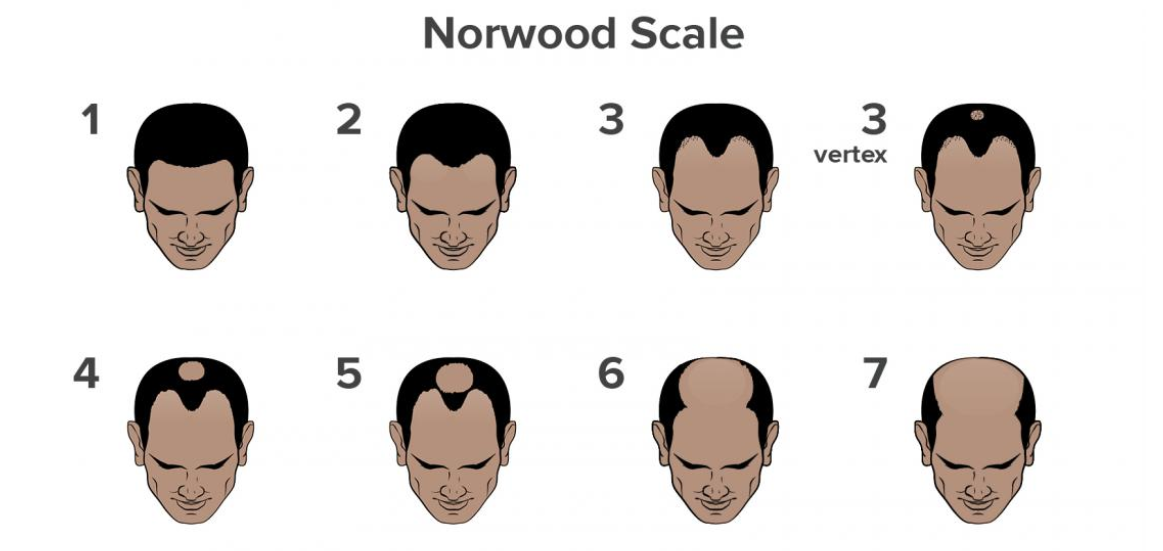
I look at your Norwood grade, donor density (measured per square centimetre under polarised light), the angle of your existing hair near the recipient zone, your hair calibre and curl pattern, and your budget. Norwood 3 hairline rebuild → DHI. Norwood 5 with 4,000-graft requirement → FUE. Corrective case (previous botched transplant) → both, FUE for bulk extraction and DHI for the camouflage layer at the front.
Hair transplant cost in Delhi vs Cult Aesthetics
Delhi hair transplant cost varies widely depending on the clinic. The bottom end is high-volume technician-led work in places like Lajpat Nagar where a “doctor” supervises three rooms simultaneously. The top end is celebrity-branded chains in South Delhi paying premium real estate rates that get passed to you.
At Cult Aesthetics our rates are flat across India:
- FUE: ₹60–90 per graft
- DHI: ₹75–120 per graft
- Long-hair / unshaven FUE: 25–30% premium
- Beard, eyebrow, body hair recruitment: priced per graft, same rate as FUE
For a Norwood 3 patient who needs roughly 1,800 to 2,200 grafts, the all-in cost lands between ₹1.08 and ₹1.98 lakh with FUE (₹1.35–₹2.64 lakh with DHI). A Norwood 5 with 3,000 to 3,500 grafts comes in at ₹1.8 to ₹3.15 lakh with FUE. Norwood 6 and 7 are typically planned over two sessions.
What you do not pay for separately: the consult, the day-one wash, the post-op kit, the medication for the first week, six follow-up reviews over twelve months, and one round of complimentary GFC at month four. Full per-graft cost breakdown →
The 6 clinical pillars that decide your twelve-month result
Two surgeons given the same Delhi patient produce different outcomes because of six things. We’ve published this so you can ask any clinic not just us to walk you through their answer.
1. Sterility. Operating-theatre-grade sterilisation, autoclaved instruments, single-use punches. No reusing a punch tip across patients to save money.
2. Anaesthesia protocol. Vibratory anaesthesia, fine 30G needles, slow injection technique, ring blocks for both donor and recipient. A bad numbing experience predicts a bad day for the patient and a tense patient bleeds more, which dilates recipient sites.
3. Donor extraction. 0.8–0.9 mm punch, never exceeding 25–30% of donor density, even harvest pattern across the whole donor zone. The single biggest mistake we see in corrective cases from other clinics is over-extraction from a small patch it leaves a permanently see-through stripe.
4. Bio-chilled storage. Grafts go into a custom holding solution at 4°C the moment they’re extracted. Time outside the body is logged. Graft survival depends on handling time, hydration and technique, so we keep out-of-body time short. Most clinics don’t measure this. We do.
5. Implantation angle, depth, density. The hairline is built one follicle at a time, with single-hair grafts at the leading edge transitioning to two- and three-hair units behind. Angle has to mirror natural hair direction at every point on the scalp. Get this wrong and the result looks like a doll’s hairline and there’s no fix that doesn’t involve another surgery. This is where most Delhi corrective cases originate.
6. Post-operative protocol. Day-one wash done by us, day-seven review, photographs at month one/three/six/twelve. GFC top-up at month four to accelerate the dormant phase. We run a year-long programme.
A typical day for a Delhi patient
Day 0 (the day before). Light dinner, no alcohol, no aspirin, no blood-thinners for the previous seven days. Wash your hair with regular shampoo. Sleep well you’ll be on the table for 6–8 hours.
Day 1 (procedure day). Our driver picks you up at home between 7:30 and 8:30 AM (depending on Delhi neighbourhood). Arrive at clinic 9 AM. Pre-op vitals and final hairline marking. Local anaesthesia 9:30. Donor extraction begins ~10 AM. Lunch break 1:30. Recipient site creation and implantation 2:30 to 6 PM. Post-op briefing, take-home medication, head wrap. Dropped home by our driver around 7 to 8 PM. South Delhi patients typically sleep at home; East Delhi patients sometimes opt for a partner-hotel night.
Day 2 (wash day). Pickup at 9 AM, first wash at clinic by our team to make sure scab management is correct. Photographs taken. Dropped home by 11 AM. You leave with a written wash protocol for the next 14 days.
Days 3–7. Mild forehead swelling for 48 hours, normal. Most Delhi office workers return to work day 4 or day 5.
Days 8–14. Scabs fall off. Transplanted hair sheds (this is normal; the root remains).
Months 1–3. Dormant phase. Don’t panic at week 6.
Months 3–6. New growth begins, fine and lighter coloured initially.
Months 6–9. 70–80% density visible.
Months 12–15. Final result. We do a documented twelve-month review with photographs in the same lighting and angles as Day 0.
Real Delhi case studies
Three composite case profiles drawn from our recent Delhi patients (details lightly edited for privacy).
Case 1 Norwood 4, age 36, IT manager from Saket
Diffuse thinning at the crown, receding hairline with deep temple notches. Donor density 76 follicular units per cm². 3,200-graft FUE in a single session. Combined with a four-cycle GFC programme starting at month three. Twelve-month photographs show fully restored hairline and 85% crown coverage. He was driven home to Saket the same evening, took 5 days off work, drove back for the day-1 wash. At current FUE rates, 3,200 grafts cost ₹1,92,000–₹2,88,000, plus the GFC programme.
Case 2 Norwood 6, age 49, business owner from Connaught Place
Advanced hair loss with limited donor reserves. Two-session strategy: 3,500 grafts session one (hairline plus mid-scalp), 2,800 grafts session two ten months later (crown plus density top-up). Beard hair recruited for crown. Patient stayed at our partner hotel in Cyber City for one night each visit because the CP-to-Sector-46 drive plus post-op fatigue felt risky. Now twenty months out what we call “complete from every angle”. At current FUE rates, 6,300 grafts across both sessions cost ₹3,78,000–₹5,67,000, plus GFC.
Case 3 Corrective, age 42, previous failed transplant in Lajpat Nagar
Visible pluggy hairline, low-angle implants in the temple corners, scarred donor with 22% density loss from over-extraction. We went in with 1,400 carefully placed grafts to camouflage the existing pluggy work using DHI for ultra-fine angle control, then a separate session four months later to extract and re-implant 200 of the worst-angled original grafts. Now nine months post-op with a hairline that finally looks his age. At current repair rates (₹75–115 per graft), 1,400 grafts cost ₹1,05,000–₹1,61,000.
GFC, PRP and the non-surgical track
Not everyone needs surgery. About a quarter of Delhi patients who come for a consult leave with a non-surgical plan because their hair loss is in an early phase where existing follicles can still be revived.
GFC (Growth Factor Concentrate) is one step ahead of PRP. We process your blood through a closed-system kit to extract a high-yield concentrate of PDGF, VEGF, EGF, IGF and TGF-β. Injected into the scalp at specific depths to wake up dormant follicles, slow miniaturisation and thicken the existing shaft. Standard course: four sessions, one month apart. Delhi patients typically come Saturday mornings for the GFC sessions. GFC details →
PRP (Platelet-Rich Plasma) is the older cousin same mechanism, lower concentration, more variability between sessions. PRP works, just less reliably than GFC. It’s also 30–40% cheaper. PRP details →
What we will not do
This list matters as much as the services list above.
We won’t operate before age 25 in most cases. Hair loss patterning is still evolving; donor density forecasting is unreliable.
We won’t promise a graft count we can’t safely harvest. Delhi clinics that quote 5,000 grafts in a single session sell volume, not survival rates.
We won’t sell GFC or PRP to a patient who needs surgery, and vice versa. Norwood 2 with active diffuse fall? Medical management plus GFC for two years, not a knife.
We won’t guarantee a percentage we can’t measure. “98% graft survival guaranteed” is a marketing claim no honest clinic can make for an individual patient.
Book a free consultation
WhatsApp two scalp photos (top of head and front-on) to +91-9990449555. I personally review every photo and reply within 24 hours with a graft estimate, the technique I’d recommend, and a binding price quote. Or book a video consult → 15 minutes, no obligation, and it’s me on the other end of the call. For Delhi patients, our driver pickup is included on procedure day from anywhere in NCR.
FAQ Hair transplant in Delhi
Which is the best hair transplant clinic for Delhi patients?
Cult Aesthetics in Sector 46 Gurgaon is among the most trusted hair transplant options for Delhi patients 30 to 75 minutes from most Delhi neighbourhoods, surgeon-led every case by Dr. Gaurav Solanki, transparent per-graft pricing (FUE ₹60–90, DHI ₹75–120), rated 4.8 on Google, and free pickup-and-drop on procedure day for any NCR address.
How much does hair transplant cost in Delhi?
Delhi hair transplant cost varies widely by clinic, technique and graft count. Cult Aesthetics charges ₹60–90 per graft for FUE and ₹75–120 for DHI same rate as Gurgaon with no procedure-day surprises.
Where is Cult Aesthetics located relative to Delhi?
We are at Building 67, Residency Green, Jal Vihar Colony, Sector 46, Gurugram 30 to 75 minutes by car from most Delhi addresses. South Delhi (Saket, GK, Vasant Vihar): 35-50 minutes. Connaught Place: 50-70 minutes. Dwarka: 30 minutes. East Delhi: 75-90 minutes via DND.
Do you provide pickup from Delhi?
Yes free pickup-and-drop on procedure day for every Delhi NCR patient. Driver arrives at your home between 7:30 and 8:30 AM on Day 1 and drops you home around 7-8 PM. Day 2 wash: pickup at 9 AM, drop home by 11 AM. No charge.
Can I drive home the same evening to Delhi after my hair transplant?
Yes most Delhi patients do. Local anaesthesia means no general sedation, no recovery time. You will have a head wrap and mild discomfort but you are fully ambulatory. South Delhi and West Delhi patients drive home the same evening. East Delhi (Mayur Vihar, Patparganj) sometimes opt for a partner-hotel night in Cyber City because of the longer drive.
What is FUE hair transplant?
FUE (Follicular Unit Extraction) is a minimally invasive technique where individual follicular units are extracted with a 0.8-0.9 mm motorised punch from the donor area at the back of the scalp. Recipient sites are made with sapphire blades, then grafts are placed into them. No linear scar, no stitches.
What is DHI hair transplant?
DHI (Direct Hair Implantation) at Cult Aesthetics is done with a no-touch forceps technique developed at Cult Aesthetics. The graft is pre-loaded into the pen and injected directly. Better graft survival because grafts spend less time outside the body. We prefer DHI for hairline work and crown rebuilds where ultra-fine angle control matters.
FUE vs DHI which is better for Delhi patients?
Both work. DHI gives slightly better graft survival and is preferred for hairlines and crown work where angle precision matters most. FUE is faster and more economic for high-graft sessions of 3,000+. We recommend DHI for Norwood 2-3 cases (₹75–120/graft) and FUE for Norwood 4-6 (₹60–90/graft). For corrective cases we combine both.
How many grafts do I need?
WhatsApp two scalp photos (top of head and front-on) to +91-9990449555 and Dr. Solanki personally reviews every photo, returning a graft estimate within 24 hours. Typical guidance: Norwood 2 1,200-1,800 grafts. Norwood 3 1,800-2,200. Norwood 4 2,500-3,200. Norwood 5 3,000-3,500. Norwood 6 4,000-5,000. Norwood 7 5,500-7,500 (planned over two sessions).
Is hair transplant safe?
Yes when performed by a qualified hair transplant surgeon in a sterile facility. Complication rate in published literature is under 1%. At Cult Aesthetics we follow operating-theatre-grade sterilisation, bio-chilled graft storage at 4°C, real-time vitals monitoring and our published 6 Clinical Pillars protocol. Dr. Solanki performs graft extraction, designs and marks the hairline, and makes recipient-site slits using a sapphire blade.
Is hair transplant painful?
No. Done under local anaesthesia using fine 30G needles, vibratory anaesthesia, slow injection technique. Most patients describe the procedure as boring rather than painful they watch Netflix, take a lunch break. Post-op discomfort for 2-3 days managed with paracetamol.
How long does the procedure take?
6 to 8 hours depending on graft count. A typical 2,500-graft FUE session: 8:30 AM arrival, 9:30 AM anaesthesia, 10 AM-1 PM extraction, 1:30 PM lunch, 2:30-6 PM implantation, 6:30 PM out the door.
How long is recovery?
Days 1-5: mild swelling, scabs form. Days 5-10: scabs fall off, transplanted hair sheds (root remains). Most Delhi office workers return to work day 4 or 5. Months 1-3: dormant phase. Months 3-6: new growth begins. Months 6-9: 70-80% density visible. Month 12-15: final result.
Can I keep working from home in Delhi during recovery?
Yes. Most Delhi WFH patients return to video calls day 2 or 3. Wear a loose cap if needed. Avoid heavy exercise, swimming, direct sun for 14 days. Sleep slightly elevated for the first week.
What is the success rate?
Graft survival depends on handling time, hydration and technique. Cult Aesthetics confirms 800+ documented hair transplant cases.
Hair transplant in Saket vs Cult Aesthetics Gurgaon?
Cult Aesthetics charges ₹60–90 per graft for FUE and ₹75–120 for DHI, the surgeon personally performs graft extraction, designs and marks the hairline, and makes recipient-site slits using a sapphire blade, and Saket-to-Sector-46 is a 35-minute drive. A typical Norwood 4 case (2,500–3,200 grafts) costs ₹1,50,000–₹2,88,000 with FUE.
Hair transplant in Connaught Place vs Cult Aesthetics?
Central Delhi (CP, Karol Bagh) has high-volume clinics with quick-turn procedures. Cult Aesthetics is a 50-70 minute drive but offers surgeon-led care, transparent pricing, and a 12-month review programme. Many CP patients book a partner-hotel night with us to make the trip simpler.
Is hair transplant possible for women in Delhi?
Yes. Female hair transplant works for temple recession, frontal density, eyebrow restoration, post-traction-alopecia repair. Female donor hair is more variable than male donor, so candidacy is decided on density mapping. We have a dedicated female hair transplant track with a female-only OPD slot if requested.
What is corrective hair transplant?
A corrective transplant fixes a previous failed surgery visible pluggy hairline, low-angle implants, scar lines, doll-hair appearance. Demands more skill than primary because donor reserves are depleted and existing grafts must be camouflaged. Most Delhi corrective cases we see come from Lajpat Nagar / Karol Bagh high-volume clinics or from Turkey botched cases. Roughly one corrective case per month.
Can I do hair transplant without shaving my head?
Yes for sessions up to 1,800 grafts we offer unshaven (long-hair) FUE where only the donor strip is partially trimmed and the recipient area is untouched. Costs 25-30% more because extraction takes much longer, but social downtime is near-zero most Delhi patients are back at work the next day with no visible signs.
How does Cult Aesthetics handle Norwood 6 and 7?
Norwood 6 and 7 typically require 4,000 to 7,500 grafts which cannot be safely harvested in a single session. We plan a two-session strategy 8-12 months apart, supplement with beard or chest hair recruitment when scalp donor is exhausted, and use a hairline-and-mid-scalp first, crown later sequence so the patient looks complete after each session.
What is GFC therapy?
GFC (Growth Factor Concentrate) is a step beyond PRP. Your blood is processed in a closed-system kit to extract a high-yield concentrate of PDGF, VEGF, EGF, IGF and TGF-β. Injected into the scalp at specific depths to wake up dormant follicles. A standard course is four sessions, one month apart. Cult Aesthetics offers GFC at ₹8,000 per session with package discounts.
Do I need EMI for hair transplant?
EMI options available (terms confirmed at consultation).
Is parking available for Delhi patients?
Yes free dedicated patient parking on procedure day. Sector 46 has wide colony roads and our building has two reserved parking spots. Delhi patients who prefer to drive themselves rather than take the pickup are welcome.
Hair transplant Delhi vs Turkey vs Cult Aesthetics which is best?
Turkey is cheaper per-graft (₹15-30) but heavily technician-led, with no follow-up infrastructure once you fly home. Cult Aesthetics charges ₹60–90 per graft for FUE and ₹75–120 for DHI, with surgeon-led work, 12-month documented review, and the ability to walk back in for the day-1 wash. Most Delhi patients pick us over Turkey after weighing the post-op risk.
What Our Patients Say
Rated 4.8★ from Google reviews
“I spent a long time researching before choosing this clinic, and my experience so far has been very positive.”
Shahrukh Ahmed · Google
“As a doctor I evaluated clinics across Delhi NCR for three months before choosing Dr. Gaurav Solanki for my Grade-5 case. At 10 months the result is completely natural colleagues assume it is my own hair. The predictability of the outcome is what I value most.”
Medical Officer, Almora · Google
“I was nervous before my hair transplant, but Dr Gaurav Solanki and the team made me feel comfortable throughout the journey. The procedure was painless, recovery was smooth and the results are outstanding.”
Divyansh Sharma · Google
Hair Restoration Resources
Surgeon-authored guides on every aspect of hair transplant decision-making in Gurgaon and Delhi.
- ➜ Hair Transplant in Gurgaon
- ➜ Hair Transplant Cost in Gurgaon 2026
- ➜ FUE vs DHI vs Sapphire — Surgeon's Guide
- ➜ PRP vs GFC vs Mesotherapy
- ➜ How to Choose a Hair Transplant Surgeon
- ➜ Hair Transplant Cost in India 2026
- ➜ FUE Hair Transplant Gurgaon
- ➜ DHI Hair Transplant Gurgaon
- ➜ GFC Hair Treatment Gurgaon
- ➜ PRP Hair Treatment Gurgaon
- ➜ Hair Fall Treatment Gurgaon
- ➜ Best Hair Transplant Clinic in Delhi
- ➜ Beard Transplant Gurgaon
- ➜ Hair Transplant in Delhi