
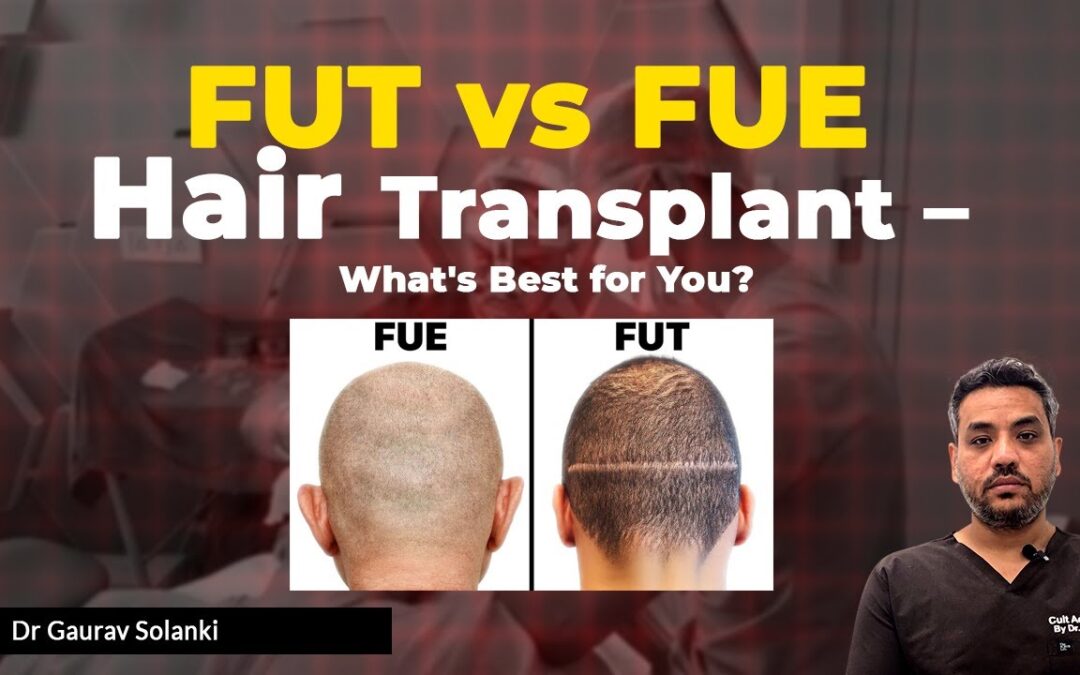
We provide a detailed comparison between two primary hair transplant techniques: FUT (Follicular Unit Transplantation) and FUE (Follicular Unit Extraction). Dr. Gaurav Solanki, a hair restoration specialist in Gurgaon from Cult Aesthetics Clinic, explains that while FUT involves removing a strip of scalp to harvest hair follicles, FUE extracts individual hair follicles one by one. FUT is rarely practiced today, with about 90% of clinics preferring the FUE method due to its minimally invasive nature and faster healing time. Despite various marketing terms like robotic, bio, DHI, and DHT being used to describe different FUE variants, the core technique remains the same. We emphasize that the success of a hair transplant depends more on the surgeon’s experience and skill rather than the technique itself. FUE is considered the best and most widely used method currently, offering natural-looking results, quicker recovery, and long-lasting effects. We encourage users to understand these differences to make an informed decision about which technique suits their hair restoration goals.
Read This Blog as well: Ultimate Guide to Hair Transplants in Gurgaon: Choosing the Best Clinic and Doctor
Highlights
- FUT involves removing a strip of scalp, whereas FUE extracts hair follicles individually.
- Approximately 90% of clinics now prefer the FUE technique over FUT.
- Various marketing names like robotic, bio, DHI, and DHT are essentially variations of the FUE method.
- FUE offers faster healing and less visible scarring compared to FUT.
- The surgeon’s expertise and experience are more critical to the transplant’s success than the choice of technique.
- FUE is generally considered cost-effective and yields natural-looking, long-lasting results.
- Patients should focus on understanding the extraction method rather than getting confused by marketing terms.
Key Insights
- The fundamental difference between FUT and FUE lies in the method of follicle extraction: FUT removes a strip of scalp tissue, which can lead to a linear scar, while FUE removes follicles individually, minimizing visible scarring and allowing for quicker recovery. This distinction is crucial for patients concerned about post-operative appearance and downtime.
- The overwhelming preference for FUE by clinics (around 90%) reflects its advantages in patient comfort, reduced invasiveness, and adaptability to different hair loss patterns. This trend indicates a shift in the hair restoration industry towards techniques that prioritize patient experience and aesthetic outcomes.
- Marketing strategies often complicate the understanding of hair transplant methods by introducing numerous brand names and variations of FUE, such as robotic or bio-enhanced procedures. However, these are essentially modifications of the same extraction technique, and patients should be wary of being misled by such terminology.
- The ultimate determinant of a successful hair transplant is the surgeon’s skill and experience, not merely the technique used. This insight underscores the importance of selecting a qualified and experienced hair restoration specialist over focusing solely on the advertised method.
- Faster healing times associated with FUE make it a preferred choice for individuals seeking minimal disruption to their daily lives. The absence of a large incision reduces complications and accelerates recovery, which is a significant advantage over FUT.
- From a cost perspective, while FUE might sometimes be perceived as more expensive due to its meticulous nature, its benefits in terms of hair transplant natural results and longevity often justify the investment. Patients should consider long-term outcomes rather than just upfront costs.
- Educating patients about the core differences between FUT and FUE helps them set realistic expectations and make informed decisions aligned with their hair restoration goals, ultimately leading to higher satisfaction and confidence post-procedure.