
Quick answer: The seven red flags when choosing a hair transplant surgeon: (1) no verifiable medical credentials, (2) refuses to show before/after case studies of similar Norwood grade, (3) quotes a flat fee without trichoscope donor mapping, (4) promises unrealistic graft counts, (5) doesn’t personally design the hairline or make the incisions, (6) no clear 12-month follow-up protocol, (7) pressure-sells immediate booking. A credentialed hair restoration surgeon who personally designs the hairline, makes the incisions and offers structured 12-month follow-up is the safe choice.
Quick Answer: How to Choose a Hair Transplant Surgeon (2026)
The single most important question is: “Will you personally design my hairline and make every recipient incision?” If the surgeon delegates hairline design or recipient incisions to technicians, or leaves the room while they work, walk away. The other red flags: opaque “package” pricing, no documented case archive, photos that look stock or AI-generated, no 12-month follow-up protocol, marketing-only Instagram presence without published clinical work. Five must-do checks: (1) verify the surgeon’s qualifications (MBBS with MS/DNB, or MDS in Oral & Maxillofacial Surgery, plus dedicated hair restoration training), (2) ask to see at least 20 documented cases by Norwood grade, (3) confirm the surgeon designs the hairline and makes every recipient incision (not just supervises), (4) get per-graft transparent pricing with no “package” caps, (5) confirm 12-month follow-up is included.
The 5 Must-Ask Questions Before Booking
- “Will you personally design my hairline and make every recipient incision?” The single most predictive question. If the answer involves “my team” or “trained technicians” designing the hairline or making the incisions, you’re looking at a technician-led clinic. Outcomes will be variable.
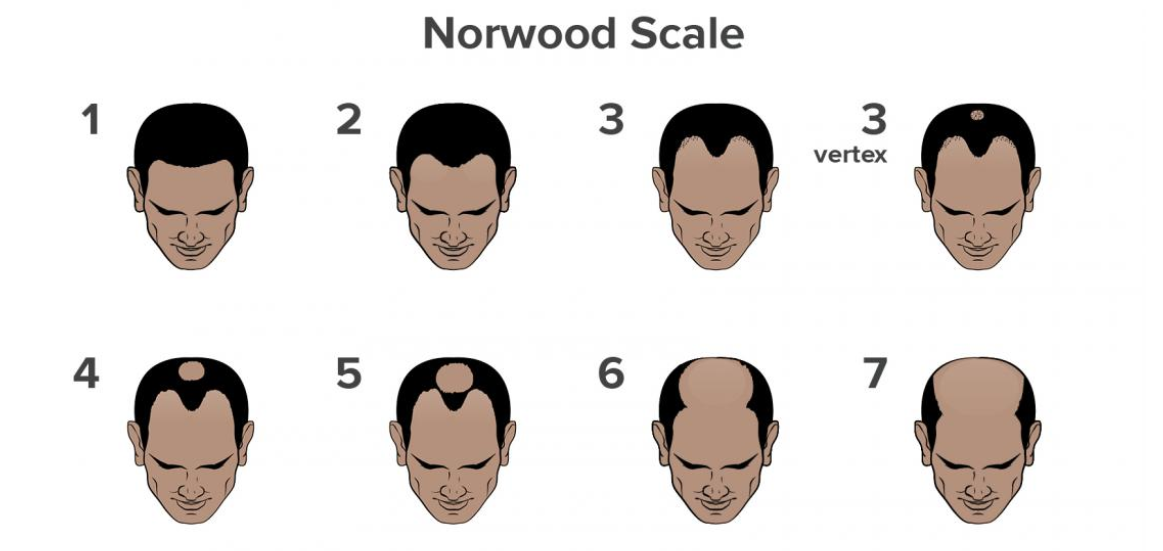
- “Can you show me 20 documented cases at my Norwood stage with 12-month follow-up imagery?” If they cherry-pick 3 best results, that’s marketing. If they have a public archive organised by Norwood grade with consistent documentation, that’s a clinical practice.
- “What are your qualifications and how long have you been performing FUE specifically?” You want a surgical degree (MBBS + MS/DNB, or MDS in Oral & Maxillofacial Surgery) + dedicated hair restoration training + at least 5 years of transplant work. Less = junior; lower density outcomes.
- “Is your pricing per-graft or package-based, and what’s included?” Per-graft transparent is honest. “Package up to X grafts” is a trap if you actually need more grafts (almost always the case for Norwood 4+).
- “What happens at 12 months? Can I see your patients’ 12-month outcomes?” The 12-month mark is when graft density and survival are visible. If the clinic only shows 3-month photos, ask why.
Red Flag #1: Surgeon Doesn’t Lead the Procedure Personally
This is the single most important factor in outcome variability. In a typical technician-led model, a doctor performs the consultation, designs the hairline, and then technicians often paid by graft count make the recipient incisions and perform the extraction and placement under “supervision.” The surgeon may move between multiple operating rooms or consultations during your procedure.
Already chose the wrong clinic? A bad result can often be fixed. See our corrective hair transplant results for failed and pluggy transplants repaired by Dr. Gaurav.
The result: graft survival rates depend on extraction speed, placement angle, and storage quality all single-operator-dependent. Different technicians produce different outcomes. Outcomes can vary noticeably between different technicians at the same clinic.
What to ask: “Will you, the surgeon I’m meeting today, personally design my hairline, make every recipient incision, and stay in the room supervising extraction and placement?” If the answer is anything other than an unqualified yes, get the answer in writing before booking.
Red Flag #2: No Documented Case Archive
Marketing photos and patient “transformations” on Instagram aren’t a clinical archive. A real archive has: pre-op imagery from multiple angles, immediate post-op (Day 0 or 1), Day 30, Month 3, Month 6, and Month 12 imagery for the same patient, organised by Norwood grade so you can see what to expect for your specific stage of hair loss.
If a clinic shows you 3–5 cherry-picked best results, ask to see all cases at your Norwood grade in chronological order. A clinic confident in its outcomes will have nothing to hide. A clinic that refuses or pivots to “we have privacy concerns” is signalling that the average outcome is not what the highlight reel suggests.
Red Flag #3: Stock or AI-Generated Result Photos
This has become a 2026 problem specifically. Some clinics now use AI image generation to create “before/after” results that don’t correspond to real patients. Tells:
- Hair pattern that doesn’t match the person’s natural growth direction
- Symmetry that’s too perfect (real hairlines have asymmetry)
- Skin texture that doesn’t match between before and after photos
- No video, only stills
- Same lighting, same angle, but suspicious sharpness/softness changes
- Clinic refuses to provide a video walkthrough of the same patient
Ask for video walkthroughs of patients at 6 and 12 months difficult to fake video. At Cult Aesthetics, every documented case is paired with timeline imagery and many include video walkthroughs.
Red Flag #4: “Package” Pricing With Hidden Caps
The “₹50,000 unlimited grafts” or “₹75,000 package up to 3,000 grafts” structure is built to obscure unit economics. Three problems:
- If you need more grafts than the cap, you pay premium rates for the additional grafts often ₹60–80/graft above the cap.
- If you need fewer grafts, you don’t get a refund. The package is the floor.
- It hides the per-graft cost comparison, making it impossible to compare clinic A to clinic B objectively.
Insist on per-graft transparent pricing. Cult Aesthetics charges ₹60–90/graft for Sapphire FUE the actual graft count is determined at the free trichoscopy and the total is your graft-count × per-graft rate. No floors, no caps.
Red Flag #5: No 12-Month Follow-Up Protocol
Hair transplant outcomes mature at 12 months. Density at 3 months can look thin (initial shedding, immature growth) and at 6 months can look incomplete. The 12-month mark is when graft survival, hairline definition, and patient satisfaction stabilise.
A clinic that stops following up at 3 months either: (1) doesn’t care about long-term outcomes, or (2) doesn’t have measured outcomes to share. Either way, you don’t have measurement-based recourse if the result is poor at 12 months. Cult’s standard protocol includes Day 3, Day 14, Day 30, Month 6, Month 12 follow-ups with photographic documentation at each.
Red Flag #6: Aggressive Discounts and “Limited-Time Offers”
Surgical procedures shouldn’t be sold like e-commerce. “50% off this week,” “book today and save ₹25,000,” or “limited slots” pressure tactics signal a sales-first culture. The surgeon’s time and the clinical resources are bounded; deep discounts mean either the original price was inflated or the discount-time experience is downgraded.
Reasonable inducements (free first consultation, free trichoscopy, included GFC sessions, EMI options) are normal. Aggressive 30–50% off, deal-deadline pressure, or commission-based agents pushing booking are not.
Red Flag #7: No Mention of Side Effects, Complications, or Limitations
Hair transplant has real complications: temporary shock loss (5–20% of grafts in some cases), donor-zone over-harvesting, infection, hairline-design errors that can’t be corrected, and continued native hair loss requiring future sessions. A surgeon who does not discuss these openly is selling you a result, not a procedure.
At consultation, expect to be told what “cannot” be achieved given your donor density and age and what realistic 12-month outcomes look like for your Norwood stage. If everything is “100% guaranteed natural results,” the surgeon is over-promising.
Surgeon-Led vs Technician-Led Models The Difference
| Aspect | Surgeon-Led | Technician-Led |
|---|---|---|
| Hairline design | Surgeon | Surgeon |
| Recipient incisions | Surgeon | Technicians (often) |
| Who oversees graft extraction | Surgeon | Technicians |
| Who oversees graft placement | Surgeon | Technicians |
| Average graft survival | Depends on handling time, hydration and technique; reviewed at 12 months | Varies with the technician team and handling time |
| Outcome consistency | High | Variable |
| Per-graft cost | ₹60–120 | ₹20–40 |
| Common in | Cult, premium NCR clinics | High-volume Turkey clinics, package operators |
Frequently Asked Questions
What qualifications should a hair transplant surgeon have?
Minimum: a surgical qualification such as MBBS + MS/DNB (General or Plastic Surgery) or MDS (Oral & Maxillofacial Surgery). Bonus: dedicated hair restoration training and ISHRS membership. Verify via the medical council registration number; ask for documents.
How many cases should the surgeon have performed?
Minimum 200 documented cases. Senior surgeons typically have 500–1,500. Cult Aesthetics confirms 800+ documented hair transplant cases. The number alone isn’t enough ask to see the documentation organised by Norwood grade.
Should I trust online reviews?
Google reviews are useful but can be gamed. Look for: (1) volume a clinic with 500+ reviews is harder to fake, (2) review distribution healthy clinics have a mix of 4-5 stars, not all 5, (3) specific clinical content in reviews (“my donor zone healed in 5 days” is more credible than “great staff”), (4) responses from the clinic to negative reviews. Cult Aesthetics is rated 4.8 on Google, with detailed clinical reviews.
\nFor a separate method of evaluating online reputation signals, see the guide to spotting fake hair-transplant reviews.
\n\n\nIs YouTube channel size a good signal?
Yes a surgeon-led clinic with educational YouTube content (procedure walkthroughs, common myths, patient testimonials) suggests the surgeon participates in patient education. Cult Aesthetics maintains an active YouTube channel with 30+ educational videos by Dr. Gaurav.
Should I get a second opinion?
Yes, always especially for procedures over ₹1 lakh. A second opinion at no cost (most clinics offer free first consultation) helps you cross-check graft estimates, technique recommendations, and pricing. If two clinics disagree by more than 30% on graft count, ask both to explain the difference.
What’s the worst question to ask?
“How much for a hair transplant?” without context. The honest answer requires a scalp examination. A clinic that quotes a fixed number over WhatsApp without seeing your scalp is selling a package, not a clinical procedure. Insist on free trichoscopy first.
Get a Second Opinion at Cult Aesthetics
If you’ve consulted at another clinic and want a surgeon-led second opinion, Dr. Gaurav Solanki offers free in-person trichoscopy and graft-count assessment at Cult Aesthetics, Sector 46 Gurugram. The consultation includes scalp analysis, technique recommendation, written cost estimate, and if you bring documents from another clinic a comparison of estimates with explanation of differences.
Phone / WhatsApp: +91-9990449555 · Address: Cult Aesthetics, Residency Green, Sector 46, Gurugram 122003 · Free second opinion includes written report.
Hair Restoration Resources
Surgeon-authored guides on every aspect of hair transplant decision-making in Gurgaon and Delhi.
- ➜ Hair Transplant in Gurgaon
- ➜ Hair Transplant Cost in Gurgaon 2026
- ➜ FUE vs DHI vs Sapphire — Surgeon's Guide
- ➜ PRP vs GFC vs Mesotherapy
- ➜ How to Choose a Hair Transplant Surgeon
- ➜ Hair Transplant Cost in India 2026
- ➜ FUE Hair Transplant Gurgaon
- ➜ DHI Hair Transplant Gurgaon
- ➜ GFC Hair Treatment Gurgaon
- ➜ PRP Hair Treatment Gurgaon
- ➜ Hair Fall Treatment Gurgaon
- ➜ Best Hair Transplant Clinic in Delhi
- ➜ Beard Transplant Gurgaon
- ➜ Hair Transplant in Delhi