

Do Bald Men Have More Testosterone?
Quick Answer: Do Bald Men Have More Testosterone?
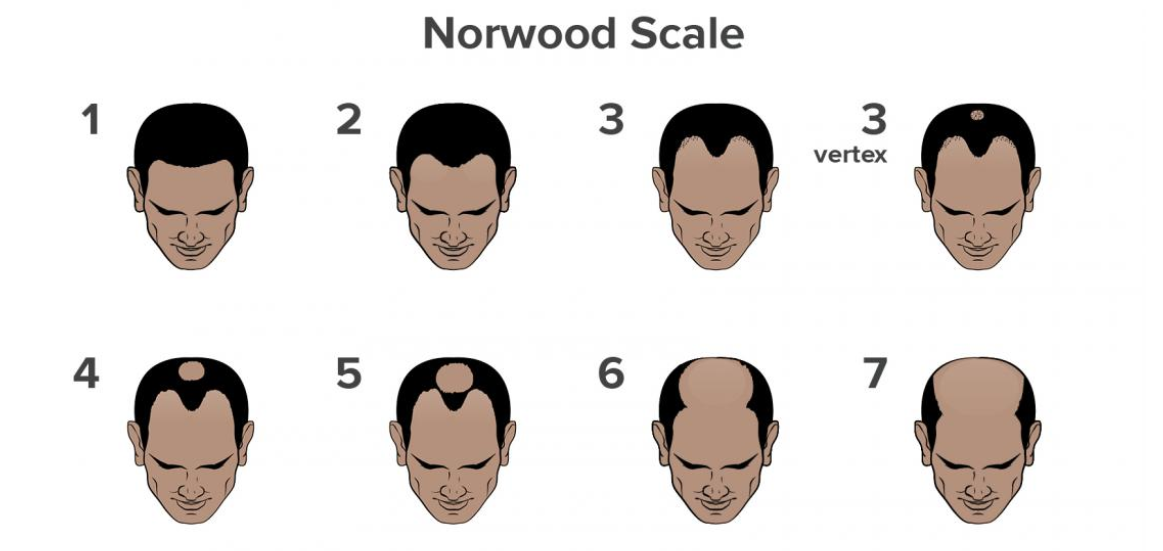
No. Bald men do not have higher total testosterone than men with full hair. The actual cause of male-pattern baldness is genetic sensitivity to DHT (dihydrotestosterone) in the scalp follicles not the absolute amount of testosterone in the bloodstream. Multiple peer-reviewed studies, including a landmark 1998 study in Hormone Research, have shown that bald and non-bald men have statistically similar serum testosterone levels. What differs is the conversion of testosterone to DHT by the enzyme 5-alpha-reductase, and the genetic susceptibility of follicles to DHT-induced miniaturisation.
The Myth: Bald Men = More Testosterone
This is one of the most persistent myths in popular culture the idea that bald men are somehow more virile, more aggressive, or have more testosterone than men with full hair. The myth gets reinforced every time a movie casts the bald-but-strong character, or someone makes the joke that “hair is wasted on the young.” But it’s empirically wrong, and it has been wrong for over 25 years of clinical literature.
The confusion comes from one specific fact: testosterone is involved in male-pattern baldness, but not in the way the myth claims. Testosterone is the precursor; the actual culprit is its derivative, dihydrotestosterone (DHT). And the deciding factor is not how much testosterone you have, but how genetically sensitive your scalp follicles are to DHT.
The Science: Testosterone vs DHT vs Genetic Sensitivity
Three biochemical processes drive androgenetic alopecia (male-pattern baldness):
- Testosterone production happens primarily in the testes. Total serum testosterone in healthy adult men ranges from 300–1,000 ng/dL. Bald men do not, on average, have higher serum testosterone than non-bald men of the same age.
- 5-alpha-reductase enzyme conversion this enzyme converts testosterone into DHT in target tissues including the scalp, prostate, and skin. This is the rate-limiting step. Higher local 5-alpha-reductase activity in the scalp = more local DHT = more follicular miniaturisation in genetically susceptible men.
- Androgen receptor sensitivity (AR gene) the AR gene on the X chromosome encodes how sensitive your follicles are to DHT once it’s there. Variation in this gene is the strongest single genetic predictor of male-pattern baldness. You inherit it primarily from your mother (who carries the X), which is why “the baldness gene comes from your mother’s side” is true in part.
So a bald man and a man with full hair, both age 40, can have identical serum testosterone levels but the bald man has follicles that are more sensitive to DHT (or has higher local 5-alpha-reductase activity in his scalp). The hair loss is genetic, not hormonal in the simplistic sense.
What the Studies Actually Show
The clinical literature on this is not subtle:
- Schweikert & Wilson (1974), Journal of Clinical Endocrinology & Metabolism the foundational study showing that DHT, not testosterone, is the active androgen in male-pattern baldness.
- Kuttenn et al. (1985) demonstrated higher 5-alpha-reductase activity in bald-area scalp tissue compared to non-bald areas of the same scalp.
- Sinclair et al. (2005), Australasian Journal of Dermatology reviewed serum testosterone in androgenetic alopecia. Conclusion: total testosterone is not significantly elevated in bald men.
- Hillmer et al. (2005), American Journal of Human Genetics identified the AR gene polymorphism as the strongest single genetic predictor of male-pattern baldness, independent of testosterone levels.
The evidence is consistent across decades of research: baldness is a follicular response to DHT in genetically susceptible men, not a function of total testosterone.
Why the Myth Persists Three Reasons
- The DHT-testosterone link gets oversimplified. DHT is derived from testosterone, so people conflate the two. Mass-media articles routinely write “high testosterone causes baldness” when the accurate statement is “high DHT in scalp tissue, in DHT-sensitive follicles, causes baldness.”
- Confirmation bias in casting and observation. Bald action heroes, gym bros, and dominant figures get cast or remembered more often reinforcing the visual association even though the population data doesn’t support it.
- The “virility” cultural narrative. The idea that hair loss is a sign of high masculinity is psychologically appealing, especially for men experiencing it. The data doesn’t back it up, but the reframe is comforting.
Practical Implications for Hair Loss Treatment
Understanding the testosterone-DHT distinction is not academic it directly determines which treatments work and which don’t.
Treatments that target DHT (effective)
- Finasteride inhibits the 5-alpha-reductase enzyme. Reduces scalp DHT by ~60–70%. Slows or arrests progression in 80–90% of users at 12 months.
- Dutasteride inhibits both 5-alpha-reductase isoforms. More potent DHT reduction (~90%). Used off-label.
- Topical minoxidil doesn’t target DHT directly but lengthens the anagen (growth) phase, partially offsetting DHT-induced miniaturisation.
Treatments that don’t work for hereditary baldness
- Lowering total testosterone doesn’t restore hair (and would cause obvious side effects). Misdirected target.
- Most over-the-counter “hair growth” supplements biotin, saw palmetto, etc. Saw palmetto has weak 5-alpha-reductase inhibition but is not clinically equivalent to finasteride.
For established hair loss hair transplant
Once follicles are gone, no medical treatment regrows them. The grafts moved during a hair transplant come from the donor zone (sides and back of the scalp), which is genetically resistant to DHT. That’s why transplanted hair stays it carries its own genetics into the new location.
Frequently Asked Questions
Do bald men have more testosterone?
No. On average, bald and non-bald men of the same age have similar total serum testosterone levels. Multiple studies (Sinclair et al. 2005; Hillmer et al. 2005) have confirmed this. The cause of male-pattern baldness is genetic sensitivity to DHT, not the amount of testosterone in the bloodstream.
So what does cause male-pattern baldness?
A combination of: (1) DHT (dihydrotestosterone) acting on scalp follicles, (2) the activity of the 5-alpha-reductase enzyme that converts testosterone to DHT, and (3) genetic sensitivity of follicles to DHT (the AR gene polymorphism, inherited primarily from the mother’s side).
Does taking testosterone (TRT) cause baldness?
It can accelerate hereditary baldness in genetically susceptible men, because exogenous testosterone increases the substrate available for DHT conversion. Men on TRT who notice rapid hair loss often add finasteride or dutasteride to inhibit the conversion. If you’re not genetically susceptible, TRT will not cause baldness.
Is the “baldness gene” really from your mother’s side?
Partially yes. The AR gene is on the X chromosome, which men inherit from their mothers. So the AR gene component of baldness susceptibility comes from the maternal side. However, baldness is polygenic multiple genes contribute, including some from the father’s side. The maternal grandfather’s hair pattern is the single best predictor, but it’s not deterministic.
Can a bald man with low testosterone benefit from TRT for hair?
No. TRT addresses low testosterone symptoms (low energy, low libido, muscle loss), not baldness. If anything, raising testosterone in a genetically susceptible man can accelerate hair loss. The two issues should be evaluated separately.
If I’m bald, can a hair transplant restore my hair?
Yes if you have sufficient donor zone supply (sides and back of the scalp). The transplanted follicles are genetically resistant to DHT and continue to grow at the new site. At Cult Aesthetics in Sector 46 Gurgaon, Dr. Gaurav Solanki has performed 800+ documented FUE procedures. Free trichoscopy assessment confirms whether you’re a candidate.
The Bottom Line
Bald men do not have more testosterone. They have follicles that are more sensitive to DHT, which is a different thing entirely. The myth conflates testosterone with DHT, ignores the role of the 5-alpha-reductase enzyme, and skips over the AR gene which is what actually determines who goes bald and who doesn’t.
If you’re losing hair and want to understand your specific case trichoscopy, hormonal panel, genetic predisposition assessment a consultation with Dr. Gaurav Solanki at Cult Aesthetics is free and includes a written diagnostic plan. WhatsApp +91-99904-49555 for a video consultation, or visit Sector 46, Gurugram.
Hair Restoration Resources
Surgeon-authored guides on every aspect of hair transplant decision-making in Gurgaon and Delhi.
- ➜ Hair Transplant in Gurgaon
- ➜ Hair Transplant Cost in Gurgaon 2026
- ➜ FUE vs DHI vs Sapphire — Surgeon's Guide
- ➜ PRP vs GFC vs Mesotherapy
- ➜ How to Choose a Hair Transplant Surgeon
- ➜ Hair Transplant Cost in India 2026
- ➜ FUE Hair Transplant Gurgaon
- ➜ DHI Hair Transplant Gurgaon
- ➜ GFC Hair Treatment Gurgaon
- ➜ PRP Hair Treatment Gurgaon
- ➜ Hair Fall Treatment Gurgaon
- ➜ Best Hair Transplant Clinic in Delhi
- ➜ Beard Transplant Gurgaon
- ➜ Hair Transplant in Delhi