


The Best Age to Get a Hair Transplant, Is There One?
The short answer
There is no universal “best age” for a hair transplant. A person’s date of birth is only one part of the assessment. The diagnosis, pace and pattern of hair loss, donor-area quality, expectations and likelihood of future loss usually matter more than reaching a particular birthday.
That is also why two people of the same age can receive very different advice.
Why younger patients need careful planning
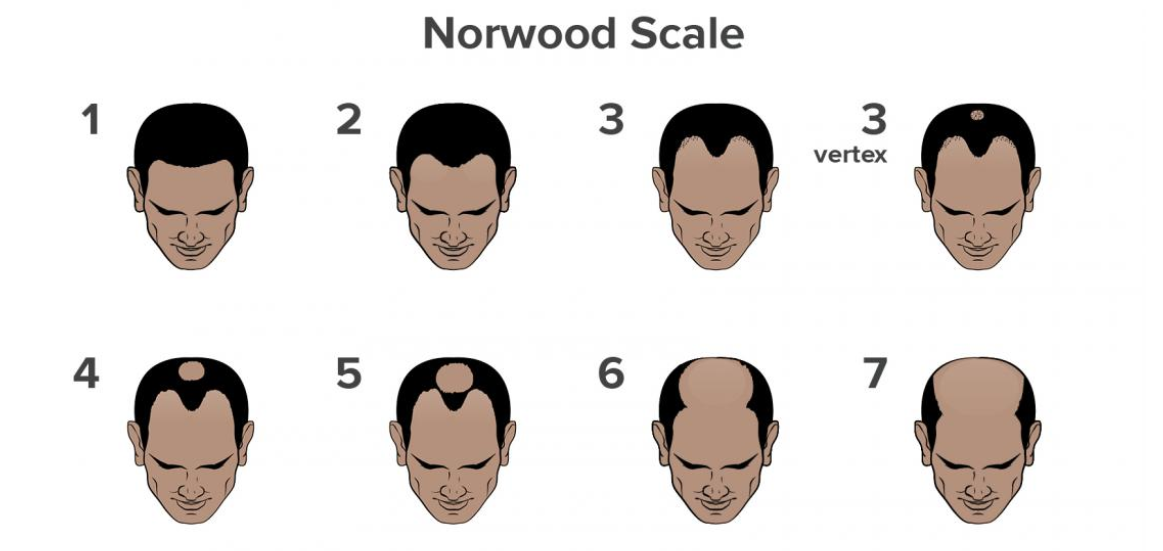
Hair loss can still be changing in early adulthood. A low, dense hairline created too soon may look disconnected if the native hair behind it continues to thin. It can also use donor hair that may be needed later.
This does not mean that every younger adult is automatically unsuitable. It means the clinician should be especially cautious about diagnosis, progression and design. A conservative plan may involve monitoring, discussing appropriate non-surgical management, adjusting the proposed hairline or waiting before surgery.
If a clinic presents age alone as proof that you are ready, ask what evidence they used to judge the future pattern.
Does older age make surgery straightforward?
Not necessarily. In an older patient, the pattern may be easier to understand, but general health, medicines, scalp condition, donor quality and healing considerations still need review. An established area of loss does not guarantee that the donor area is suitable or that the requested density is achievable.
The relevant question is not, “Am I too old?” It is, “Is this procedure medically appropriate for me, and is the plan proportionate to my hair and health?”
What does “stable hair loss” mean?
People often hear that their hair loss should be stable, but the term needs explanation. It should not be reduced to a fixed number of months or a quick look at old selfies. A clinician may consider your history, serial photographs, family pattern, examination findings and the location of ongoing miniaturisation. The assessment may also identify a condition that needs treatment before cosmetic surgery.
Stability does not mean that future loss is impossible. Long-term planning should assume that native hair may change and reserve donor resources accordingly.
Questions worth taking to the consultation
Ask why the clinician believes your current pattern is suitable for surgery, how the proposed hairline will age, and what happens if surrounding hair thins later. Ask whether waiting would change the recommendation and whether medical assessment or treatment should come first.
For NRI patients planning surgery during a short India visit, allow enough time for a real evaluation. A travel date should not dictate clinical readiness. Clarify who will review photographs after you leave, how concerns will be handled, and whether follow-up can continue across time zones.
A responsible age discussion ends with an individual plan, not a slogan. Sometimes the most useful advice is to proceed conservatively; sometimes it is to wait.
Check the medical context
The American Academy of Dermatology’s dedicated transplant page notes that younger adults may be advised to wait and that candidacy requires a scalp assessment. The NHS hair-transplant guide also stresses suitability, continued thinning and planning over time. These are general resources, not personal medical advice.
Hair Restoration Resources
Surgeon-authored guides on every aspect of hair transplant decision-making in Gurgaon and Delhi.
- ➜ Hair Transplant in Gurgaon
- ➜ Hair Transplant Cost in Gurgaon 2026
- ➜ FUE vs DHI vs Sapphire — Surgeon's Guide
- ➜ PRP vs GFC vs Mesotherapy
- ➜ How to Choose a Hair Transplant Surgeon
- ➜ Hair Transplant Cost in India 2026
- ➜ FUE Hair Transplant Gurgaon
- ➜ DHI Hair Transplant Gurgaon
- ➜ GFC Hair Treatment Gurgaon
- ➜ PRP Hair Treatment Gurgaon
- ➜ Hair Fall Treatment Gurgaon
- ➜ Best Hair Transplant Clinic in Delhi
- ➜ Beard Transplant Gurgaon
- ➜ Hair Transplant in Delhi