
DHI Hair Transplant Cost in India 2026 — Surgeon-Verified Guide

Quick answer: DHI (Direct Hair Implantation) hair transplant cost in India ranges from ₹60,000 to ₹3,50,000 in 2026, depending on the number of grafts, surgeon experience, and city. Per-graft pricing for DHI sits at ₹55–₹120, which is about 30–50% higher than standard FUE because of the specialised Choi implanter pen and the slower, more precise implantation technique.

I’m Dr. Gaurav Solanki. I’ve personally performed over 800 hair transplants in India, and below is an honest, surgeon-verified breakdown of what a DHI hair transplant actually costs in India in 2026 — what drives the price, what’s usually quoted “extra”, and how to tell if a price you’re being offered is fair or a red flag.

What is DHI hair transplant?

DHI — Direct Hair Implantation — is an evolution of the FUE (Follicular Unit Extraction) technique. In standard FUE, the surgeon first creates recipient site incisions, then implants follicles into those sites. In DHI, the extracted follicles are loaded into a patented Choi implanter pen, which creates the incision and implants the graft in a single motion.

The practical result: higher density per square centimetre, shorter time between extraction and implantation (which protects graft survival), and finer control over hair angulation and direction — especially valuable in the frontal hairline and crown zones. DHI is not fundamentally a different surgery than FUE; it is a refined implantation method that costs more to deliver.

DHI hair transplant cost in India — 2026 price guide

In 2026, DHI hair transplant costs in India are best understood in two ways: as a per-graft rate and as a total package price.

  • Per-graft rate (2026): ₹55 to ₹120 for DHI. Compare with ₹35 to ₹90 for FUE.
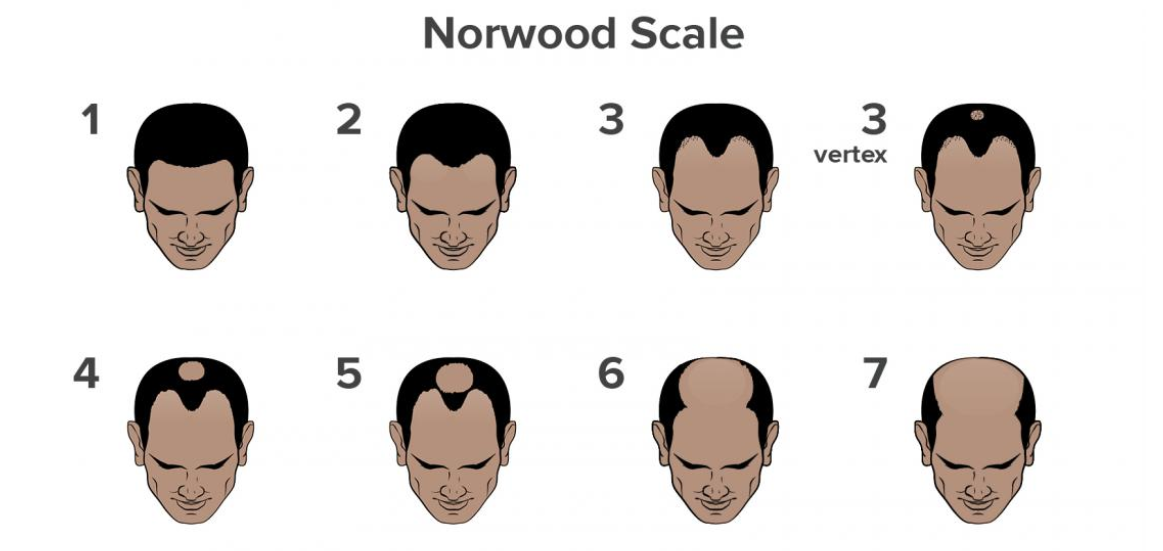
  • Small case (1,000–1,500 grafts): ₹60,000 – ₹1,50,000 total. Typical for early-stage Norwood 2–3 hairlines.
  • Medium case (2,000–2,500 grafts): ₹1,10,000 – ₹2,50,000 total. Typical for Norwood 3V–4 crown and frontal coverage.
  • Large case (3,000+ grafts): ₹1,80,000 – ₹3,50,000 total. Usually split into two consecutive days to protect graft viability.

A few honest caveats: per-graft pricing drops as case size grows, so don’t multiply the “₹80 per graft” sticker by 2,500 and expect that to be the quote — most serious clinics offer blocked pricing for larger cases. Second, prices advertised in festive-season ads (“FLAT ₹30/graft DHI!”) are usually achieved by substituting cheaper technicians or including only partial services; read the fine print.

City-wise DHI hair transplant cost in India (2026)

CityPer-graft (DHI)2,500-graft typical total
Delhi / NCR (including Gurgaon)₹60 – ₹120₹1,50,000 – ₹2,75,000
Mumbai₹70 – ₹140₹1,75,000 – ₹3,25,000
Bangalore₹65 – ₹120₹1,60,000 – ₹2,75,000
Hyderabad₹60 – ₹110₹1,50,000 – ₹2,50,000
Chennai₹60 – ₹100₹1,50,000 – ₹2,30,000
Pune₹60 – ₹110₹1,50,000 – ₹2,50,000
Ahmedabad / Jaipur / tier-2₹55 – ₹90₹1,35,000 – ₹2,10,000

A higher city-wise rate does not automatically mean better results. What tracks with outcomes is the individual surgeon’s experience, case volume, and whether they personally perform the critical extraction and design steps. A skilled surgeon in Hyderabad will consistently outperform a brand-name chain where technicians do the actual work.

DHI vs FUE — cost comparison

ParameterFUEDHI
Per-graft cost₹35 – ₹90₹55 – ₹120
2,500-graft total₹85,000 – ₹2,25,000₹1,35,000 – ₹3,00,000
Session duration6 – 8 hours8 – 10 hours (slower by design)
Density per cm²35 – 5545 – 65
Recovery time7 – 10 days visible healing7 – 10 days visible healing
Best forLarge coverage, mid-scalp thinningHairline, crown, higher-density cases
Shaving needed?Donor area onlyDonor area; recipient can often stay unshaved

In my practice, roughly 30% of hair restoration candidates are better served by DHI (younger patients with fine frontal zones, patients who don’t want a full recipient shave, and retained-density cases where every graft must count). The remaining 70% get equivalent or better outcomes with a well-executed FUE at lower cost. A good surgeon will tell you when DHI is genuinely worth the extra spend and when it isn’t.

What’s included in DHI hair transplant cost

Price opacity is the single biggest trap in the Indian hair transplant market. A fair, transparent DHI quote should include the following in the headline price:

  • Pre-operative consultation and trichoscopic scalp evaluation
  • Routine pre-op blood tests (CBC, coagulation, HIV, HBsAg)
  • Surgeon’s planning session — hairline design, graft count estimate
  • Operating theatre, staff, disposables, Choi implanter pens
  • Anaesthesia (local) and intra-op medications
  • Take-home medication kit: antibiotics, analgesics, topical antiseptic
  • Post-op reviews at day 1, day 10, month 3, month 6, month 12
  • Scalp photography at baseline and follow-up intervals

Things commonly quoted as “extra” which you should negotiate upfront: PRP or GFC booster sessions (typically ₹5,000–₹12,000 each), post-op bio-cellulose dressings, foreign patient accommodation, and airport transfers.

Why DHI costs more than FUE

Three real reasons the DHI price is higher, and one reason you’ll hear but shouldn’t believe:

  • Implanter pen consumables. Each Choi pen tip is single-use per case; a 2,500-graft case uses multiple tips. That hardware cost flows through to the quote.
  • Slower, more controlled pace. DHI extends OT time by 1.5–2 hours over an equivalent FUE. Surgeon and staff time is the biggest cost driver.
  • Specialised training. Not all hair transplant surgeons are trained in DHI. Those who are typically charge a fellowship premium.
  • “DHI gives more density.” Density is a function of planning and graft count, not implantation tool. A senior surgeon doing FUE routinely matches DHI density numbers. Don’t let this be the selling argument.

How to choose a DHI surgeon — not just a clinic

The single biggest predictor of your result is not the city, not the price, not the technique — it’s the person holding the implanter pen. Large chains often advertise low DHI prices because technicians (not surgeons) do most of the work. A few checks that separate surgeon-led from assembly-line practice:

  • Ask for the operating surgeon’s name in writing before you pay any advance. If they dodge, walk away.
  • Verify NMC (formerly MCI) registration at nmc.org.in. Ideal: MCh Plastic Surgery or a named hair-restoration fellowship.
  • Ask to see at least 20 unedited before–after cases of theirs — not clinic brand photos — with dates and graft counts.
  • Confirm the surgeon personally performs extraction, hairline design, and the first 500 implantations (the visible front-line zone).
  • Independently check Google reviews — specifically look for surgeon name mentions rather than generic “great clinic” reviews.

DHI at Cult Aesthetics — transparent 2026 pricing

At Cult Aesthetics in Gurgaon, DHI is priced at ₹60 to ₹90 per graft depending on case size, with everything listed in the “what’s included” section above bundled into the headline quote. Every case is performed by Dr. Gaurav Solanki personally — extraction, design, and the critical front-line implantations. We’ve documented 800+ transplants, hold a 4.8-star rating across 503 Google reviews, and publish case-by-case before–after photography with graft counts and dates.

If you want a written quote for your case — with a surgeon-led scalp assessment, not a sales-desk estimate — book a free consultation with our clinic or see our detailed DHI hair transplant Gurgaon page for the full technique breakdown.

Frequently asked questions about DHI hair transplant cost in India

How much does DHI hair transplant cost in India in 2026?

DHI hair transplant cost in India in 2026 ranges from ₹60,000 for small cases to ₹3,50,000 for large premium cases. Per-graft pricing sits at ₹55–₹120, roughly 30–50% higher than equivalent FUE because of the Choi implanter pen consumables and the longer operating time DHI requires.

Is DHI worth the extra cost over FUE?

DHI is worth the premium for specific case types: fine frontal hairlines, patients who want to avoid recipient-area shaving, and high-density crown cases. For large mid-scalp coverage or straightforward male-pattern baldness, a well-executed FUE by an experienced surgeon produces equivalent aesthetic results at 30–40% lower cost. The technique choice should be case-driven, not marketed as automatically superior.

Why does DHI cost more than FUE?

DHI costs more because of three real cost drivers: single-use Choi implanter pen tips consumed per case, 1.5–2 hours additional operating theatre time per procedure, and the specialised surgeon training required. It does not produce “more permanent” hair than FUE — both methods use the same DHT-resistant donor grafts.

Which city has the cheapest DHI hair transplant in India?

Tier-2 cities like Jaipur and Ahmedabad typically have the lowest advertised DHI pricing (₹55–₹90 per graft). However, surgeon experience and volume are concentrated in Delhi NCR, Mumbai, and Bangalore. For high-stakes hairline design, the marginal saving in a smaller city is usually not worth the reduction in surgeon expertise — pay for the person, not the postcode.

Is DHI hair transplant permanent?

Yes. DHI uses exactly the same donor hair as FUE — follicles from the DHT-resistant area at the back of the scalp. Once established, transplanted DHI grafts are permanent for life and grow, wash, and cut like your native hair. The technique influences density and design precision, not graft permanence.

What is the success rate of DHI hair transplant in India?

Competent DHI in India achieves a 90–95% graft survival rate at 12 months when performed by an experienced surgeon in a proper operating environment. Graft survival is influenced more by surgeon technique, out-of-body time, and recipient site vascularity than by the DHI method itself. Ask any clinic quoting you for their own documented survival data with follow-up photography.


About the author: Dr. Gaurav Solanki is a plastic and hair restoration surgeon at Cult Aesthetics, Sector 46 Gurugram. He has performed 800+ documented hair transplants across FUE, DHI, and Sapphire-blade techniques, and trains fellows in surgical hair restoration. Clinical reviewers and patient before–after galleries are available on the clinic’s homepage. Last reviewed: April 2026.