
Featured On External Media

Unbinary Life Podcast

Dr. Gaurav Solanki, Founder of Cult Aesthetics, joins the Unbinary Life Podcast for a candid, hour-long conversation on the psychology of hair loss, post-COVID patient trends, and the real truth about getting a hair transplant abroad.

Watch the full interview above. Key timestamps are referenced throughout this article for your convenience.

About This Interview

Dr. Gaurav Solanki, one of India’s most sought-after hair transplant surgeons in Gurgaon, sat down with the Unbinary Life Podcast for a rare, unfiltered conversation. With over 340 documented cases and a growing international patient base, Dr. Solanki discussed the psychology behind hair loss, the post-COVID surge in younger patients, and why India has emerged as a global hub for hair restoration — beating Turkey on almost every parameter that matters.

This is not a promotional interview. It is a peer-to-peer conversation that covers the science, the sociology, and the hard truths about hair transplants in India today.

Section 1 [05:10] — The Psychology of Hair Loss: Why Hair Matters More Than We Admit

At the 5:10 mark, Dr. Solanki opens up about something most clinics never discuss: the deep psychological and cultural weight of hair in Indian society.

In India, hair is not just a cosmetic feature — it is tied to identity, confidence, social perception, and even marriageability. Dr. Solanki explains that for many of his patients, hair loss is not merely a physical change. It creates a ripple effect: social withdrawal, anxiety in professional settings, and a measurable drop in self-esteem.

He notes that hair has always been a marker of youth and vitality in Indian culture — from Bollywood heroes to social media aesthetics — and when it begins to thin, patients often feel they are “aging ahead of schedule.” This cultural dimension makes the decision to seek treatment more emotionally loaded than in Western markets, where attitudes towards baldness are generally more accepting.

The takeaway for anyone considering treatment: understanding why you want your hair back is just as important as the procedure itself. Dr. Solanki encourages patients to have an honest conversation about their emotional goals during the free consultation at Cult Aesthetics, so that expectations are aligned and results are genuinely life-changing.

Section 2 [10:07] — Post-COVID Shift: The Average Patient Is Now a Decade Younger

One of the most striking data points in the entire interview comes at 10:07: Dr. Solanki reveals that the average age of his hair transplant patients has dropped by approximately 10 years since the COVID-19 pandemic.

Pre-pandemic, the typical patient walking through his door was between 35 and 45 years old. Today, a significant proportion of consultations involve men in their mid-to-late twenties — some as young as 23 or 24.

What caused this shift? Dr. Solanki points to several converging factors:

  • Prolonged stress during lockdowns accelerated telogen effluvium (stress-induced hair shedding) in younger men.
  • Post-COVID hair loss — now well-documented as a sequela of the virus itself — affected a broad demographic that had never previously worried about hair thinning.
  • Increased screen time and video calls made people hyper-aware of their appearance, particularly hairlines, in ways that were not as prominent before remote work became mainstream.
  • Social media created a new benchmark for grooming and appearance among younger Indian men.

This trend has significant implications. Younger patients require a more conservative and long-term planning approach. At Cult Aesthetics, Dr. Solanki takes a nuanced position: if a patient is too young and their hair loss pattern is still actively progressing, he may recommend GFC therapy or PRP treatment to stabilise the loss first, before committing to a surgical solution.

Section 3 [13:02] — Is a Hair Transplant Safe? The Honest Answer

At 13:02, the host puts the question directly: “Is a hair transplant risky?” Dr. Solanki’s answer is refreshingly straightforward.

A hair transplant performed at a qualified, experienced clinic is one of the safest cosmetic procedures available today. It is a one-day, minimally invasive, outpatient procedure conducted entirely under local anaesthesia. There is no general anaesthesia, no hospitalisation, and — when done correctly — zero serious complications.

The word “risky” in the context of hair transplants almost always traces back to one source: clinics that cut corners. Unqualified technicians, unhygienic environments, improper graft handling, and unrealistic promises are the real risks — not the procedure itself. This is precisely why choosing the right clinic and surgeon matters more in hair transplantation than in almost any other cosmetic procedure.

Dr. Solanki also walks through what a typical day looks like for a patient at Cult Aesthetics: arrival in the morning, a brief pre-operative assessment, the FUE procedure, and discharge by evening — often with the patient flying back to their home city the same day. Recovery involves minimal downtime, with most patients back to desk work within 3 to 5 days.

Section 4 [38:18] — Turkey vs. India for Hair Transplant: The Definitive Comparison

This section, beginning at 38:18, is arguably the most impactful part of the entire interview — particularly for international patients or NRIs who are considering their options. The “Turkey question” has become one of the most common queries at Cult Aesthetics, and Dr. Solanki addresses it with data and candour.

ParameterTurkeyIndia (Cult Aesthetics)
Primary DrawPrice (often ₹40,000–₹80,000 all-inclusive “packages”)Price + Quality + Accountability
Who Performs the Surgery?Often technician-led; surgeon may only be present for hairline designDr. Gaurav Solanki personally performs all procedures
Graft HandlingVariable; high-volume “package” clinics may rush proceduresBio-chilled storage protocol, meticulous extraction
Post-Op Follow-UpDifficult; you are in a foreign country with limited recourseOngoing follow-up, accessible directly via WhatsApp
Corrective CasesA significant % of Cult Aesthetics’ corrective cases originate from TurkeyWe fix Turkey results
Language & CommunicationTranslation barriers are commonFull communication in Hindi and English
Cost (True Total)Flights + hotel + procedure + potential revision = often more than IndiaTransparent, all-in pricing with no hidden costs

Dr. Solanki is careful not to dismiss all Turkish clinics — there are genuinely excellent surgeons in Turkey. His concern is with the “hair transplant tourism package” model, where patients are treated as numbers rather than individuals, procedures are rushed, and the surgeon’s involvement is minimal. The corrective cases this produces end up at clinics like Cult Aesthetics, and the emotional and financial cost of fixing a bad transplant far exceeds what was “saved” by going abroad for a cheap package.

For NRI and international patients considering India, Cult Aesthetics has a dedicated hair transplant tourism guide that covers travel, stay, and recovery logistics in Gurgaon.

Section 5 [39:15] — Why India Is Becoming the World’s Hair Transplant Capital

Building on the Turkey discussion, Dr. Solanki makes the broader case at 39:15 for why India — and specifically clinics like Cult Aesthetics in Gurgaon — represents the best combination of value, quality, and accountability in the global hair transplant market.

India’s advantages are structural: a world-class medical education system, MBBS and MS-qualified surgeons who are fully accountable under Indian medical law, significantly lower overhead costs that translate into patient savings without quality compromise, and a growing culture of transparency and documentation (Cult Aesthetics alone has 340+ photographically documented cases available for review).

The combination of proximity to Delhi’s international airport, English-speaking medical teams, and internationally competitive pricing makes Gurgaon an increasingly compelling destination for patients from Australia, the UK, Canada, and the Middle East.

Frequently Asked Questions: Based on the Unbinary Life Podcast Interview

The following FAQ section is extracted from key insights shared by Dr. Gaurav Solanki during the interview. These answers represent his professional opinion based on clinical experience.

Q: Is a hair transplant a risky procedure?

As explained by Dr. Gaurav Solanki at [13:02], a hair transplant is a very safe, one-day outpatient procedure with zero serious complications when performed at a qualified clinic. The risks associated with hair transplants are almost always linked to unqualified practitioners, not the procedure itself.

Q: Why are younger people getting hair transplants now?

According to Dr. Solanki [10:07], the average patient age at his clinic has dropped by 10 years post-COVID. Stress-induced hair loss, post-COVID shedding, and heightened appearance awareness from video calls and social media are the primary drivers behind this demographic shift.

Q: Does hair loss affect mental health and self-confidence?

Yes. Dr. Solanki discusses this in depth at [05:10], explaining that in Indian society, hair is deeply tied to identity, youth, and social perception. Hair loss frequently leads to anxiety, social withdrawal, and reduced self-esteem — particularly in professional and social contexts where appearance is scrutinised.

Q: Should I get my hair transplant done in Turkey?

Dr. Solanki addresses this directly at [38:18]. While Turkey has reputable clinics, the “package tourism” model popular with budget-focused patients often involves technician-led surgeries, rushed procedures, and poor post-operative follow-up. A significant portion of corrective hair transplant cases at Cult Aesthetics originate from procedures performed in Turkey.

Q: What makes India better than Turkey for a hair transplant?

As discussed at [39:15], India offers fully qualified MBBS surgeons who are personally accountable, meticulous documentation practices, competitive pricing without quality compromise, and accessible post-operative follow-up — all factors that give Indian clinics a structural advantage over the package-tourism model that dominates the Turkish market.

Q: How do I know if I am ready for a hair transplant?

The best starting point is a consultation. At Cult Aesthetics, Dr. Gaurav Solanki offers a free online or in-person consultation where your hair loss pattern, donor area density, and long-term goals are assessed before any recommendation is made.

Q: What is the recovery time after a hair transplant?

Most patients are back to light desk work within 3 to 5 days. The transplanted hair sheds in the first 2 to 4 weeks — this is completely normal. New growth begins around the 3 to 4 month mark, with final density visible between 9 and 12 months post-procedure.

Q: What is the difference between FUE and FUT hair transplant?

FUE (Follicular Unit Extraction) is the modern gold-standard technique where individual follicles are extracted without leaving a linear scar. FUT (Follicular Unit Transplantation) involves removing a strip of scalp, which leaves a linear scar but can yield a higher number of grafts in a single session. Dr. Solanki performs both techniques and recommends the appropriate method based on the patient’s specific case. Read the full comparison: FUE vs FUT Hair Transplant.

Q: How much does a hair transplant cost at Cult Aesthetics?

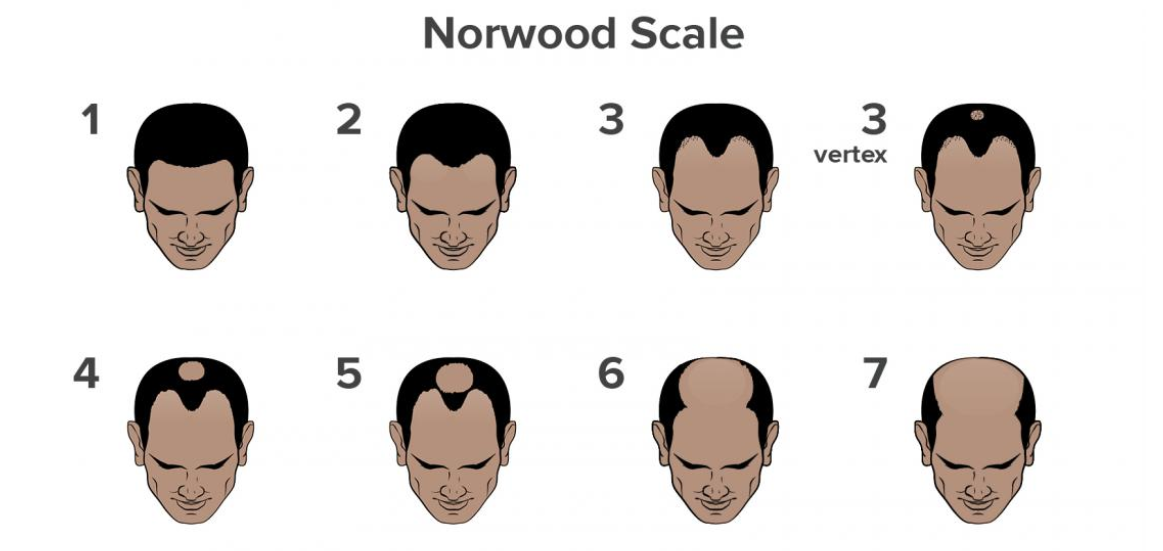
The cost depends on the number of grafts required, which is determined by your grade of hair loss. Cult Aesthetics offers transparent, all-inclusive pricing. You can calculate your estimated hair transplant cost here or book a free consultation for a personalised quote.

Q: Can GFC or PRP replace a hair transplant?

GFC and PRP are non-surgical therapies that stimulate existing follicles and reduce hair fall. They cannot restore hair in completely bald areas, but they are highly effective at slowing progressive hair loss and improving density in thinning areas. For younger patients whose loss is still progressing, Dr. Solanki often recommends GFC therapy as a first step before considering surgery.

Ready to Take the Next Step?

Book a free consultation with Dr. Gaurav Solanki — the same expert you just heard on the Unbinary Life Podcast.

Book Free Consultation →
author avatar
Dr. Gaurav Solanki