
Quick Answer: Surgeon-led hair transplant means a qualified hair restoration surgeon personally performs every extraction and implantation. Technician-led means trained assistants do most of the work while the named surgeon supervises or only designs the hairline. Industry estimates suggest over 70% of Indian hair transplant clinics run the technician-led model to scale throughput. The gap shows up in graft survival rates (doctor-led: 90–95% vs technician-led: 70–85%) and revision rates. At Cult Aesthetics in Sector 46, Gurgaon, Dr. Gaurav Solanki personally performs every step across 800+ documented cases. Free consultation: +91-9990449555.
What\u2019s the difference between surgeon-led and technician-led hair transplant?
Hair transplant has three technical phases: extraction of follicular units from the donor area, preparation of grafts under microscopy, and implantation into recipient sites. In a surgeon-led clinic, a qualified hair restoration surgeon personally does the extraction and implantation \u2014 the two phases that determine your final result. Microscopy-based graft preparation is normally handled by trained technicians, which is appropriate. The surgeon stays in the room from start to finish, manages every clinical decision, and adapts technique to your scalp in real time.
In a technician-led clinic, the named surgeon usually meets you for the consultation, designs the hairline, and may make a token appearance on surgery day. The actual extraction and implantation \u2014 four to eight hours of micro-surgical work \u2014 is delegated to trained assistants. Some clinics call these assistants \u201cqualified technicians\u201d. They may have hundreds of hours of practice. But they are not medically qualified to operate, and the clinical judgement they bring is fundamentally different from a surgeon\u2019s.
Why most Indian clinics use the technician-led model
The honest answer is throughput and economics. A surgeon working alone can do one mid-size hair transplant per day. A clinic with three to five technicians per doctor can do four or five procedures in parallel, with the surgeon designing hairlines and bouncing between rooms. The maths is simple: technician-led clinics generate four to five times the daily revenue of a surgeon-led clinic at the same head-count cost.
This model isn\u2019t illegal in India. The Medical Council of India guidelines say hair transplant should be performed by qualified doctors, but enforcement is thin and most chains have legal structures in place that put a doctor name on the procedure even if they\u2019re not physically operating. From a regulatory standpoint, it\u2019s a grey zone. From an outcome standpoint, the grey zone shows up in your scalp.
There\u2019s also a training pipeline problem. Hair restoration as a sub-specialty has very few formal training routes in India. Most surgeons learn on the job, often as the senior technician at a high-volume clinic before opening their own. That same career path explains why high-volume clinics naturally cycle through technicians \u2014 the model selects for it.
None of this means every technician-led result is bad. A skilled technician with consistent supervision can produce excellent outcomes. The problem is variance. When your surgeon is not the one extracting and implanting, you have no way to know which technician you\u2019re actually getting, what their case-load was the previous day, or whether anyone caught a subtle issue mid-procedure.
What you actually lose when a technician runs your surgery
Four specific things degrade in technician-led work, in roughly this order of importance.
1. Graft survival rate
This is the single most important metric in hair transplant and the one most clinics avoid publishing. Published industry data and ISHRS-cited literature consistently show doctor-performed FUE producing 90\u201395% graft survival, with technician-performed procedures typically falling in the 70\u201385% range depending on experience and supervision. On a 2,500-graft procedure, that\u2019s the difference between roughly 2,250 grafts surviving and roughly 1,875 \u2014 a 16% density gap that you only discover at month 12.
2. Hairline naturalness
The frontal hairline is where surgical artistry shows up. Angle, direction, irregularity, and single-hair-graft placement at the front edge separate a result that looks natural from one that looks plug-like or feminine. This is the phase that benefits most from years of surgical experience and a real-time aesthetic judgement that doesn\u2019t come from technical training alone.
3. Donor area damage
FUE extraction takes follicles from the back and sides of the scalp \u2014 a finite resource you cannot replace. Over-harvesting, transected follicles, or uneven extraction patterns produce a moth-eaten donor area visible when the hair is cut short. Bad extraction technique compounds over decades and can make revision impossible later.
4. Revision risk and cost
Revision hair transplant \u2014 fixing the result of a previous procedure \u2014 is harder, takes more grafts, and costs more than the original. Patients who come to a corrective specialist after a technician-led primary procedure typically need 1,500\u20133,000 additional grafts. The lifetime cost of \u201cbudget\u201d hair transplant is rarely lower than doing it properly the first time.
Red flags during consultation that suggest technician-led work
Most patients won\u2019t see the inside of the operating theatre until they\u2019re lying in it. So the consultation is where you spot the model. Watch for these patterns.
- The surgeon doesn\u2019t personally examine your scalp under magnification. Trichoscopy should take 10\u201315 minutes. If it\u2019s a 30-second look, that\u2019s a sales meeting, not a medical consultation.
- No clear answer to \u201cwho will perform the surgery on the day?\u201d Acceptable answers: a specific surgeon\u2019s name. Red flags: \u201cour expert team\u201d, \u201cour qualified technicians under doctor supervision\u201d, \u201cthe doctor will be present\u201d (present is not the same as performing).
- Quote given the same day without proper analysis. Hair transplant pricing depends on graft count, technique, and donor density. A real quote needs a real exam. A high-pressure same-day discount is a sales technique.
- You\u2019re shown stock before/after photos, not the clinic\u2019s documented cases. Every legitimate hair restoration surgeon has a public gallery of their own work, with timeline photos.
- The clinic boasts about volume. \u201cWe do 200 procedures a month\u201d sounds impressive. Then ask how many surgeons \u2014 if the answer is one or two, the maths tells you the rest.
- Pricing is opaque or quoted only in \u201cstarting from\u201d ranges with no per-graft transparency. Opaque pricing is the easiest sign that the cost model is built around case-mix optimisation, not patient interest.
Questions to ask on surgery day to verify who is operating
If you\u2019ve booked, the morning of surgery is your last checkpoint. Five questions you should ask the clinic before you sit in the chair:
- Who, by name, will perform the extraction and implantation today?
- Will the surgeon stay in the room from start to finish?
- If the surgeon steps out, who continues the procedure and what are their qualifications?
- Can I see the surgeon\u2019s ISHRS or equivalent credentials before signing?
- If something goes wrong intra-operatively, who makes the call?
If any of these get an evasive answer, your last clean exit point is to postpone. A real surgeon will not be insulted by these questions \u2014 they will welcome them.
Surgeon-led vs technician-led \u2014 the comparison that matters
| Dimension | Surgeon-led | Technician-led |
|---|---|---|
| Who extracts each follicle | The named surgeon | Trained assistant under variable supervision |
| Who implants each graft | The named surgeon | Trained assistant under variable supervision |
| Hairline design | Surgeon, in real time | Surgeon at start; technicians execute |
| Typical graft survival (12 months) | 90\u201395% | 70\u201385% |
| Revision risk | Low | Moderate to high |
| Daily procedure volume per surgeon | 1 | 4\u20135 (parallel rooms) |
| Cost per graft (typical Indian range) | \u20b935\u201370 | \u20b920\u201340 (advertised low end) |
| Pricing transparency norm | Often per-graft published | Often \u201cfrom\u201d ranges only |
| Lifetime cost (including revisions) | One procedure | Sometimes two, occasionally three |
Be honest about the table\u2019s limits: these are ranges and tendencies, not laws. A skilled technician-led team with a careful surgeon supervising every step can absolutely match a surgeon-led result. A bored surgeon working alone on their 800th case can produce a poor outcome. The real question is whether the structural incentives in the model push variance up or down for the average patient. The answer in current Indian practice is that they push it up in technician-led settings.
How the surgeon-led approach works at Cult Aesthetics
Dr. Gaurav Solanki personally performs every extraction and implantation across all 450+ documented hair transplant cases at Cult Aesthetics, Sector 46 Gurgaon. This is enforceable because the clinic is set up to run one surgical theatre with one surgeon, not a parallel-throughput chain. The clinic\u2019s 9+ year in-house technical team handles graft preparation under microscopy \u2014 the variable that most affects 12-month survival rates.
The protocol on procedure day is straightforward: Dr. Solanki opens the case, performs every extraction himself, monitors graft prep continuously, then performs every recipient site creation and implantation. He stays in the room from start to finish. Average procedure length is 6\u201310 hours depending on graft count. The published graft survival rate across Cult Aesthetics\u2019 documented cases is 92\u201396% \u2014 at the upper end of global benchmarks for surgeon-performed FUE.
Pricing follows the same transparency principle: \u20b935\u201340 per graft for FUE, \u20b940\u201345 per graft for DHI, published on the clinic website and confirmed in writing after consultation. There are no per-procedure surprises. Read more about our complete cost breakdown or Dr. Solanki\u2019s full credentials.
Frequently Asked Questions \u2014 Surgeon-Performed Hair Transplant in Gurgaon
How do I check if my hair transplant will actually be done by a doctor?
Ask the clinic directly, in writing: \u201cWho, by name, will perform the extraction and implantation on the day of my procedure?\u201d A real surgeon-led clinic answers with a specific surgeon\u2019s name and welcomes you verifying their ISHRS or equivalent credential before signing. Evasive or template answers (\u201cour expert team\u201d, \u201cour qualified technicians\u201d) tell you the model.
Is technician-performed hair transplant illegal in India?
The Medical Council of India guidelines state that hair transplant should be performed by qualified doctors. Enforcement, however, is uneven. Many high-volume clinics structure their operations so a doctor name is on the procedure for legal record-keeping even when the doctor is not physically performing extraction and implantation. The regulatory grey zone is the reason this question matters as a consumer choice, not just a legal one.
Does technician-led mean the result will be bad?
Not always. A skilled technician with consistent surgeon supervision can produce excellent outcomes. The problem is variance. In a technician-led clinic you have no way to know which assistant will work on you, what their case-load was the previous day, or whether anyone caught a subtle issue mid-procedure. Surgeon-led clinics narrow that variance because the same person performs every step.
What\u2019s the realistic cost difference between surgeon-led and technician-led?
Technician-led clinics typically advertise \u20b920\u201340 per graft at the lower end. Surgeon-led clinics typically run \u20b935\u201370 per graft. At Cult Aesthetics in Sector 46, FUE is priced at \u20b935\u201340 per graft and DHI at \u20b940\u201345, published transparently \u2014 no surprises. The genuine total-cost comparison includes revision risk: technician-led patients more often need a corrective procedure, which restores the cost gap and then some.
Why do some clinics not publish their per-graft price?
Opaque pricing is often a sign of case-mix optimisation \u2014 the quote you get depends on how the clinic reads your willingness to pay. Surgeon-led clinics that publish a tight per-graft band have less room to play this game, which is part of why transparent pricing tends to correlate with the surgeon-led model.
Will the surgeon really stay in the room for 8 hours?
In a single-surgeon clinic, yes \u2014 because there is no parallel case to step out to. At Cult Aesthetics, Dr. Gaurav Solanki performs every extraction and implantation himself for the full duration of the procedure. The clinic runs one operating theatre, not parallel rooms, which is what makes this physically possible.
Are there exceptions \u2014 single-doctor clinics that aren\u2019t actually surgeon-led?
Yes. Some sole-practitioner clinics still operate technician-led in practice \u2014 the named surgeon designs the hairline, then trains and supervises one or two technicians who do the surgical work. The structure is smaller but the model is the same. The way to test for this is to ask, in writing, who specifically performs extraction and implantation. Treat this as more important than the clinic\u2019s size or marketing.
Book a Free Surgeon-Performed Consultation with Dr. Gaurav Solanki
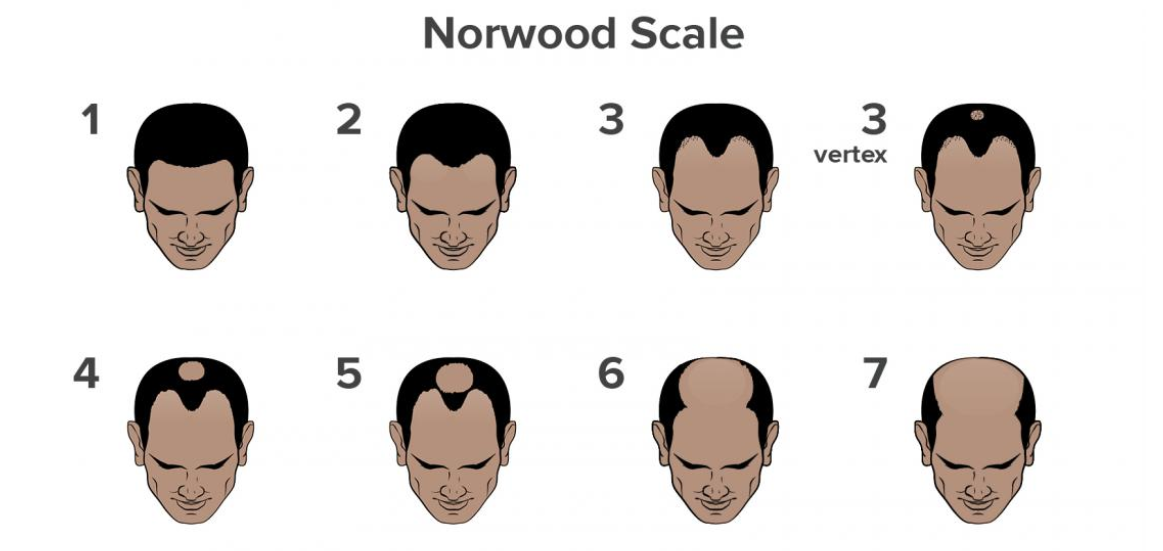
If you want to verify what a real surgeon-led consultation looks like before deciding on a clinic, the consultation at Cult Aesthetics is free and includes 45 minutes of trichoscopy, Norwood/Ludwig grading, a written treatment plan, and itemised cost in writing. Dr. Solanki personally consults with every patient and personally performs every procedure he books.
Phone / WhatsApp: +91-9990449555
Address: 67, Residency Green, 3rd Floor, Sector 46, Gurugram, Haryana 122003
Hours: Mon, Wed\u2013Sun 10:00 AM \u2013 7:00 PM; Tuesday closed
Rating: 4.8\u2605 across 536 Google reviews
About the Author
Dr. Gaurav Solanki, MDS, Oral & Maxillofacial Surgeon, ISHRS Member \u2014 Founder and lead hair transplant surgeon at Cult Aesthetics, Sector 46 Gurgaon. 12+ years of operative experience in hair restoration. 450+ documented FUE and DHI cases with a published 92\u201396% twelve-month graft survival rate. Read full bio.
Related Reading
- Hair Transplant in Gurgaon \u2014 Complete Overview
- Hair Transplant Cost in Gurgaon \u2014 Transparent Per-Graft Pricing
- Best Doctor for Hair Fall in Gurgaon \u2014 How to Choose
- Meet Dr. Gaurav Solanki \u2014 Full Surgeon Bio
Hair Restoration Resources
Surgeon-authored guides on every aspect of hair transplant decision-making in Gurgaon and Delhi.
- ➜ Hair Transplant in Gurgaon
- ➜ Hair Transplant Cost in Gurgaon 2026
- ➜ FUE vs DHI vs Sapphire — Surgeon's Guide
- ➜ PRP vs GFC vs Mesotherapy
- ➜ How to Choose a Hair Transplant Surgeon
- ➜ Hair Transplant Cost in India 2026
- ➜ FUE Hair Transplant Gurgaon
- ➜ DHI Hair Transplant Gurgaon
- ➜ GFC Hair Treatment Gurgaon
- ➜ PRP Hair Treatment Gurgaon
- ➜ Hair Fall Treatment Gurgaon
- ➜ Best Hair Transplant Clinic in Delhi
- ➜ Beard Transplant Gurgaon
- ➜ Hair Transplant in Delhi