
3000 Grafts Hair Transplant Cost in Gurgaon A Realistic 2026 Breakdown
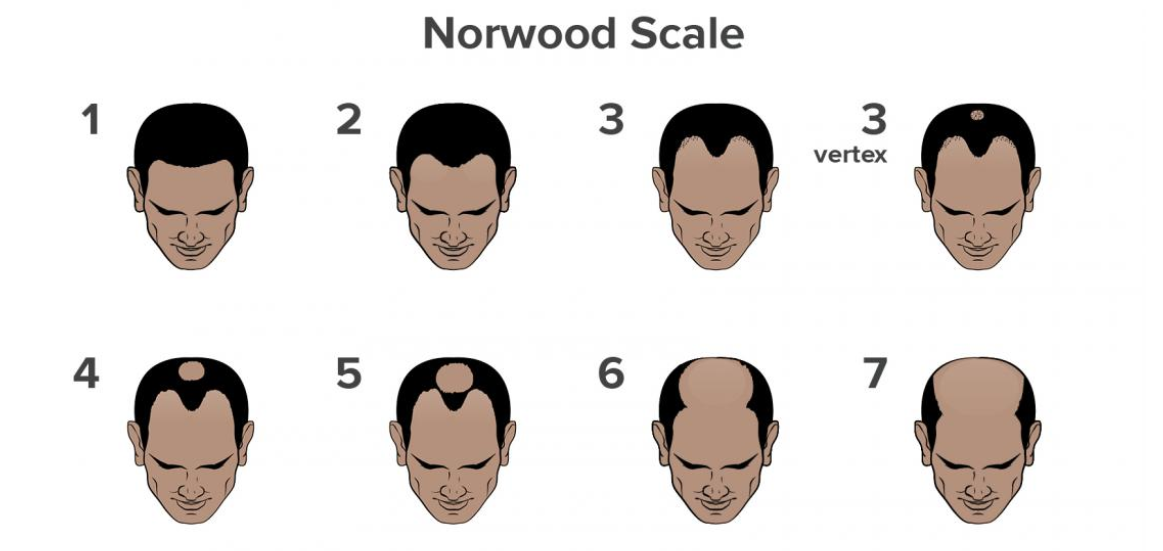
Most patients searching for “3000 grafts hair transplant cost in Gurgaon” are at Norwood Stage IV frontal hairline gone, mid-scalp thinning, but enough donor density at the back and sides to restore both zones in a single sitting. This page tells you exactly what 3,000 grafts costs at a Gurgaon clinic in 2026, what’s included in that number, and what determines whether you’re actually a 3,000-graft candidate or a different number entirely.
Headline cost what 3,000 grafts actually costs in Gurgaon
Across reputable Gurgaon hair transplant clinics in 2026, a 3,000-graft case typically falls in this range:
| Technique | Per-graft rate | Total (3,000 grafts) |
|---|---|---|
| FUT (strip method) | ₹20 – ₹35 | ₹60,000 – ₹1,05,000 |
| FUE (standard) | ₹25 – ₹50 | ₹75,000 – ₹1,50,000 |
| FUE (premium / surgeon-led) | ₹35 – ₹45 | ₹1,05,000 – ₹1,35,000 |
| DHI / Sapphire / Implanter pen | ₹40 – ₹70 | ₹1,20,000 – ₹2,10,000 |
At Cult Aesthetics, Sector 46, Gurgaon: a typical 3,000-graft FUE case is quoted at ₹1,05,000 – ₹1,35,000 all-inclusive (consultation, surgery, anaesthesia, post-op kit, four scheduled follow-ups). DHI cases run higher. See our complete cost guide for all graft counts →
What’s included in a 3,000-graft quote (and what’s not, at most clinics)
The single most expensive lesson new transplant patients learn is that “₹25 per graft” at one clinic and “₹40 per graft” at another may be the same total cost once the unbundled fees are added back. Always ask for the all-inclusive number. A reputable 3,000-graft quote should include:
- Pre-op consultation with scalp examination, donor density count, candidacy decision
- Pre-op blood work review (CBC, HbA1c, viral markers typically you bring these from a lab)
- The full surgical day local anaesthesia, extraction, slit creation, implantation
- Post-op kit antibiotics, painkillers, head support, post-op shampoo, scalp moisturizer
- Day-1 wash visit at the clinic
- Follow-up visits at week 1, month 1, month 4, and month 9 minimum
- One PRP session for donor-area healing (some clinics include this; ask)
Items that are sometimes extra and where surprise charges often come from:
- Sedation beyond local anaesthesia (if you specifically request it)
- Travel/accommodation packages for NRI patients
- Additional PRP / GFC sessions beyond the included one
- Hair-growth supplements or finasteride/minoxidil prescriptions (these are inexpensive but should be itemized)
Are you actually a 3,000-graft candidate? (Most online quote calculators get this wrong)
Two patients with the same Norwood grade can need wildly different graft counts. The variables that actually move the number:
Donor density
We measure follicular units per square centimetre at the back and sides of the scalp under magnification. Indian patients average 65–85 FU/cm². Patients on the lower end physically cannot donate 3,000 high-quality grafts without leaving a visibly thinned donor zone and an over-harvested donor is one of the few transplant complications that’s almost impossible to fully reverse. Sometimes the right answer is 2,200 grafts, not 3,000.
Recipient zone area (cm²)
Frontal hairline alone: ~30–40 cm². Hairline + mid-scalp: 60–80 cm². Crown adds another 40–60 cm². For natural-looking density you need roughly 35–45 grafts per cm² in the frontal zone, lower in the mid-scalp. Multiply it out and 3,000 grafts is right for hairline + mid-scalp on a Norwood IV patient but not enough for crown coverage on the same person. Many clinics will sell you 3,000 grafts to cover everything; the result is uniformly thin everywhere instead of dense where it counts.
Hair characteristics
Coarse, dark hair on light skin gives a denser visual result per graft than fine, light hair. A patient with thick hair may look fully restored at 2,500 grafts; a patient with fine hair may need 3,500 for the same visual outcome.
Goals and which goal you’re sacrificing
A 3,000-graft session is finite. We will sit with you and decide: hairline-first (most patients), mid-scalp-first (rare), or split. We almost never recommend covering a full balding crown with 3,000 grafts on a Norwood V patient the math doesn’t work, and the result disappoints.
For a broader explanation of how graft requirements are estimated, see the hair-transplant graft-estimation guide.
\nWhy two Gurgaon clinics can quote ₹70,000 and ₹2,00,000 for the same 3,000 grafts
The price spread is real. The difference comes from a few things:
- Who actually operates. A surgeon-led case priced at ₹40/graft and a technician-led case priced at ₹25/graft may have similar surgical-time inputs but the design and slit-making skill is different. Hairline aesthetics at month 12 reflect that.
- Single sitting vs split. 3,000 grafts is at the boundary of what’s done in one sitting. Some clinics split into two sessions to protect graft viability; some don’t and push out-of-body time past 6 hours, which hurts day-0 graft survival.
- Bio-chilled graft storage vs ambient holding. The chilled holding solution protocol used at Cult Aesthetics was developed precisely to extend safe out-of-body time on larger cases. Lower-priced clinics often skip this; the savings come out of your graft survival rate.
- OT volume per day. Some clinics run two transplant cases in parallel in the same OT to spread fixed costs. This is fine if technician staffing is doubled; it’s a graft-survival risk if it isn’t.
- Brand and location overhead. A flashy lobby in Cyber City costs money. So does a marketing budget. Both end up in your per-graft rate.
What a 3,000-graft surgery day looks like at Cult Aesthetics
- 9:00 AM Arrival, pre-op briefing. Photos, hairline marking with you in front of a mirror, anaesthesia plan reviewed.
- 9:30 AM Local anaesthesia, donor prep.
- 10:00 AM – 1:00 PM Extraction phase. 3,000 follicular units extracted with 0.8–0.9 mm punches under loupe magnification. Grafts go into chilled holding solution immediately.
- 1:00 – 1:30 PM Lunch break. You eat. Grafts continue to be sorted in chilled solution.
- 1:30 – 2:30 PM Slit creation. Dr. Gaurav personally creates recipient sites angle, depth, and orientation set here determine the final aesthetic result.
- 2:30 – 6:30 PM Implantation phase. Surgical technicians implant grafts into the pre-made slits in the order Dr. Gaurav has specified for the hairline.
- 6:30 – 7:00 PM Final dressing, post-op briefing, post-op kit handover, departure.
You do not stay overnight. You do not need a companion (though one is welcome). You should not drive yourself home.
What 3,000 grafts looks like at month 12
For a Norwood IV patient with average Indian donor density and average hair calibre, 3,000 grafts placed at the hairline and mid-scalp typically produce:
- Visible density restored to ~70–80% of native density in the front half of the scalp
- A hairline that is age-appropriate, not “celebrity low”
- No visible donor-area thinning when you wear hair at 6mm or longer
- One visible scar in FUT cases (ear-to-ear, hidden by hair); no linear scar in FUE
- Need for adjunct PRP/GFC every 9–12 months in some patients to protect non-transplanted hair
Frequently asked questions about 3,000-graft hair transplant cost
Is ₹70,000 for 3,000 grafts in Gurgaon too cheap?
It’s at the bottom edge of what’s possible without compromising something. Common compromises at that price: technician-led slit creation, ambient (not chilled) graft holding, single-day schedule with under-staffed implantation, and post-op care charged extra. This doesn’t mean a ₹70,000 quote is automatically bad but ask exactly what’s not included before assuming the number is real.
Is ₹2,00,000 for 3,000 grafts in Gurgaon too expensive?
It’s at the top edge. Whether it’s worth it depends on whether you’re paying for surgeon-led technique, premium location overhead, or aggressive marketing. Ask: who specifically does the slit creation? How many cases does the surgeon personally do per week? Can you see month-12 photos from the same surgeon? Cost should match clinical contribution.
Can the cost be split into EMI?
Yes at Cult Aesthetics we work with several no-cost EMI partners for 3, 6, and 9-month plans, subject to credit-card eligibility. Ask the front desk during your consultation.
Will I need a second 3,000-graft session later?
It depends on whether your underlying hair loss is stable. Patients with active genetic hair loss may continue to lose non-transplanted hair, which can require a smaller second session 4–7 years later. Adjunct PRP/GFC and finasteride significantly slow this. The transplanted hair itself is permanent.
Is FUT cheaper than FUE for 3,000 grafts and why don’t more people choose FUT?
FUT is typically ₹15,000–₹30,000 cheaper for 3,000 grafts. The trade-off is a linear donor scar (1–2 mm wide if well-closed) that becomes visible if you ever shave the back of your head short. For most patients FUE is worth the price difference; for some older patients, fixed long-hair wearers, or patients with low donor density FUT remains the right choice.
How many grafts will I actually need can you tell from a photo?
Photo estimates are a starting point, not a final number. WhatsApp a top-of-scalp photo to the clinic and we’ll give you a 24-hour preliminary estimate. The final graft count is set during the in-person scalp examination, where donor density is measured directly and the recipient zone is mapped in cm².
Get a real 3,000-graft quote in writing
Either send us a scalp photo on WhatsApp for a 24-hour estimate, or book a consultation in our Sector 46 clinic for a measured quote with a full candidacy assessment.
Cost ranges quoted are typical for May 2026 in Gurgaon. Final cost for your case requires an in-person scalp examination. Clinical outcomes vary.
Hair Restoration Resources
Surgeon-authored guides on every aspect of hair transplant decision-making in Gurgaon and Delhi.
- ➜ Hair Transplant in Gurgaon
- ➜ Hair Transplant Cost in Gurgaon 2026
- ➜ FUE vs DHI vs Sapphire — Surgeon's Guide
- ➜ PRP vs GFC vs Mesotherapy
- ➜ How to Choose a Hair Transplant Surgeon
- ➜ Hair Transplant Cost in India 2026
- ➜ FUE Hair Transplant Gurgaon
- ➜ DHI Hair Transplant Gurgaon
- ➜ GFC Hair Treatment Gurgaon
- ➜ PRP Hair Treatment Gurgaon
- ➜ Hair Fall Treatment Gurgaon
- ➜ Best Hair Transplant Clinic in Delhi
- ➜ Beard Transplant Gurgaon
- ➜ Hair Transplant in Delhi