
The successful completion of a hair transplant whether FUE (Follicular Unit Extraction) or DHT (Direct Hair Transplant) is often viewed by patients as the finish line. In reality, the moment Dr. Solanki places the final graft, a silent, microscopic race against time begins.
A hair transplant is a structural relocation, but its survival depends entirely on the Biological Environment of the recipient site. This is where Platelet-Rich Plasma (PRP) and Growth Factor Concentrate (GFC) transition from "optional extras" to essential "Graft Insurance."
The "Ugly Duckling" Phase: The Post-Transplant Hurdles
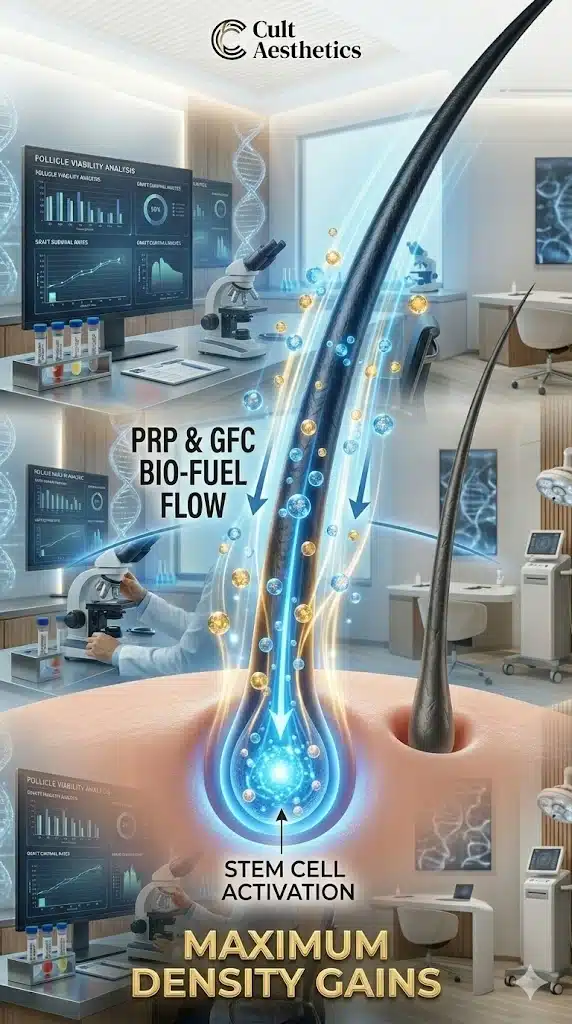
The Solution: Creating a "Conducive Biological Niche"
In regenerative medicine, we speak about the "Seed and the Soil" analogy. PRP and GFC act as the high-performance "fertilizer" that prepares the terrain.
How GFC "Reboots" the Stem Cell Niche
The "master switch" for Angiogenesis. It forces the body to build new blood vessels around grafts, ensuring oxygen delivery within hours.
Triggers cell replication and skin regeneration, ensuring tiny wounds heal with zero visible scarring.
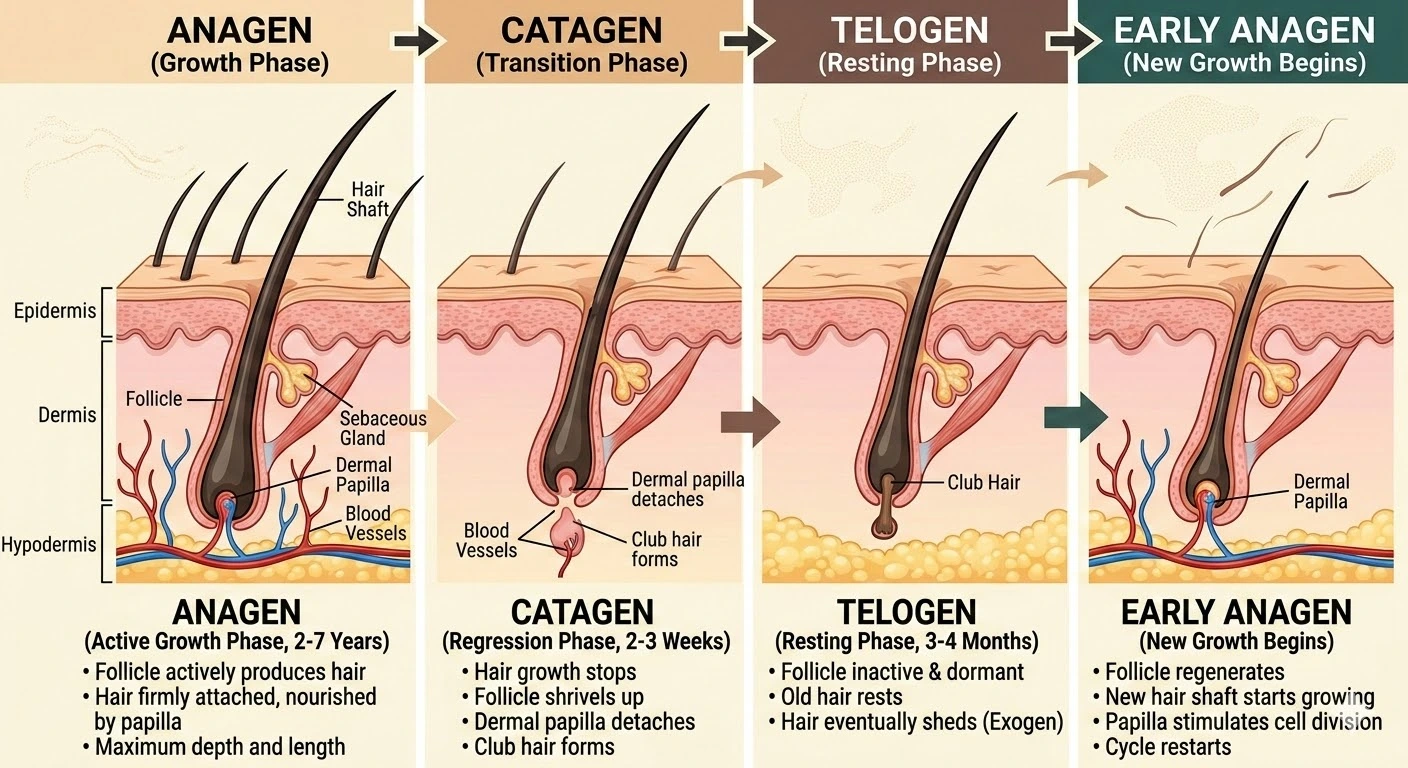
The "Anagen-prolonger." It ensures the new hair shaft grows back thicker and stays in the growth phase longer.
PRP vs. GFC: Which One for Your Transplant?
| Feature | PRP in Transplant | GFC in Transplant |
|---|---|---|
| Primary Role | General healing & inflammation control. | High-speed graft "awakening" & density. |
| Purity | Contains some WBCs (may cause swelling). | Acellular (filtered); minimal swelling. |
| Timing | Ideal during surgery for graft storage. | Ideal for months 1-6 post-op. |
The "Lifelong Care" Philosophy
- Biocellular Maintenance: Periodic "Booster" GFC sessions.
- Medical Stabilization: Managing DHT levels for non-transplanted hair.
- Scalp Hygiene: Shielding the micro-environment from pollution and stress.
Maximize Your Results Today
Combining surgical precision with GFC protocols ensures every graft thrives.
Don't just move hair grow it.
Hair Restoration Resources
Surgeon-authored guides on every aspect of hair transplant decision-making in Gurgaon and Delhi.
- ➜ Hair Transplant in Gurgaon
- ➜ Hair Transplant Cost in Gurgaon 2026
- ➜ FUE vs DHI vs Sapphire — Surgeon's Guide
- ➜ PRP vs GFC vs Mesotherapy
- ➜ How to Choose a Hair Transplant Surgeon
- ➜ Hair Transplant Cost in India 2026
- ➜ FUE Hair Transplant Gurgaon
- ➜ DHI Hair Transplant Gurgaon
- ➜ GFC Hair Treatment Gurgaon
- ➜ PRP Hair Treatment Gurgaon
- ➜ Hair Fall Treatment Gurgaon
- ➜ Best Hair Transplant Clinic in Delhi
- ➜ Beard Transplant Gurgaon
- ➜ Hair Transplant in Delhi