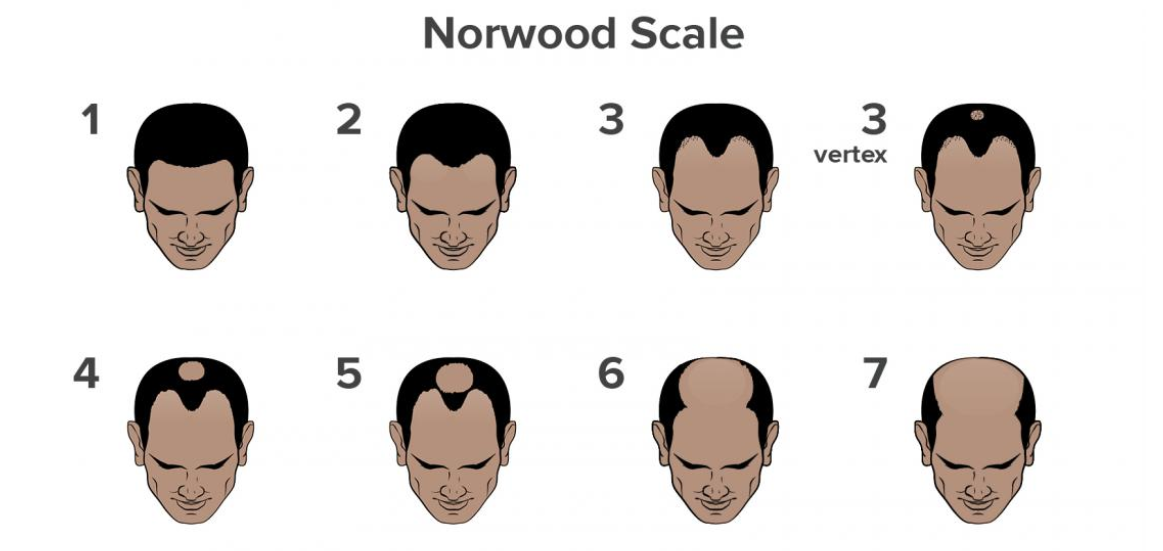

The hair transplant recovery timeline in Gurgaon is a 12 to 18 month journey, but the visible healing happens in just 10 days. This day-by-day, week-by-week, month-by-month guide tells you exactly what to expect at every stage of recovery after a hair transplant in Gurgaon performed by Dr. Gaurav Solanki at Cult Aesthetics and what each milestone means for your final result.
Hair transplant recovery timeline at a glance
- Day 1 to 3 Forehead swelling, mild discomfort, sleep with head elevated
- Day 4 to 7 Scab formation, donor area redness, gentle saline sprays
- Day 7 to 10 First wash, scabs fall off naturally
- Week 2 to 4 Shock loss begins (transplanted hairs shed this is normal)
- Month 1 to 3 Dormant phase, follicles re-entering anagen
- Month 4 to 6 First visible regrowth, 30 to 40 percent density
- Month 6 to 9 60 to 70 percent of final density visible
- Month 12 Full hairline result, 90 to 95 percent density
- Month 18 Crown grafts (last to mature) reach final density
Day 1 The first 24 hours after hair transplant
The local anaesthesia wears off about 6 hours after the procedure. Mild tightness and tenderness around the donor and recipient areas are normal. Take the prescribed paracetamol every 6 hours and the antibiotic + antihistamine combination at the timing on the printed schedule. Sleep on your back at a 45-degree angle (use 2 to 3 pillows or a recliner) this minimises forehead swelling on day 2 and 3.
Do not touch, scratch, or cover the recipient area for 24 hours. The grafts are still loose in their slits they fully anchor only at hour 72. Avoid bending, lifting anything heavier than 2 kg, and any forward head tilt. Mild oozing of clear or pinkish fluid from the donor area on the pillow is expected and harmless.
Day 2 to 3 Peak swelling and ice protocol
Forehead swelling peaks on day 2 or 3 and gravitates downward toward the eyelids and bridge of the nose by day 4. This is gravity, not infection. The Cult Aesthetics post-op kit includes a forehead ice band apply it 10 minutes on, 20 minutes off, for 4 hours during day 2. Continue head elevation while sleeping. Antihistamines (cetirizine 10 mg) are continued for 4 days to reduce swelling.
You can shower body-down (not head) on day 2 with lukewarm water. Eat normally and stay hydrated protein intake (40 to 60 g/day) supports graft healing. Avoid alcohol, smoking, salty food, and any strenuous activity. Most patients work from home from day 2 onward.
Day 4 to 7 Scab formation and the first wash
By day 4, scabs (microcrusts of dried serum) have formed around each implanted graft. The donor area looks red with pinpoint dots from the FUE punches. Spray the entire scalp with the saline mist provided every 3 hours during waking hours this softens scabs without dislodging grafts. Do not pick, scratch, or rub.
The first medicated wash happens at the clinic on day 3 (with the surgeon supervising) or at home on day 4 with the demo video sent on WhatsApp. Use the medicated shampoo (typically ketoconazole 2 percent) pour gently over the head with a mug, no direct shower spray on the recipient area for the first 14 days. Pat dry with a clean towel, never rub.
Day 7 to 10 Scabs fall off, return to social activities
Between day 7 and day 10, scabs fall off naturally during washes. The implanted hairs come along with the scabs in many cases this is expected and not a sign of graft loss. The follicle stays in place; only the hair shaft sheds. The recipient area now shows tiny red dots that will fade over 4 to 6 weeks.
By day 10, most patients are socially presentable with a cap. Outstation patients can fly home on day 8 or 9. Office return without a cap is possible from day 14 onwards if hairline scabs are fully cleared. The complete Hair Transplant Process in Gurgaon page covers what was done before this stage.
Week 2 to Week 4 Shock loss begins
This is the most psychologically difficult phase. Around week 2 to 4, almost all transplanted hairs shed sometimes dramatically. This is “telogen effluvium” the trauma of transplantation pushes the implanted follicles into a temporary resting (telogen) phase. The follicles are alive and well-anchored. They simply need to complete the resting phase before re-entering active growth.
Some patients also experience minor shock loss in the existing native hair around the transplant zone. This is also reversible and recovers by month 4 to 6. PRP or GFC sessions at week 4 and week 8 (often included in the all-inclusive package see Hair Transplant Cost in Gurgaon) reduce shock loss severity and accelerate the return to anagen.
Month 1 to Month 3 The dormant phase
Between month 1 and month 3, the scalp looks “back to baseline” the transplanted hairs are gone, the original hair pattern is back. This is the dormant phase, when follicles are in telogen. There is nothing visible happening, but the follicles are restoring their dermal papilla and bulb structure deep below the skin.
Continue minoxidil 5 percent (started from week 4) twice daily, finasteride if prescribed, and complete the second post-op consultation at month 1. Strenuous gym activity (weights, cardio) is allowed from week 3. Swimming and direct sunlight return at week 4 with sunscreen. Tight helmets and motorcycle gear: avoid for 3 weeks.
Month 4 to Month 6 First visible regrowth
This is the celebration phase. Around month 3.5 to 4, fine, baby-like hairs start emerging from each transplanted follicle. By month 5, density is around 30 percent of final result. By month 6, you have around 60 to 70 percent of final density and the hairline is clearly visible in most lighting. Hairs are still thin and may grow at slightly different rates this is normal.
The month-6 review consultation captures photos for the case archive. Browse comparable 6-month outcomes at Hair Transplant Before & After Gurgaon 800 Cases. A second optional GFC session at this stage maximises shaft thickness in the new growth.
Month 7 to Month 12 Final density and hairline maturation
Between month 7 and month 12, two things happen: existing transplanted hairs thicken to their final shaft diameter, and late-bloomer follicles (about 10 to 15 percent) finally enter anagen. By month 9, you are at 80 to 85 percent. By month 12, you are at 90 to 95 percent. The hairline matures meaning the slightly artificial “fresh-cut” line softens as native and transplanted hairs intermingle.
Crown grafts mature slowest if your transplant included crown coverage, expect month 12 to 18 to reach final density there. Many patients need only one session for full coverage; some Norwood 5 to 6 cases benefit from a second session at month 12 to 15 for maximal density.
When can I resume normal activities? Quick reference
- Driving Day 1 (passenger preferred), self-drive from day 2
- Desk work from home Day 2
- Office attendance with a cap Day 7 to 10
- Office without a cap Day 14 onwards
- Light exercise (walks) Day 5
- Strenuous gym (weights, cardio) Week 3
- Swimming Week 4
- Direct sun exposure with SPF 50 Week 2
- Helmet, motorcycle gear Week 3
- Hair colouring Month 4
- Salon haircut on transplanted area Month 1 (scissors only, no clipper closer than #4)
Frequently Asked Questions about hair transplant recovery
How much swelling should I expect after hair transplant?
Forehead swelling peaks on day 2 to 3 and looks worse than it feels. By day 4, gravity moves the swelling downward and you may notice puffiness around the eyes and bridge of the nose. By day 5 to 6, all swelling resolves. The forehead ice band (provided in your post-op kit) and the antihistamine schedule reduce severity by 50 to 60 percent.
Why are my transplanted hairs falling out at week 3?
This is shock loss a normal phase where transplanted hairs shed because the follicle has entered a temporary resting (telogen) phase from surgical trauma. The follicle itself is alive and anchored. Re-growth begins at month 3 to 4. Some native hairs around the transplant zone may also shed temporarily these also recover by month 4 to 6.
When can I sleep normally after hair transplant?
Sleep at a 45-degree angle (using 2 to 3 pillows or a recliner) for the first 5 nights to minimise forehead swelling. From night 6, you can sleep on your back flat. From day 14, side and stomach sleeping are safe by then grafts are fully anchored and scabs have fallen off. Most patients return to their normal sleep position by week 3.
Can I sweat or work out after hair transplant?
Light walks: from day 5. Sweating during exercise is safe from week 3 onwards because by then grafts are fully anchored and the recipient area is healed. Until week 3, heavy sweating can dislodge grafts and increase infection risk in the donor area. Yoga, stretching, and light cardio are safe from week 2.
When will I see final hair transplant results?
First visible regrowth at month 3 to 4. 60 to 70 percent of final density at month 6. 90 to 95 percent at month 12. Crown grafts (if included) reach full density at month 18. The hairline matures and softens as native and transplanted hairs intermingle. Browse 6-month, 9-month, 12-month outcome comparisons at the 800 Cases archive.
Related guides at Cult Aesthetics
- Hair Transplant in Gurgaon main service page, Dr. Gaurav Solanki. Cult Aesthetics confirms 800+ documented hair transplant cases.
- Hair Transplant Process Step-by-Step what happens before recovery starts
- Hair Transplant Before & After Gurgaon 800 Cases visual case archive at every recovery stage
- Hair Transplant Cost in Gurgaon what’s included in the all-inclusive recovery package
- FUE Hair Transplant in Gurgaon technique-specific recovery notes
- PRP Hair Treatment in Gurgaon accelerates recovery and reduces shock loss
- GFC Hair Treatment in Gurgaon combination therapy for graft growth boost
Hair Restoration Resources
Surgeon-authored guides on every aspect of hair transplant decision-making in Gurgaon and Delhi.
- ➜ Hair Transplant in Gurgaon
- ➜ Hair Transplant Cost in Gurgaon 2026
- ➜ FUE vs DHI vs Sapphire — Surgeon's Guide
- ➜ PRP vs GFC vs Mesotherapy
- ➜ How to Choose a Hair Transplant Surgeon
- ➜ Hair Transplant Cost in India 2026
- ➜ FUE Hair Transplant Gurgaon
- ➜ DHI Hair Transplant Gurgaon
- ➜ GFC Hair Treatment Gurgaon
- ➜ PRP Hair Treatment Gurgaon
- ➜ Hair Fall Treatment Gurgaon
- ➜ Best Hair Transplant Clinic in Delhi
- ➜ Beard Transplant Gurgaon
- ➜ Hair Transplant in Delhi