
Quick Answer: Hair thinning is the earliest stage of androgenetic alopecia or chronic telogen effluvium when hair shafts become finer but you haven’t yet lost visible density. This is the highest-ROI moment to intervene. At Cult Aesthetics in Sector 46, Gurgaon, Dr. Gaurav Solanki uses trichoscopy to detect miniaturisation patterns invisible to the naked eye, then prescribes a stage-matched protocol: topical/oral medical therapy, GFC at ₹8,000–12,000/session, PRP at ₹6,000–9,000/session, or combined treatment plans. Acting now often eliminates the need for surgery later. Call +91-9990449555.
Why Early Hair Thinning Is the Critical Window
Once a follicle has miniaturised past the point of producing visible hair, no medical therapy will bring it back only surgical transplantation can restore that follicle’s function. This is why early intervention matters more in hair restoration than in almost any other aesthetic field. Catching thinning at the miniaturisation stage when follicles are still producing hair but with reduced diameter is the difference between non-surgical maintenance for life and eventual hair transplant.
The challenge: visible thinning trails the actual biology by 2–4 years. By the time a patient notices visible density loss in the mirror, follicular miniaturisation has already been underway. Trichoscopy high-magnification scalp imaging reveals miniaturisation patterns 2–3 years before they’re visible to the naked eye. Every Cult Aesthetics consultation begins with trichoscopy.
Early Signs of Hair Thinning What to Watch For
- Widening parting: Especially noticeable when hair is wet and parted. Compare with photos from 1–2 years ago.
- Visible scalp under bright light: If your scalp now shows through at the crown or hairline under direct overhead light, miniaturisation is already underway.
- Finer hair texture overall: Hair that no longer holds styling, lies flatter, or feels “thinner” between fingers.
- More hairs in shower drain or pillow: Losing 50–100 hairs daily is normal. Consistently more than 100 for over a month warrants evaluation.
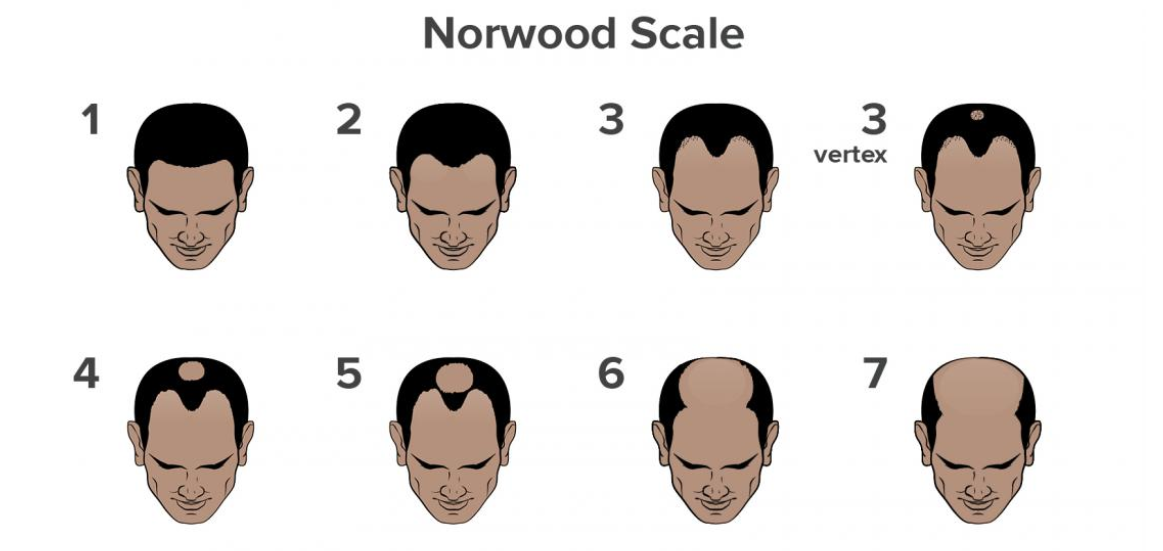
- Receding temples (men): Even mild M-shape recession is the start of androgenetic alopecia. Best treated at this stage, not later.
- Family history: If a parent or sibling went visibly bald, you have elevated risk and should monitor proactively from your 20s.
What Causes Hair Thinning?
The two dominant causes are androgenetic alopecia (genetic, progressive, requires lifelong management) and chronic telogen effluvium (sustained shedding from a maintained trigger such as low ferritin, thyroid dysfunction, nutritional deficiency, or persistent stress). Distinguishing the two is the entire purpose of the diagnostic workup. Treatment plans diverge completely.
Less common but important: traction alopecia (tight hairstyles), drug-induced shedding (certain blood pressure medications, statins, antidepressants), and autoimmune conditions (alopecia areata, lichen planopilaris). A complete history-taking covers all of these.
Treatment Protocols for Hair Thinning at Cult Aesthetics
The PRP + GFC Combination Protocol (Most Common)
For documented early-stage androgenetic alopecia or chronic telogen effluvium with confirmed miniaturisation but no significant visible density loss, Dr. Solanki most often prescribes a combined PRP + GFC course. Two reasons: (1) the protocols are complementary at the biological level PRP’s broader factor mix kickstarts response, GFC’s pure concentration sustains it; (2) clinical outcomes in our 450+ case data set are visibly better than either alone.
Standard course: 6 sessions over 6 months alternating PRP and GFC, followed by maintenance every 4–6 months. Cost: ₹45,000–65,000 for the primary course.
Mesotherapy as Adjunct
Vitamin and amino-acid mesotherapy injections support follicle health alongside PRP/GFC. Particularly valuable when nutritional deficiencies are partial but not severe enough for oral correction alone. Added to the same session at modest extra cost (₹2,000–3,000 per session).
Topical Minoxidil
For male pattern thinning: 5% strength applied twice daily. For female pattern thinning: 2% strength. Continues alongside the injectable course and ongoing for life if androgenetic alopecia is confirmed. Cost: ₹400–800/month.
Oral Finasteride (Men Only)
For men with confirmed androgenetic thinning, finasteride 1mg daily blocks DHT and prevents further follicular miniaturisation. Particularly effective at the early thinning stage. Cost: ₹400–700/month. Dr. Solanki reviews safety profile and discusses considerations.
Why Surgery Isn’t the First Answer for Thinning
Hair transplant is the right answer for restored density once follicles have miniaturised past the point of medical recovery. At the early thinning stage, your existing follicles are still capable of recovery with proper stimulation. Operating prematurely sacrifices donor area you may need later, and uses surgical risk for a problem still solvable medically. Dr. Solanki defaults to medical therapy first.
The Cult Aesthetics Hair Thinning Cost Plan (2026)
| Component | Cost | Frequency |
|---|---|---|
| Initial consultation + trichoscopy + blood review | FREE | One-time |
| PRP session | ₹6,000–9,000 | 3 sessions in primary course |
| GFC session | ₹8,000–12,000 | 3 sessions in primary course |
| Mesotherapy add-on | ₹2,000–3,000 | Per session, optional |
| Topical Minoxidil 5% or 2% | ₹400–800/month | Ongoing |
| Oral Finasteride 1mg (men) | ₹400–700/month | Ongoing if AGA confirmed |
| Maintenance sessions (post primary course) | ₹7,000–10,000/session | Every 4–6 months |
Typical first-year all-in cost: ₹55,000–80,000 for a documented case (primary course + medical therapy + 1 maintenance). Compare to the ₹70,000–1,10,000 cost of hair transplant if thinning progresses unchecked. Acting at the thinning stage saves money over the long horizon.
What Patients Say About Treatment at Cult Aesthetics
Verified Google reviews from patients who completed hair fall and hair restoration treatment with Dr. Gaurav Solanki. Cult Aesthetics holds a 4.8★ rating across 536 Google reviews.
“I was nervous before my hair transplant, but Dr Gaurav Solanki and the team made me feel comfortable throughout the journey. The procedure was painless, recovery was smooth and the results are outstanding.”
★★★★★ Divyansh Sharma, verified Google review
“Have got hair fall management with Cult Aesthetics and got really good results. Took GFC/PRP sessions on recommendation of Dr Gaurav and got amazing results in 3 months only. Now I am taking maintenance sessions from the clinic.”
★★★★★ Sneha Slathia, verified Google review
“I spent a long time researching before choosing this clinic, and my experience so far has been very positive. The diagnosis was thorough and the treatment plan made sense.”
★★★★★ Shahrukh Ahmed, verified Google review
Read all 536 reviews on Google Maps →
Frequently Asked Questions Hair Thinning Treatment in Gurgaon
How do I know if I have hair thinning vs normal shedding?
Normal: 50–100 hairs lost daily, stable hair density year-over-year, consistent shaft thickness. Thinning: more than 100 hairs daily for 4+ weeks, visibly widening parting, scalp showing through hair under bright light, finer hair texture compared to 1–2 years ago. Trichoscopy can confirm miniaturisation that’s not yet visible to the naked eye.
Can hair thinning be stopped?
Yes in most cases. Early-stage thinning has the highest treatment response of any hair loss stage. The combination of PRP/GFC injections, minoxidil, and (for men) finasteride arrests progression in 85–90% of documented androgenetic alopecia cases. Telogen effluvium reverses fully once the underlying trigger is addressed.
Will GFC or PRP make my thinning hair thicker?
Yes, in most documented cases. GFC and PRP stimulate miniaturised follicles to produce thicker hair shafts. Measurable improvements in hair shaft diameter and follicular density are visible by session 4 on trichoscopy and noticeable to the patient by session 5–6.
How long does the primary thinning treatment course take?
6 sessions over 6 months for the primary course. Most patients then move to maintenance every 4–6 months. Medical therapy (minoxidil, finasteride if applicable) runs continuously for as long as androgenetic alopecia is being managed.
Is hair thinning treatment worth the cost?
For documented early thinning, yes both in absolute outcome and in lifetime cost. A ₹55,000–80,000 first-year investment in PRP/GFC + medical therapy delays or eliminates the need for a ₹70,000–1,10,000+ hair transplant later. The earlier you intervene, the better the cost-to-result ratio.
Can hair thinning return after treatment stops?
Androgenetic alopecia requires lifelong management stopping treatment generally returns thinning to its baseline progression within 6–12 months. Chronic telogen effluvium typically doesn’t return once the underlying cause is fixed. Dr. Solanki structures plans around realistic long-horizon maintenance, not one-off interventions.
Book Your Trichoscopy + Consultation
The thinning phase is when intervention matters most. Dr. Gaurav Solanki’s free 45-minute consultation includes trichoscopy that detects miniaturisation 2–3 years before it’s visible and a written plan tailored to your specific findings.
Phone / WhatsApp: +91-9990449555
Address: 67, Residency Green, 3rd Floor, Sector 46, Gurugram, Haryana 122003
Hours: Mon, Wed–Sun 10:00 AM – 7:00 PM; Tuesday closed
Related Pages
- Hair Fall Treatment in Gurgaon Overview
- Hair Fall Treatment for Men
- Hair Fall Treatment for Women
- GFC Hair Treatment
- PRP Hair Treatment
- Hair Transplant in Gurgaon
What Our Patients Say
Real patient experiences from Google
Main Ghaziabad se hoon Dr Gaurav Solanki nai mera hair transplant kiya aur bohat acha result mila hai mujhe, unka clinic Cult Aesthetics best hair transplant clinic hai. Ab main apne baalon ke liye hair fall management le raha hoon PRP, GFC le raha hoon.
View on GoogleGot amazing results with hair transplant with Dr Gaurav Solanki best hair transplant surgeon in Gurgaon. Existing hair have become better because of hair fall management with PRP and GFC therapy.
View on GoogleGot superb results for my hair transplant and hair fall management PRP, GFC with Dr Gaurav Solanki at Cult Aesthetics Gurgaon.
View on GoogleHair Restoration Resources
Surgeon-authored guides on every aspect of hair transplant decision-making in Gurgaon and Delhi.
- ➜ Hair Transplant in Gurgaon
- ➜ Hair Transplant Cost in Gurgaon 2026
- ➜ FUE vs DHI vs Sapphire — Surgeon's Guide
- ➜ PRP vs GFC vs Mesotherapy
- ➜ How to Choose a Hair Transplant Surgeon
- ➜ Hair Transplant Cost in India 2026
- ➜ FUE Hair Transplant Gurgaon
- ➜ DHI Hair Transplant Gurgaon
- ➜ GFC Hair Treatment Gurgaon
- ➜ PRP Hair Treatment Gurgaon
- ➜ Hair Fall Treatment Gurgaon
- ➜ Best Hair Transplant Clinic in Delhi
- ➜ Beard Transplant Gurgaon
- ➜ Hair Transplant in Delhi