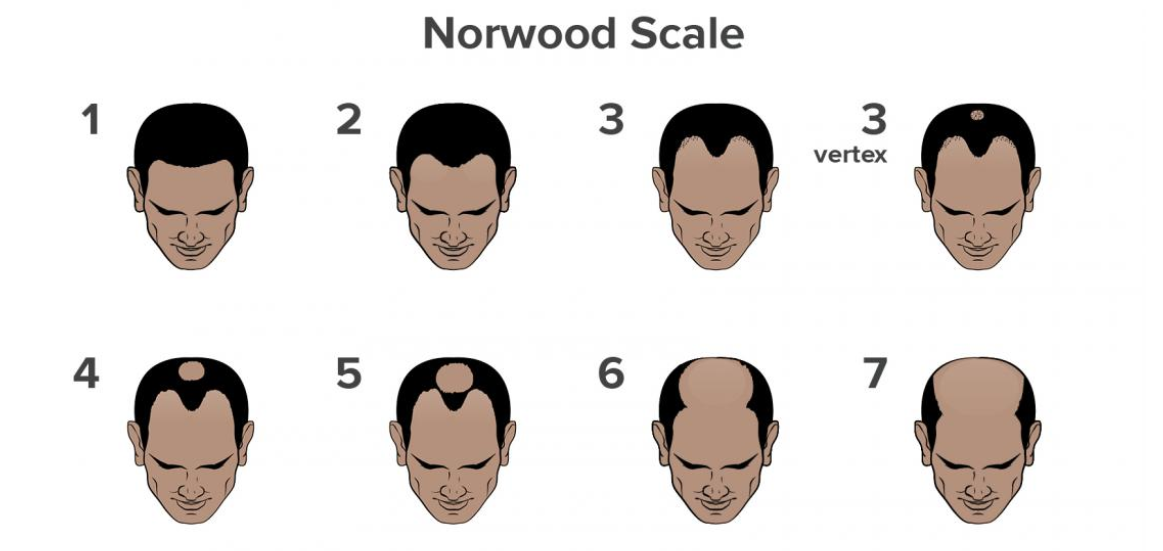

Finasteride remains the most effective medicine available for male pattern hair loss — and the most misunderstood. In this honest guide, Dr. Gaurav Solanki of Cult Aesthetics, Sector 46 Gurgaon, explains how oral and topical finasteride compare, what results to genuinely expect, and a frank account of side effects without scare-mongering or salesmanship.
How Finasteride Works
Male pattern baldness is driven by dihydrotestosterone (DHT), a by-product of testosterone that progressively shrinks genetically sensitive follicles on the top of the scalp. Finasteride blocks the enzyme 5-alpha-reductase, cutting scalp DHT by around 60 to 70 per cent. With the hormonal assault reduced, miniaturising follicles stabilise and many recover calibre. Large long-term studies show roughly nine in ten men stop losing further hair on finasteride, and about two-thirds see measurable regrowth — numbers no other oral medication matches.
Oral vs Topical Finasteride: What the Evidence Says
Oral finasteride, 1 mg daily, is the proven standard with decades of data behind it. Topical finasteride, applied as a spray or solution, was developed to deliver the drug to the scalp while lowering blood levels of the medicine. Current evidence suggests well-formulated topical finasteride reduces scalp DHT comparably to the tablet while producing substantially lower systemic drug levels — making it a reasonable option for men who experienced or fear systemic side effects. The trade-offs: topical results depend heavily on formulation quality, daily application discipline, and it costs more. Dr. Solanki prescribes both, matched to the individual patient rather than a blanket policy.
The Honest Side-Effect Discussion
Sexual side effects — reduced libido, erectile difficulty, reduced ejaculate — occur in roughly 2 to 4 per cent of men on oral finasteride in controlled trials, only marginally above placebo rates, and resolve in most men on stopping the drug. A small number report persistent symptoms after discontinuation; this remains medically debated, but we mention it because you deserve the full picture. Mood changes are rare but reported. What we refuse to do is either dismiss side effects as myth or amplify them into panic: the realistic position is that most men tolerate finasteride uneventfully, a small minority do not, and any new symptom should be discussed with your doctor promptly — not managed by quietly quitting and losing your hair.
What Results to Expect, and When
Finasteride is slow medicine. Shedding stabilises over the first three to six months — some men notice a temporary shed early on, which paradoxically signals follicles resetting. Visible thickening, when it occurs, shows between months six and twelve, strongest at the crown and mid-scalp, weaker at the temples. Standardised photographs at baseline and follow-up are how we judge response at Cult Aesthetics; mirror impressions deceive in both directions. Crucially, benefits persist only while you take it — stopping returns you to your genetic course within a year.
Finasteride Around a Hair Transplant
Finasteride and transplantation are partners, not rivals. A transplant relocates permanent hair; finasteride protects the native hair around it. Patients who combine both keep denser, more uniform coverage for years longer than surgery alone. Dr. Solanki typically recommends starting medical therapy before surgery where appropriate and continuing after, with the regimen — oral, topical, or combined with minoxidil — tailored at review visits.
Related Resources
- How Effective Is Minoxidil?
- The A–Z of Hair Loss Treatments for Men
- Balding and Testosterone: The Connection
- Hair Fall Treatment in Gurgaon
- Online Consultation
Frequently Asked Questions
Does finasteride really work for hair loss?
Yes. Around 90 per cent of men stop further loss and about two-thirds see regrowth, making it the most effective oral medication for male pattern baldness.
Is topical finasteride as effective as the tablet?
Good formulations appear to lower scalp DHT comparably with much lower drug levels in the blood, which may reduce systemic side effects. Long-term data is still smaller than for oral finasteride.
What are the side effects of finasteride?
Sexual side effects occur in roughly 2 to 4 per cent of users and usually resolve on stopping. Rarely, symptoms persist after discontinuation. Most men tolerate the medicine without problems.
How long before finasteride shows results?
Loss stabilises within three to six months and visible improvement, where it occurs, appears between six and twelve months. It must be continued to maintain benefit.
Should I take finasteride after a hair transplant?
In most cases yes. It protects non-transplanted native hair from continuing loss, keeping the overall result dense for longer.
Want a prescription decision made on evidence, not fear? Book an online consultation with Dr. Gaurav Solanki at Cult Aesthetics, Sector 46 Gurgaon, or call +91-9990449555. Every case is assessed personally by the surgeon — no counsellors, no sales pressure.
Hair Restoration Resources
Surgeon-authored guides on every aspect of hair transplant decision-making in Gurgaon and Delhi.
- ➜ Hair Transplant in Gurgaon
- ➜ Hair Transplant Cost in Gurgaon 2026
- ➜ FUE vs DHI vs Sapphire — Surgeon's Guide
- ➜ PRP vs GFC vs Mesotherapy
- ➜ How to Choose a Hair Transplant Surgeon
- ➜ Hair Transplant Cost in India 2026
- ➜ FUE Hair Transplant Gurgaon
- ➜ DHI Hair Transplant Gurgaon
- ➜ GFC Hair Treatment Gurgaon
- ➜ PRP Hair Treatment Gurgaon
- ➜ Hair Fall Treatment Gurgaon
- ➜ Best Hair Transplant Clinic in Delhi
- ➜ Beard Transplant Gurgaon
- ➜ Hair Transplant in Delhi