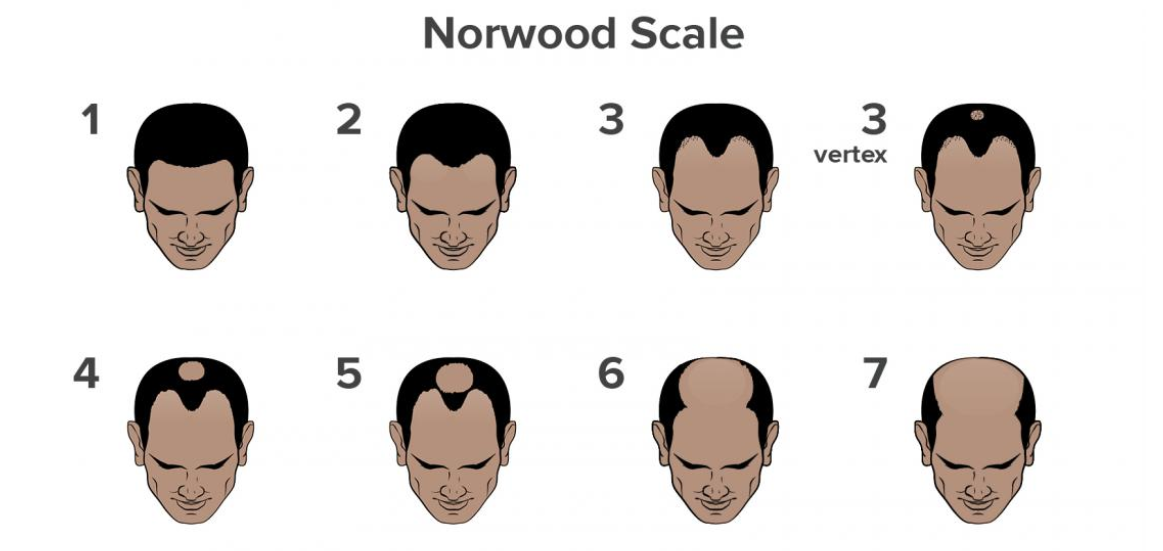

Hair transplant density planning — deciding how many grafts per square centimetre go where — is the single biggest determinant of whether your result looks full or see-through. At Cult Aesthetics in Sector 46 Gurgaon, Dr. Gaurav Solanki plans density zone by zone on measured scalp area, and shows patients the arithmetic before surgery rather than quoting a round number over the phone.
What Grafts per cm² Actually Means
Natural scalp carries roughly 80 to 100 follicular units per square centimetre, but the eye perceives “full” at about half that, because hair layers over hair. A follicular unit (graft) contains one to four hairs, so 40 grafts per square centimetre may deliver 80 to 100 actual hairs in that space. When a clinic quotes you 3,000 grafts, the meaningful questions are: spread over how many square centimetres, at what density per zone, and with what mix of single and multi-hair grafts? Without those three answers, a graft number is marketing, not planning.
Zone-by-Zone Density: Where Grafts Earn Their Keep
Good planning is deliberately uneven. The frontal hairline edge takes fine single-hair grafts at modest density for softness, backed immediately by the densest packing of the whole scalp — 40 to 50 grafts per square centimetre in the frontal tuft, where every photograph and every conversation looks. The mid-scalp runs slightly lighter at 30 to 40, and the crown lighter still at 25 to 35, because its spiral pattern and lower visibility tolerate it. This gradient mirrors how natural hair distributes and stretches a finite donor supply where it matters most.
The Donor Budget: Why You Cannot Have Maximum Density Everywhere
A lifetime donor supply of 5,000 to 7,000 grafts has to serve your whole head for your whole life. Packing 50 grafts per square centimetre across a large bald area would exhaust the donor long before the area was covered — and leave nothing for future loss. Density planning is therefore triage: Dr. Solanki measures your bald area, measures your donor capacity, and allocates grafts so the visible zones read as full while the reserve stays protected. Sometimes that means advising a slightly higher hairline or a staged second sitting; you will hear that honestly rather than discover it later.
For a fuller explanation of donor supply, preservation and long-term planning limits, see the donor-area management guide.
\nFactors That Change the Density You Need
Two patients with identical bald areas can need very different graft counts. Thick-calibre hair covers more scalp per hair; curly or wavy hair adds volume; low contrast between hair and skin colour — dark hair on dark skin, grey on fair — hides scalp and lets lower densities look fuller. Average hairs per graft matters too: a donor averaging 2.5 hairs per graft delivers 25 per cent more coverage than one averaging 2.0 from the same graft count. These variables are measured at consultation, which is why honest quotes only follow examination.
Density and Graft Survival: More Is Not Always Better
Packing grafts beyond what the scalp’s blood supply can nourish lowers survival — dense packing done recklessly means paying for grafts that die. The skill lies in achieving high visual density at a packing level your tissue can support, with fine instruments, minimal trauma and proper graft handling. That balance of ambition and restraint is precisely what you should interrogate any clinic about before booking.
Related Resources
- How Many Grafts Do I Need?
- Hair Graft Concepts Explained
- Hair Transplant Cost in Gurgaon
- Hair Transplant Before & After Results
- Online Consultation
Frequently Asked Questions
What density is used in a hair transplant?
Typically 40 to 50 grafts per square centimetre in the frontal zone, 30 to 40 in the mid-scalp and 25 to 35 at the crown — a deliberate gradient that mirrors natural distribution.
How many grafts per cm² look natural?
Around 35 to 45 grafts per square centimetre reads as visually full for most hair types, since the eye perceives fullness at roughly half of natural follicular density.
Why not transplant at full natural density everywhere?
Donor supply is finite and scalp blood flow limits safe packing. Excessive density wastes grafts through poor survival and empties the reserve needed for future loss.
Does hair thickness affect how many grafts I need?
Significantly. Thick, curly or low-contrast hair covers more scalp per graft, so coarser-haired patients often need fewer grafts for the same visual fullness.
What questions should I ask about a graft quote?
Ask the area in square centimetres, the planned density per zone, and the expected hairs per graft. A bare graft number without these is not a plan.
Want your density plan worked out on real measurements? Book an online consultation with Dr. Gaurav Solanki at Cult Aesthetics, Sector 46 Gurgaon, or call +91-9990449555. Every case is assessed personally by the surgeon — no counsellors, no sales pressure.
Hair Restoration Resources
Surgeon-authored guides on every aspect of hair transplant decision-making in Gurgaon and Delhi.
- ➜ Hair Transplant in Gurgaon
- ➜ Hair Transplant Cost in Gurgaon 2026
- ➜ FUE vs DHI vs Sapphire — Surgeon's Guide
- ➜ PRP vs GFC vs Mesotherapy
- ➜ How to Choose a Hair Transplant Surgeon
- ➜ Hair Transplant Cost in India 2026
- ➜ FUE Hair Transplant Gurgaon
- ➜ DHI Hair Transplant Gurgaon
- ➜ GFC Hair Treatment Gurgaon
- ➜ PRP Hair Treatment Gurgaon
- ➜ Hair Fall Treatment Gurgaon
- ➜ Best Hair Transplant Clinic in Delhi
- ➜ Beard Transplant Gurgaon
- ➜ Hair Transplant in Delhi