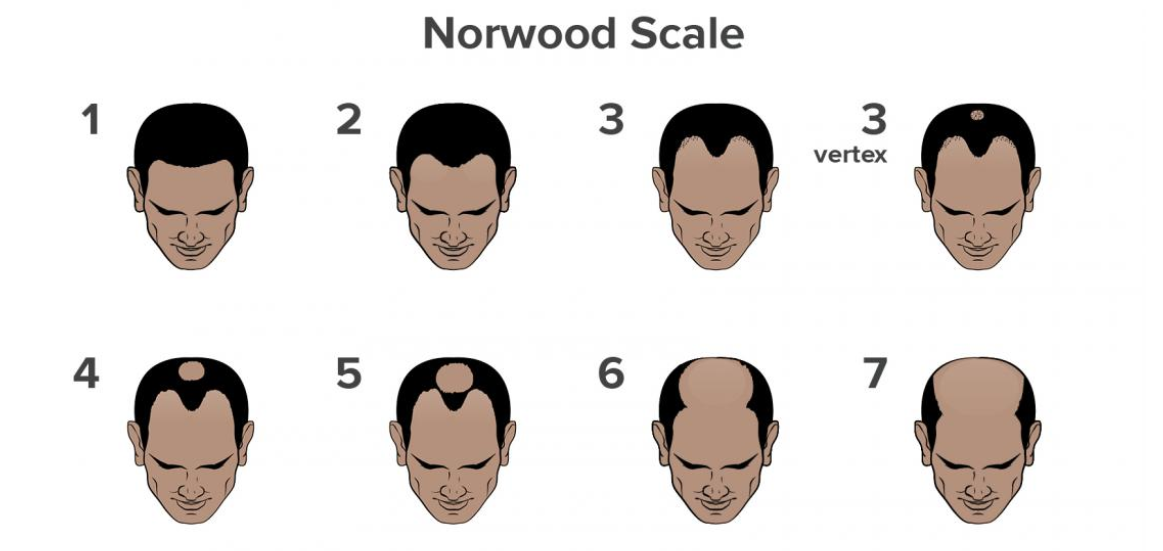

Your donor area — the permanent band of hair at the back and sides of the scalp — is a strictly finite lifetime bank, and how it is managed decides every hair transplant you will ever be able to have. At Cult Aesthetics, Sector 46 Gurgaon, Dr. Gaurav Solanki treats donor preservation as seriously as the visible result, because a great hairline funded by a ruined donor is a bad trade.
Why the Donor Area Is Called a Lifetime Hair Bank
The hair at the occipital and parietal scalp is genetically resistant to DHT, which is why it survives even in grade 7 baldness and why transplanted grafts from this zone grow for life. But the bank holds a fixed balance — typically 5,000 to 7,000 safely extractable grafts across a lifetime. Every graft removed is gone from the donor forever; nothing regrows in its place. Spend the balance wisely and it funds a full restoration plus future touch-ups. Spend it recklessly and you are left with visible thinning at the back and no currency for the front.
Overharvesting: The Damage That Cannot Be Undone
The most common disaster we see in repair patients is an overharvested donor — too many grafts pulled in one ambitious session, or extractions concentrated in a narrow strip instead of distributed evenly. The result is a moth-eaten, see-through donor zone, visible scarring dots, and sometimes shock loss of surrounding hair. Because donor hair cannot be replaced, this damage is largely permanent; repair options like beard-graft camouflage or scalp micropigmentation only soften it. This is why “maximum grafts in one sitting” advertising should alarm you, not attract you.
How a Careful Surgeon Protects Your Donor
At Cult Aesthetics, donor management follows fixed principles: extraction stays within the safe zone, away from areas that may thin with age; punches are small-calibre to minimise scarring; extractions are spread evenly across the whole donor so density drops uniformly and invisibly; and no more than roughly one in three to one in four units is taken from any region. Dr. Solanki maps every extraction zone himself and directly supervises his trained team throughout, and stops at the number the donor can safely give — even when the bald area could absorb more — staging the rest into a later sitting.
Planning Withdrawals Across a Lifetime
Sensible donor strategy assumes your baldness will progress. A 30-year-old at grade 3 may need a second or third procedure by 50, so the first surgery should leave a healthy reserve, and medical therapy should protect native hair to reduce future withdrawals. Where scalp supply is tight, beard and body hair can extend the bank by one to two thousand grafts in suitable patients. Before any surgery here, you will see the whole-life math: what you need now, what may come later, and what remains in reserve after each step.
For a separate explanation of how a finite donor supply is distributed across treatment areas, see the hair-transplant density-planning guide.
\nAlready Have a Depleted Donor? Repair Options
If a previous clinic has thinned or scarred your donor, options still exist: redistributing remaining grafts strategically, supplementing from beard, camouflaging scars with micropigmentation, and stabilising everything medically. Honest assessment comes first — we will tell you plainly what is recoverable and what is not. Our hair transplant repair resource below covers documented corrective cases.
Related Resources
- Hair Transplant Repair in India
- How Many Grafts Do I Need?
- Hair Transplant Scarring Explained
- Hair Transplant in Gurgaon
- Online Consultation
Frequently Asked Questions
Does donor area hair grow back after a hair transplant?
No. Extracted follicular units are gone permanently. The donor looks normal after a well-planned FUE because extractions are spread thinly, but total density is reduced with every graft taken.
How many grafts can be safely taken from the donor area?
Most patients have 5,000 to 7,000 safely extractable grafts in a lifetime, with no more than roughly 2,500 to 3,500 advisable in a single sitting depending on donor density.
What does an overharvested donor area look like?
Patchy, see-through hair at the back of the head, visible white dot scars, and uneven density. The damage is largely permanent, which is why prevention matters.
Can beard or body hair expand my donor supply?
Yes, in suitable patients beard hair can add 1,000 to 2,000 grafts, typically used for crown coverage or to spare the scalp donor.
Can a damaged donor area be repaired?
Partially. Scar camouflage, beard-graft supplementation and scalp micropigmentation can improve appearance, but lost donor capacity cannot be restored.
Want your donor capacity assessed before anyone touches it? Book an online consultation with Dr. Gaurav Solanki at Cult Aesthetics, Sector 46 Gurgaon, or call +91-9990449555. Every case is assessed personally by the surgeon — no counsellors, no sales pressure.
Hair Restoration Resources
Surgeon-authored guides on every aspect of hair transplant decision-making in Gurgaon and Delhi.
- ➜ Hair Transplant in Gurgaon
- ➜ Hair Transplant Cost in Gurgaon 2026
- ➜ FUE vs DHI vs Sapphire — Surgeon's Guide
- ➜ PRP vs GFC vs Mesotherapy
- ➜ How to Choose a Hair Transplant Surgeon
- ➜ Hair Transplant Cost in India 2026
- ➜ FUE Hair Transplant Gurgaon
- ➜ DHI Hair Transplant Gurgaon
- ➜ GFC Hair Treatment Gurgaon
- ➜ PRP Hair Treatment Gurgaon
- ➜ Hair Fall Treatment Gurgaon
- ➜ Best Hair Transplant Clinic in Delhi
- ➜ Beard Transplant Gurgaon
- ➜ Hair Transplant in Delhi