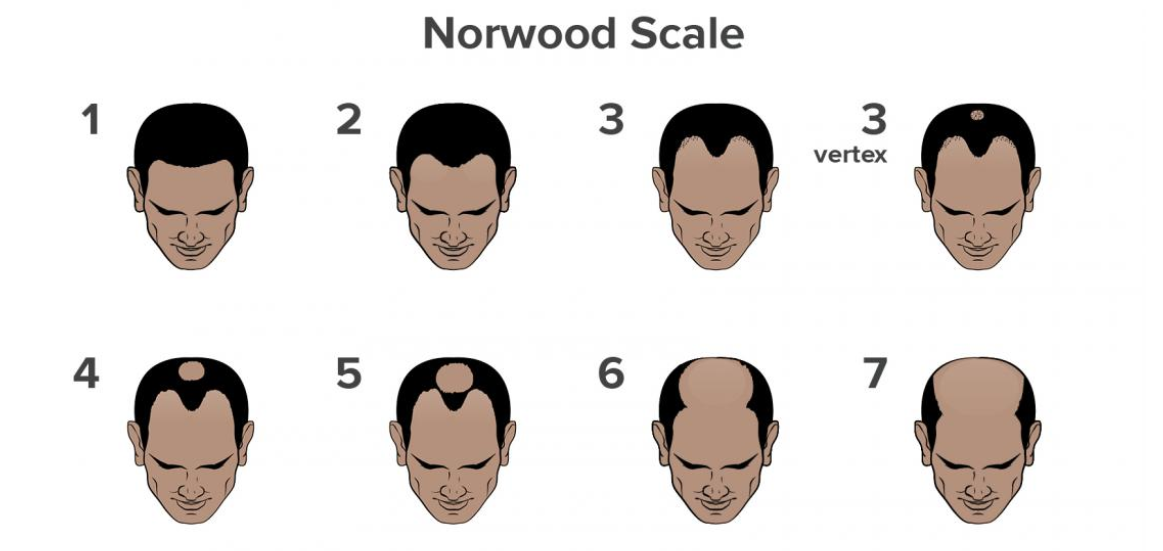

Looking for a hair transplant in Mumbai that actually delivers natural-looking results twelve months later not just a polished consultation room? You are in the right place. Cult Aesthetics is a surgeon-led hair restoration clinic based in Sector 46, Gurugram, and a meaningful share of our patients fly in from Mumbai. This page explains exactly why that happens, what it costs, what to look for in any Mumbai clinic before you book, and how the Cult Aesthetics protocol compares.
Mumbai has plenty of hair transplant clinics. The honest reality: the city has produced excellent surgeons and also a tier of high-volume corporate chains where junior technicians do most of the actual extraction and implantation. Some Mumbai patients are perfectly served by a local clinic. Others fly to Gurugram for a surgeon-led protocol they could not find at home for the same price. We help you decide which group you fall into.
Why Mumbai patients fly to Gurgaon for a hair transplant
Mumbai is a city of premium clinics with premium pricing. A high-quality FUE protocol at a reputable Bandra or Andheri clinic typically lands at ₹85 to ₹140 per graft. At Cult Aesthetics in Gurugram, FUE is ₹60 to ₹90 per graft (DHI ₹75 to ₹120), and Dr. Gaurav Solanki plans every case, performs graft extraction, designs and marks the hairline, and makes recipient-site slits using a sapphire blade. For a 2,500-graft FUE case, that is a difference of roughly ₹62,500 to ₹1,25,000 more than enough to cover return flights and three nights at a Gurgaon hotel.
But the cost is only half of the story. The bigger reason patients travel is what we call the surgeon-touch problem. In high-volume Mumbai chains, a celebrity surgeon is often only present for the consultation and the hairline design. Junior team members handle the extraction and implantation across multiple parallel patients. We do the opposite. Dr. Gaurav Solanki personally performs graft extraction, designs and marks the hairline, and makes recipient-site slits using a sapphire blade for every Mumbai patient who chooses Cult Aesthetics, with technicians performing forceps-based no-touch implantation, on a single-case-per-day schedule. This is not marketing language it is the operational decision that determines what your hair looks like at twelve months.
- Pricing: FUE ₹60 to ₹90 per graft and DHI ₹75 to ₹120 per graft, published upfront for the same surgeon-led protocol
- Travel: Mumbai → Delhi flights from ₹3,500 each way, hotel stays from ₹3,000 per night near the clinic
- Single-case days: One surgeon, one patient per day, no rotation across rooms
- Documented hair transplant cases: Cult Aesthetics confirms 800+ documented hair transplant cases.
- Aftercare: Forty-five day post-op support managed by Dr. Solanki personally over WhatsApp
The Mumbai neighbourhoods we serve
Patients come to us from every corner of the Mumbai Metropolitan Region. The most frequent travellers come from Bandra West, Andheri West, Juhu, Powai, BKC, Worli, Lower Parel, Khar, Santacruz, Thane West, Vashi (Navi Mumbai), Pali Hill, and Hiranandani Gardens. We also see steady inflow from Pune patients combining the trip with a Delhi business visit. If you are based in any of these areas, the standard travel package looks like a Friday evening flight, Saturday surgery, Sunday rest, and a Monday morning return total time away from work less than 72 hours.
About Dr. Gaurav Solanki
Dr. Gaurav Solanki is the Co-Founder and lead hair restoration surgeon at Cult Aesthetics. He holds an MDS in Oral and Maxillofacial Surgery from Maharashtra University of Health Sciences (MUHS), Nashik the same surgical training tradition many top Mumbai facial surgeons share. He is a member of the International Society of Hair Restoration Surgery (ISHRS). His training in facial geometry and bone-and-soft-tissue planning is one reason his hairline design work translates so well across Indian face shapes.
Cult Aesthetics confirms 800+ documented hair transplant cases. Graft survival depends on handling time, hydration and technique. For Mumbai patients specifically, we maintain a separate gallery of cases anonymised on consent viewable in person during your consultation visit.
FUE vs DHI vs combined which technique you actually need
Most Mumbai clinics will steer you toward whichever procedure their team is fastest at performing. We assess each patient against five criteria graft requirement, donor density, scalp laxity, hairline age, and post-op lifestyle and recommend the protocol that matches. The honest verdict on each technique:
| Technique | Best for | Sessions | Cult Aesthetics range | Mumbai range |
|---|---|---|---|---|
| FUE Follicular Unit Extraction | Most cases. Norwood 3 to 6, adequate donor area, want shaved or short hair after | 1 surgery, optional second after 12 months | ₹60 to ₹90 per graft | ₹85 to ₹140 per graft |
| DHI Direct Hair Implantation | Hairline reconstruction, women, patients who want to keep existing hair longer (no shaving) | 1 surgery | ₹75 to ₹120 per graft | ₹95 to ₹140 per graft |
| Combined FUE + DHI | Norwood 5+ with frontal hairline detail and posterior density | 1 surgery, sometimes split over two days | ₹60 to ₹120 per graft | ₹90 to ₹130 per graft |
| Beard or eyebrow | Cosmetic detail work, scar repair, asymmetric grafts | 1 surgery | ₹60 to ₹90 per graft | ₹100 to ₹160 per graft |
| Corrective hair transplant | Fixing a previous failed transplant from another clinic | 1 to 2 surgeries | Quote on assessment | Quote on assessment |
For most Mumbai patients booking us, FUE is the right answer the surgeon-led approach pays back most heavily here because graft survival depends on extraction quality, and extraction is the step that suffers most when technicians work without a surgeon in the room. For full breakdowns of each technique, see our FUE hair transplant in Gurgaon and DHI hair transplant in Gurgaon pages.
Hair transplant cost in Mumbai vs Cult Aesthetics, Gurugram
Pricing transparency matters more in this category than people realise. Below is a like-for-like comparison of typical 2,000-graft and 3,000-graft FUE cases. Mumbai ranges are based on published rates from major Bandra, Andheri and BKC clinics for surgeon-led protocols not the technician-led discount tier.
| Case profile | Mumbai (surgeon-led, FUE) | Cult Aesthetics, Gurugram (FUE) | You save |
|---|---|---|---|
| 1,500 grafts (Norwood 3, frontal hairline) | ₹1,30,000 to ₹2,10,000 | ₹90,000 to ₹1,35,000 | ₹40,000 to ₹75,000 |
| 2,000 grafts (Norwood 4) | ₹1,70,000 to ₹2,80,000 | ₹1,20,000 to ₹1,80,000 | ₹50,000 to ₹1,00,000 |
| 2,500 grafts (Norwood 4-5) | ₹2,15,000 to ₹3,50,000 | ₹1,50,000 to ₹2,25,000 | ₹65,000 to ₹1,25,000 |
| 3,000 grafts (Norwood 5) | ₹2,55,000 to ₹4,20,000 | ₹1,80,000 to ₹2,70,000 | ₹75,000 to ₹1,50,000 |
| 4,000+ grafts (Norwood 6) | ₹3,40,000 to ₹5,60,000 | ₹2,40,000 to ₹3,60,000 | ₹1,00,000 to ₹2,00,000 |
Add ₹15,000 to ₹25,000 for the typical Mumbai-to-Gurgaon travel package (round-trip flights, three nights hotel, airport transfers, and post-op consultation). For a complete breakdown of pan-India pricing including EMI options and what determines the final quote, read our hair transplant cost in India 2026 guide.
The 6 clinical pillars that decide your twelve-month result
Hair transplant outcomes are not random. Every case rests on six clinical pillars. When a clinic compromises on any of these, the patient is the one who sees the consequences twelve months later. We are transparent about how we treat each pillar and what to ask any Mumbai clinic about before you sign.
1. Donor area planning and density audit
Before any extraction, we do a full donor density count using a magnification trichoscope. We document the donor reserve in follicular units per square centimetre and calculate how many grafts can be safely harvested without thinning the donor visibly. Many Mumbai clinics skip this step and over-harvest, leaving a visibly thinned donor that becomes obvious within two years. We refuse cases where the math does not work and recommend SMP or non-surgical alternatives instead.
2. Hairline design the most important 30 minutes
The hairline is the most visible artefact of your transplant for the next forty years. Get it wrong and you look transplanted; get it right and nobody notices. Dr. Solanki uses a measured-from-glabella approach with attention to your forehead-to-chin ratio, age-appropriate density, and irregular distribution at the leading edge. The hairline is drawn before any anaesthesia, you approve it in a mirror, and we photograph it with consent so you can confirm it matches what was discussed.
3. Extraction with controlled punch geometry
The punch tip diameter, depth, and rotation speed are the difference between a healthy graft and a transected one. We use 0.7 to 0.9 mm punches calibrated to your follicle thickness, with a maximum extraction rate of 800 grafts per hour to maintain quality. Volume clinics often run at 1,500 grafts per hour by parallelising across technicians; transection rates climb sharply at that pace.
4. Graft holding solution and time out of body
Grafts are stored in cooled HypoThermosol or ATPv during the gap between extraction and implantation. We keep grafts out of body for less than 4 hours on average and never more than 6, because graft survival drops sharply past that mark. We document the time stamps in your chart.
5. Implantation angle and depth
The angle of insertion, the depth of the slit, and the spacing all influence how the hair grows out and how natural it looks at six and twelve months. We use our no-touch forceps technique for the frontal hairline detail and 0.6 to 0.7 mm slits at posterior zones. Each graft is placed in the same angular orientation as the surrounding native hair, not vertically.
6. Aftercare and twelve-month follow-up
You receive a written 45-day aftercare protocol the day of surgery. Dr. Solanki reviews your progress on WhatsApp at days 3, 7, 14, 30, 60, 90, 180, and 365. If shock loss runs longer than expected, we initiate a GFC or PRP support session at no additional cost. Most Mumbai chains hand off post-op to a junior team after week one.
What a typical Mumbai patient day looks like
- Day before evening flight from Mumbai: 90-minute flight to Indira Gandhi International (DEL), terminal 3 arrival, 35-minute drive to Gurgaon hotel. Light dinner, no alcohol, paracetamol if needed.
- Surgery day 8:00 AM arrival at clinic: Final hairline confirmation, photo documentation, blood work review, local anaesthesia. Surgery typically runs from 9:30 AM to 4:30 PM with a one-hour lunch break midway. You stay awake throughout, watch a film, eat normally.
- Surgery day 5:00 PM hotel return: Driver drops you back. Dinner in room. Sleep upright on a travel pillow.
- Day after 9:00 AM follow-up at clinic: First wash, written care kit, post-op photographs, headband if needed for the flight back.
- Day after 1:00 PM return flight: You are back in Mumbai by mid-afternoon. Most patients return to work day 3 or 4.
Real Mumbai patient case studies
We share three short case profiles below. Full photo galleries with twelve-month follow-up images are available during your in-person consultation. Patient names redacted on consent.
Case 1 Banking executive from BKC, age 36, Norwood 4
Frontal recession with thinning crown. Booked 2,400-graft FUE in March 2024 after consulting two Andheri clinics. At current rates a 2,400-graft FUE case is ₹1,44,000 to ₹2,16,000. Reviewed at twelve months. Continuing on finasteride for stabilisation. Returned April 2025 for a 600-graft refinement on the temples.
Case 2 Film industry professional from Bandra West, age 31
DHI hairline reconstruction with no shaving requirement. 1,800 grafts placed in a single day session. At current DHI rates this is ₹1,35,000 to ₹2,16,000. Twelve-month review: peer reviewers unable to identify any visible signs of transplantation in standard headshots. Patient returned to set on day 8.
Case 3 IT entrepreneur from Powai, age 42, Norwood 6
Advanced hair loss with limited donor area. Combined approach: 3,200-graft FUE plus dedicated SMP density follow-up at month nine. At current rates the transplant is ₹1,92,000 to ₹2,88,000 (FUE), plus ₹62,000 SMP. Reviewed at twelve months, with SMP closing the visual density gap. For patients in this profile we always discuss the SMP option upfront see our dedicated scalp micropigmentation in Gurgaon guide.
Red flags to watch for in any Mumbai clinic
If you do book locally in Mumbai, here is the audit checklist we tell every patient to run before signing the consent form. These are not opinions these are the operational shortcuts that produce poor twelve-month outcomes.
- “Surgeon will be supervising”: Ask what else the surgeon does; supervising from another room is not enough. Ask explicitly: “Will Dr. X personally design my hairline, make every recipient incision and stay in the room throughout?” If the answer is no, walk away or expect tier-2 quality.
- “We do 4,000 grafts per day”: Not biologically possible to do that volume cleanly with a single surgeon. The work is parallelised across teams. Quality drops.
- “Lifetime guarantee”: Hair transplants do not work this way. Marketing language. Real clinics explain what affects graft survival and review outcomes with documented audits.
- No before-after gallery shown in person: Authentic galleries are kept on tablets and shown during consultation. If they only show stock photos on the website, the surgeon does not have a documented case base.
- Hard-sell pricing pressure: “Book today and save 30 percent” is a discount-clinic tactic. Quality clinics quote you the real price and let you think.
- No twelve-month follow-up protocol mentioned: Tells you the clinic disappears after the procedure is done.
GFC, PRP and the non-surgical Mumbai patient
Not every Mumbai patient who consults us ends up booking a transplant. About 1 in 5 patients we see are not yet at the stage where surgery makes sense, and we redirect them to non-surgical regenerative therapies GFC (growth factor concentrate) or PRP (platelet-rich plasma) which can be done locally in Mumbai or as a day visit to Gurgaon. We have a detailed comparison: read our GFC vs PRP hair treatment surgeon’s guide for the side-by-side analysis.
For Mumbai patients in early-stage thinning, the right move is often a 6-month medical protocol (finasteride or dutasteride plus topical minoxidil) supported by 3 GFC sessions. Many of these patients never need a transplant.
What we will not do
Setting honest expectations is part of the protocol. The cases we decline:
- Norwood 7 patients with severely depleted donor area surgery is not viable, we counsel SMP instead
- Patients on isotretinoin (acne medication) within the last 6 months
- Patients with active alopecia areata or unstable autoimmune conditions until medically cleared
- Anyone under 23 with progressive androgenic alopecia who has not first stabilised on medical therapy
- Patients seeking “celebrity hairlines” that are not anatomically appropriate for their facial structure
Authoritative sources we follow and recommend
Patients researching hair transplant should rely on peer-reviewed and society-curated sources. The references we ourselves consult and recommend:
- International Society of Hair Restoration Surgery (ISHRS) global standards and physician directory
- PubMed FUE research peer-reviewed clinical literature on follicular unit extraction
- US FDA finasteride patient information for medical therapy considerations alongside transplant
Book a free Mumbai consultation
The first step is a 30-minute video consultation with Dr. Solanki, free of charge, scheduled at your convenience. We review your hair loss history, photograph your donor area on video, and give you a written quote with no pressure to commit. WhatsApp +91-9990449555 to book, or send a single front, side and crown photograph for a same-day pre-assessment.
Cult Aesthetics is located at Building 67, Residency Green, Jal Vihar Colony, Sector 46, Gurugram, Haryana 122003. The clinic is 35 minutes from Indira Gandhi International Airport (DEL Terminal 3) by Uber, and 25 minutes from the IndiGo and Air India Mumbai-Delhi domestic terminal at T2.
Related reading for Mumbai patients
- Hair transplant in India 2026 surgeon’s guide
- Hair transplant in Gurgaon clinic overview
- Hair transplant in Delhi for Delhi NCR patients
- Hair transplant cost in India full city pricing breakdown
- FUE hair transplant technique deep dive
- DHI hair transplant when it makes sense
- Scalp micropigmentation non-surgical alternative
- GFC vs PRP hair treatment surgeon’s comparison
- Hair specialist in Gurgaon full clinic credentials
- Hair fall treatment early-stage thinning protocols
Beyond transplant — complementary services available at our Gurgaon flagship: Mumbai patients who travel for surgery often combine the trip with non-surgical workups. Platelet-rich plasma therapy is offered as a 4-week post-op booster cycle, low-level laser therapy caps are dispensed for at-home maintenance once you return to Mumbai, and eyebrow restoration is offered as an add-on for patients combining brow thinning with scalp work.
FAQ Hair transplant in Mumbai
How much does a hair transplant cost in Mumbai versus Gurgaon?
Surgeon-led FUE in major Mumbai clinics typically runs ₹85 to ₹140 per graft. The same protocol at Cult Aesthetics in Gurugram is ₹60 to ₹90 per graft. For a 2,500-graft case, that is a saving of roughly ₹62,500 to ₹1,25,000 well above the ₹15,000 to ₹25,000 a typical Mumbai-to-Gurgaon travel package costs.
Is travelling from Mumbai to Gurgaon for a hair transplant safe?
Yes. Most Mumbai patients fly the evening before surgery, stay one or two nights at a Gurgaon hotel, attend the day-after follow-up, and fly back the same afternoon. Total time away from work is 72 hours or less. We arrange airport pickup, hotel coordination, and the post-op visit on a single shared schedule. Air travel itself is safe from day 2 post-op.
Can I do my consultation online from Mumbai?
Yes. We do video consultations free of charge over WhatsApp video or Google Meet. You send three photographs (front, side, crown) at booking, and the 30-minute video call covers your case assessment, technique recommendation, written quote, and timeline. About 70 percent of Mumbai patients book their entire procedure based on the video consultation alone.
Who is the best hair transplant doctor in Mumbai?
Mumbai has several reputable hair restoration surgeons. The honest answer to “best” depends on what you value: a Mumbai-local surgeon, total cost, or surgeon-personally-doing-the-work. For patients who prioritise a surgeon-led single-case-per-day approach, Dr. Gaurav Solanki at Cult Aesthetics in Gurugram is worth the 90-minute flight.
How long does the surgery take?
For a 2,000 to 3,000-graft FUE case, plan on 7 to 9 hours including a one-hour lunch break. DHI cases of similar volume take 8 to 10 hours due to the slower implantation step. You stay awake throughout under local anaesthesia. We work straight through with a single surgeon, not in parallel teams.
How quickly will I see results?
The first 2-3 weeks the implanted hairs shed (this is normal “shock loss” the follicle remains alive). New growth begins at 12-16 weeks. Visible density appears at 4-6 months. Final result is judged at 12 months, with continued maturation up to 18 months in some cases.
Will my Mumbai dermatologist see the difference?
If the work is done well, no. The surgeon is testing for natural angle, irregular distribution at the leading edge, age-appropriate density, and graft survival. A trained dermatologist will see the absence of visible scarring (FUE leaves no linear scar) and a hairline that grows in the same direction as native hair. They will not be able to tell which hair is native and which is grafted.
How many grafts do I need?
For a Norwood 3 frontal hairline, typically 1,500 to 2,000 grafts. Norwood 4 (recession plus crown thinning), 2,000 to 2,800. Norwood 5, 2,800 to 3,500. Norwood 6, 3,500 to 4,500. Norwood 7 cases over 4,500 grafts may need staged sessions or a combined protocol with SMP. Final number depends on donor density, scalp area, and target visual density.
Is hair transplant permanent?
Yes for the transplanted follicles, which are taken from the back and sides of the scalp where hair is genetically programmed not to fall. They retain that programming after relocation. However, your remaining native hair can continue to thin with time if not stabilised on medical therapy (finasteride or dutasteride). We always discuss this in consultation.
What is the recovery time?
Most patients return to office work on day 3 or 4 (looking slightly red but presentable with a cap). Heavy gym from day 14, swimming from day 21, full sun exposure from day 30. The transplanted area looks visibly transplanted for the first 7-10 days; after the scabs fall, it returns to looking like a fresh haircut.
Is hair transplant painful?
The anaesthesia injections at the start are uncomfortable for the first minute. After that, you feel pressure but no sharp pain throughout the surgery. Most patients rate post-op discomfort 2 or 3 out of 10 for the first 48 hours, controlled with a single dose of paracetamol or ibuprofen.
Are there any side effects or risks?
Real risks worth knowing: temporary swelling of the forehead in days 2-4 (managed with ice), shock loss of native hair around grafts (resolves by month 4-5), small ingrown hairs in the donor area (rare, treatable), and infection (extremely rare with sterile protocol). Complications are uncommon with a qualified surgeon in a sterile setting.
Can women get hair transplants?
Yes. Female pattern hair loss has different anatomy and we use DHI for most female cases because it allows working without shaving. We have a documented gallery of female cases including post-pregnancy thinning and post-traction-alopecia reconstruction. About 18 percent of our case load is women.
Do you offer EMI for the transplant cost?
Yes. EMI options available (terms confirmed at consultation).
How do I verify the surgeon’s credentials before booking?
You should verify three things: (1) MDS or MS surgical qualification from a recognised university, (2) membership in a relevant professional society such as ISHRS, AHRS-I, or AOMSI, (3) a documented case gallery with twelve-month follow-up images. Dr. Solanki’s credentials (MDS, ISHRS member) can be confirmed at consultation, and his case gallery is available during in-person or video consultation.
About the author: Dr. Gaurav Solanki, MDS (Oral and Maxillofacial Surgeon) from MUHS Nashik, is the Co-Founder and lead hair restoration surgeon at Cult Aesthetics in Sector 46, Gurugram. Cult Aesthetics confirms 800+ documented hair transplant cases. Member, International Society of Hair Restoration Surgery (ISHRS). Last reviewed: May 2, 2026.
Hair Restoration Resources
Surgeon-authored guides on every aspect of hair transplant decision-making in Gurgaon and Delhi.
- ➜ Hair Transplant in Gurgaon
- ➜ Hair Transplant Cost in Gurgaon 2026
- ➜ FUE vs DHI vs Sapphire — Surgeon's Guide
- ➜ PRP vs GFC vs Mesotherapy
- ➜ How to Choose a Hair Transplant Surgeon
- ➜ Hair Transplant Cost in India 2026
- ➜ FUE Hair Transplant Gurgaon
- ➜ DHI Hair Transplant Gurgaon
- ➜ GFC Hair Treatment Gurgaon
- ➜ PRP Hair Treatment Gurgaon
- ➜ Hair Fall Treatment Gurgaon
- ➜ Best Hair Transplant Clinic in Delhi
- ➜ Beard Transplant Gurgaon
- ➜ Hair Transplant in Delhi