
Hair transplant in Gurgaon at Cult Aesthetics is led personally by Dr. Gaurav Solanki, MDS Oral and Maxillofacial Surgeon with 12+ years. Cult Aesthetics confirms 800+ documented hair transplant cases. FUE at ₹60–90 per graft, DHI at ₹75–120. Read patient feedback on Google Maps. Free scalp analysis at the Sector 46 clinic.
That’s the short answer. The longer one what it costs graft by graft, whether FUE or DHI suits your stage of hair loss, what recovery actually looks like week by week, and why the surgeon holding the blade matters more than the brand on the door is below.
Why does surgeon-led matter in Gurgaon’s hair transplant market?
Gurgaon has no shortage of hair transplant clinics. What it has a shortage of is surgeons who do the work themselves.
At most chains, you meet a doctor at the consultation and technicians make the incisions and run the surgery on their own. The National Medical Commission’s 2022 guidelines are blunt about this: hair transplant is surgery, and only a registered medical practitioner may perform it. Technician-performed transplants aren’t a budget option. They’re a violation.
At Cult Aesthetics, Dr. Gaurav Solanki performs graft extraction, designs and marks the hairline, and makes recipient-site slits using a sapphire blade, on every case, and technicians perform forceps-based no-touch implantation. Cult Aesthetics confirms 800+ documented hair transplant cases. With 12+ years in practice, that’s the single structural difference between this clinic and most of what ranks alongside it.
Patients notice. The phrase that repeats across the clinic’s Google reviews: “Dr. Gaurav himself was present throughout the procedure.”
FUE or DHI which one is right for you?
Both are offered at Cult Aesthetics, which means you’ll get a recommendation based on your scalp, not on whichever single technique a clinic happens to sell. The honest comparison:
| Factor | FUE (Follicular Unit Extraction) | DHI (Direct Hair Implantation) |
|---|---|---|
| Cost per graft | ₹60–90 | ₹75–120 |
| How it works | Grafts extracted, channels made, then implanted | Grafts implanted with Cult’s no-touch forceps technique into surgeon-made sites |
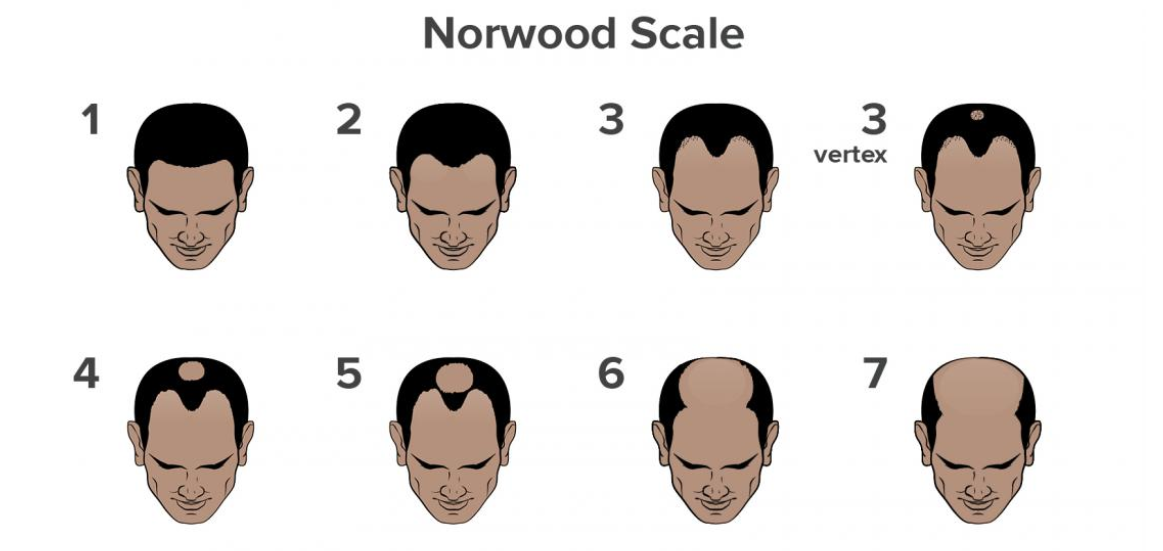
| Best for | Larger sessions (2,500+ grafts), crown coverage, Norwood 4–6 | Hairline design, density packing, unshaven cases, Norwood 2–4 |
| Density control | High | Highest depth, angle and direction controlled per graft |
| Shaving needed | Donor area trimmed | Can be done unshaven (U-FUE/DHI hybrid) |
| Recovery | 7–10 days of visible scabbing | Marginally faster healing in recipient area |
So what does that mean in practice? If you’re a Norwood 5 with a large bald crown, FUE gives you more grafts per rupee. If you’re a Norwood 3 banker who can’t show up shaved on Monday, DHI’s unshaven option earns its premium. Many cases at Cult combine both FUE for coverage, DHI for the hairline.
Deeper dives: FUE hair transplant in Gurgaon and DHI hair transplant in Gurgaon.
Unshaven FUE (U-FUE)
Best for: professionals who can’t take visible downtime. Donor hair is trimmed in hidden micro-windows; nobody at the office needs to know.
FUE + GFC therapy
Best for: maximising graft survival and speeding up early growth. Growth Factor Concentrate sessions support the transplanted zone and thicken existing native hair around it.
How much does a hair transplant cost in Gurgaon?
At Cult Aesthetics: FUE at ₹60–90 per graft, DHI at ₹75–120 per graft. No separate surgeon fee, no facility charge appearing on the final bill. The quote you get in writing after your scalp analysis is the price.
| Grafts needed | Typical stage | FUE total | DHI total |
|---|---|---|---|
| 800–1,500 | Norwood 2–3 (hairline, temples) | ₹48,000 – ₹1,35,000 | ₹60,000 – ₹1,80,000 |
| 1,500–2,500 | Norwood 3–4 (hairline + mid-scalp) | ₹90,000 – ₹2,25,000 | ₹1,12,500 – ₹3,00,000 |
| 2,500–3,500 | Norwood 4–5 (mid-scalp + crown) | ₹1,50,000 – ₹3,15,000 | |
| 3,500–4,500 | Norwood 5–6 (full restoration) | ₹2,10,000 – ₹4,05,000 |
Large sessions are usually FUE or an FUE+DHI combination pure DHI is rarely the right tool past ~2,500 grafts, which is why the DHI column stops where it does. Exact graft count comes from trichoscopy at the free consultation, in writing.
What the per-graft price includes: graft extraction, hairline design and marking, and sapphire-blade recipient-site slits by Dr. Gaurav Solanki; forceps-based no-touch implantation by technicians, local anaesthesia, OT charges, the post-op medicine kit, and scheduled follow-up reviews through your growth timeline.
EMI options available (terms confirmed at consultation).
Many clinics do not publish per-graft numbers at all. Chains also carry marketing and franchise overheads that a single-surgeon clinic doesn’t. Full city-wide context: hair transplant cost in Gurgaon and cost in India by city.
Real patients, real timelines three documented cases
These are drawn from publicly posted Google reviews and the clinic’s documented case archive not composites.
Lalit Norwood Grade 7, two sessions, 18 months
A 44-year-old with the most advanced grade of hair loss. One session can’t responsibly cover a Grade 7, and he wasn’t promised that it could the plan was two sessions, 18 months, documented on camera. “Dr. Gaurav himself was present throughout the procedure, not just at the start,” he wrote in his review. “The hairline, the crown coverage, the density everything came together in a way I genuinely didn’t think was possible.”
Ashwani Sector 46 local, Grade 4, 3,800 grafts in one FUE session
“I live in Sector 46 Gurgaon, literally minutes from Cult Aesthetics,” his review reads. “Honest graft count given, no pressure. FUE hair transplant done in one session, 3,800 grafts. 9-month result is outstanding.”
Sajjan FUE, natural hairline at 7 months
“It has been 7 months since the transplant… my hairline’s are very natural and visible. My hair density has improved significantly, and my confidence has increased a lot.”
Browse the full before and after archive or the results gallery.
What do Google reviewers say?
Read the clinic’s Google reviews. Four themes repeat, review after review:
- The surgeon leads it himself. “He is the only surgeon who showed me actual trichoscopy results, gave me a realistic graft count in writing.” Surendra Singh
- Honest assessments, no overselling. “No false promises. No ‘one session mein sab ho jaayega.'” Hariom Kumar, who travelled 700+ km from Varanasi
- The doctor stays reachable after. “2 years and still the hairs are amazing… Dr Gaurav responds to every call.” Subhash Jangra
- Patients fly in. “I came all the way from Canada… I spoke directly with Dr Gaurav Solanki as he was going to operate on me.” Harpreet Gulati
And one mixed review, because a wall of perfect fives should make you suspicious: “Since 8 month from hair transplant… results are good and more improvement are expected in upcoming months. Doctor and staff were good and cooperative… I can call/chat with Doctor Gourav at any time.” Vipin Kumar, 4★
Is a hair transplant safe? Risks, rules, and who should say no
Done properly, FUE and DHI are minor surgical procedures under local anaesthesia with a strong safety record. “Done properly” carries weight in Gurgaon, though.
Three things to verify at any clinic including this one:
- Who performs the surgery. Under NMC guidelines, it must be a registered medical practitioner not technicians working alone. Ask directly: “Will the doctor design my hairline and make the incisions himself?” At Cult Aesthetics the answer is yes, in writing if you want it.
- Real risks exist. Temporary shock loss around the transplant zone, folliculitis (small pimple-like bumps as new hair emerges), short-term numbness, and rarely infection. Each is manageable when your surgeon is actually reachable, which is exactly what the reviews keep noting.
- Some people shouldn’t get one yet. Under-25s with rapidly progressing loss (stabilise with medication first), anyone with an insufficient donor area, uncontrolled diabetes or active scalp conditions, and anyone expecting teenage density on a Norwood 6. A good consultation screens you out as readily as it books you in.
If a transplant isn’t right yet, that’s what hair fall treatment, PRP and GFC protocols are for several reviewers (including women managing thinning without surgery) came for exactly that.
Am I a good candidate?
You’re likely a strong candidate if:
- Your hair loss has been stable for 12+ months (or controlled on finasteride/minoxidil)
- You have a healthy donor zone at the back and sides
- You’re past your mid-20s, or younger with a stabilised pattern and realistic plan
- Your expectations match your donor supply density is a budget, and Dr. Solanki will show you the math on trichoscopy
Women with pattern thinning, and patients needing eyebrow restoration or beard-to-scalp grafting, are assessed with a female-specific protocol.
What happens on surgery day the 8 steps
- Final design and markup hairline drawn, photographed, agreed. You approve it before anyone touches a follicle.
- Local anaesthesia the only uncomfortable 10 minutes of the day.
- Extraction Grafts are harvested from the donor zone by Dr. Gaurav Solanki; they go straight into bio-chilled holding solution.
- Graft counting and sorting singles for the hairline, multis for density behind it. You can ask for the count mid-procedure.
- Implantation channels made by the surgeon, then placement (FUE) or no-touch forceps implantation (DHI) by his trained team under his supervision.
- Lunch break yes, really. Long sessions include one.
- Dressing and walkthrough donor area dressed; recipient area left open. Post-op kit handed over with verbal + written instructions.
- You go home the same day driving yourself is fine after FUE; most patients are back at a desk in 2–4 days.
The full version, with photos of each stage: the hair transplant process, step by step.
Recovery in Gurgaon: the week-by-week reality
| Timeline | What’s happening | What you can do |
|---|---|---|
| Day 0–3 | Mild swelling, redness; grafts setting | Rest, sleep elevated; no headwear |
| Day 4–10 | Scabbing forms and clears with washes | Desk work from day 2–4; first head wash at the clinic |
| Week 2–4 | “Shock shedding” transplanted hairs fall out. Normal. Expected. Temporary. | Gym and light cardio return ~day 10–14 |
| Month 2–3 | New growth begins as fine baby hairs | Everything normal; sun protection outdoors |
| Month 4–6 | Visible density building, texture thickening | First “people notice” stage |
| Month 9–12 | Final density and maturity | Review photos with Dr. Solanki |
A Gurgaon-specific note: planning surgery between October and March makes the first two weeks more comfortable less sweat, easier scab care. Summer transplants are completely fine too; you’ll just be stricter about sun and gym timing. During high-AQI weeks, a loose cap outdoors (after day 10) keeps particulate matter off a healing scalp. Full timeline: recovery timeline guide.
Getting to the clinic from anywhere in Gurgaon
Cult Aesthetics sits at 67 Residency Green, 3rd Floor, Sector 46 opposite Unitech Cyber Park, with parking available at the premises. Open Monday and Wednesday–Sunday, 10 am to 7 pm; Tuesday closed.
- HUDA City Centre metro: ~10 minutes by auto
- Located in Sector 46, Gurugram. Travel times vary with traffic; check live directions on Google Maps.
- Golf Course Extension / Sector 56: ~15 minutes
- Sohna Road / Sector 48: 10–15 minutes
- South Delhi: 40–50 minutes via NH-48 or MG Road
Living nearby? There’s a dedicated guide for hair transplant in Sector 46. Coming from outside NCR or abroad, start with the NRI patient guide.
Meet the surgeon: Dr. Gaurav Solanki
Dr. Gaurav Solanki, MDS Oral and Maxillofacial Surgeon co-founder of Cult Aesthetics. 12+ years in surgical practice. Cult Aesthetics confirms 800+ documented hair transplant cases. His operating principle is unfashionable in this market: take fewer cases, design every hairline and make every recipient incision personally, and stay on WhatsApp with patients for the full 12-month growth cycle. Read his full profile →
Frequently asked questions hair transplant in Gurgaon
1. Is a hair transplant permanent?
Yes. Transplanted follicles come from the DHT-resistant donor zone at the back of the scalp, so they keep growing for life. Native (non-transplanted) hair can still thin, which is why a maintenance plan matters. Reviewed by Dr. Gaurav Solanki, MDS.
2. How many grafts do I need?
Hairline work runs 800–1,500 grafts; full restoration for Norwood 5–6 runs 3,500–4,500. The honest number comes from trichoscopy, not a WhatsApp photo which is why the consultation includes one, free. Reviewed by Dr. Gaurav Solanki, MDS.
3. What does it cost at Cult Aesthetics?
FUE is ₹60–90 per graft, DHI ₹75–120. A 2,500-graft FUE session lands between ₹1,50,000 and ₹2,25,000, including anaesthesia, OT, medicines and follow-ups. You get the quote in writing. Reviewed by Dr. Gaurav Solanki, MDS.
4. Is EMI available?
Yes. EMI options available (terms confirmed at consultation). Reviewed by Dr. Gaurav Solanki, MDS.
5. Is the procedure painful?
The anaesthesia injections sting for a few minutes; after that, most patients watch movies or sleep through surgery. Post-op discomfort is managed with the medicine kit and typically gone within 2–3 days. Reviewed by Dr. Gaurav Solanki, MDS.
6. FUE vs DHI what’s the real difference?
FUE implants grafts into pre-made channels; DHI at Cult Aesthetics places each graft with our no-touch forceps technique, giving finer control over angle and density. FUE suits bigger sessions; DHI shines on hairlines and unshaven cases. Costs differ: ₹60–90 vs ₹75–120 per graft. Reviewed by Dr. Gaurav Solanki, MDS.
7. Who actually performs the surgery?
Dr. Solanki performs graft extraction, designs and marks the hairline, and makes recipient-site slits using a sapphire blade on every case; technicians perform forceps-based no-touch implantation. Under NMC guidelines, surgery by unsupervised technicians is illegal; you’re entitled to ask any clinic this question and get the answer in writing. Reviewed by Dr. Gaurav Solanki, MDS.
8. When will I see results?
Shedding through weeks 2–4, baby hairs by month 2–3, visible density by month 4–6, final result at 9–12 months. Anyone promising full density in 3 months is selling, not informing. Reviewed by Dr. Gaurav Solanki, MDS.
9. What’s the success rate?
Graft survival depends on handling time, hydration and technique, which is why we use bio-chilled graft storage and dense-packing technique, with grafts handled under the surgeon’s supervision. Survival drops sharply when grafts sit out too long a chain-clinic volume problem. Reviewed by Dr. Gaurav Solanki, MDS.
10. Will it look natural?
A natural result is 90% hairline design single grafts at the front, correct angles, age-appropriate placement. Browse the results gallery and judge with your own eyes. Reviewed by Dr. Gaurav Solanki, MDS.
11. Can I get a transplant at 25?
Sometimes. If your loss pattern is still moving fast, medication first is the responsible call transplanting into an unstable pattern creates islands of hair later. A trichoscopy maps where you are. Reviewed by Dr. Gaurav Solanki, MDS.
12. How long is recovery when can I go back to office?
Desk work in 2–4 days, gym in 10–14 days, fully normal appearance once scabs clear around day 10. U-FUE keeps even the healing phase discreet. Reviewed by Dr. Gaurav Solanki, MDS.
13. What are the risks and side effects?
Temporary shock loss, folliculitis, short-lived numbness; rarely, infection. All manageable with surgeon follow-up which is why post-op access to the doctor matters as much as the surgery. Reviewed by Dr. Gaurav Solanki, MDS.
14. How should I prepare for surgery day?
Stop smoking and alcohol 48–72 hours before, skip blood thinners per your pre-op sheet, wash your hair that morning, wear a button-down shirt, and eat breakfast. The clinic sends a full checklist after booking. Reviewed by Dr. Gaurav Solanki, MDS.
15. Is summer a bad time for a transplant in Gurgaon?
No just plan around sweat for the first two weeks. October–March is marginally more comfortable for scab care; results are identical year-round. Reviewed by Dr. Gaurav Solanki, MDS.
16. Do you treat female hair loss?
Yes both surgically (no-shave DHI) and non-surgically (GFC, PRP, mesotherapy). Several of the clinic’s reviews are from women treated for thinning without a transplant. See the women’s hair restoration guide. Reviewed by Dr. Gaurav Solanki, MDS.
17. Where exactly is the clinic, and is there parking?
67 Residency Green, 3rd Floor, Sector 46, Gurugram opposite Unitech Cyber Park, ~10 minutes from HUDA City Centre metro. Parking is available. Open Mon and Wed–Sun, 10 am–7 pm; Tuesday closed. Reviewed by Dr. Gaurav Solanki, MDS.
18. How is Cult Aesthetics different from the big chains?
One accountable surgeon instead of a rotating roster, published per-graft pricing instead of “depends”, and a 12-month follow-up relationship instead of a discharge file. Smaller by design. Reviewed by Dr. Gaurav Solanki, MDS.
Book your free scalp analysis in Sector 46
A 30–40 minute consultation with trichoscopy, an honest graft count in writing, and a clear yes/no on whether you’re ready for surgery or better served by medical management first. No booking fee, no pressure.
Talk to Dr. Solanki’s team on WhatsApp → or call the clinic. Walk-ins: Mon and Wed–Sun, 10 am–7 pm; Tuesday closed. Sector 46, Gurugram.
What Patients Say About Hair Transplant at Cult Aesthetics
Three verified Google reviews from Cult Aesthetics hair transplant patients with Dr. Gaurav Solanki. Read patient feedback on Google Maps.
Had a transplant elsewhere that did not work out? We also handle corrective hair transplants for pluggy, failed and botched results.
“I am a 5 year old patient of Dr Gaurav for hair, when he was in South Delhi. I am very happy with my hairfall management. Got amazing results from GFC and PRP. Today I am getting my hair transplant as Dr told I will need for frontal hair.”
★★★★★ — Tushar Ji, verified Google review
“I was nervous before my hair transplant, but Dr Gaurav Solanki and the team made me feel comfortable throughout the journey. The procedure was painless, recovery was smooth and the results are outstanding.”
★★★★★ — Divyansh Sharma, verified Google review
“Best hair transplant in Gurgaon. My experience is wonderful with Dr Gaurav. Satisfactory result, thank you Cult Aesthetics team, highly recommend.”
★★★★★ — Sagar Yadav, verified Google review
Watch: Hair Transplant Results Documented by Dr. Gaurav Solanki
Explore More Hair Transplant Resources
- Hair Transplant Cost in Gurgaon
- FUE Hair Transplant in Gurgaon
- DHI Hair Transplant in Gurgaon
- Sapphire FUE Hair Transplant
- Corrective & Failed Hair Transplant Repair
- Hair Transplant Before & After Results
- Hair Transplant Recovery Timeline
- Hair Transplant Process Step by Step
- Natural Hairline Design in Hair Transplantation
- About Dr. Gaurav Solanki
- Book an Online Consultation
Hair Restoration Resources
Surgeon-authored guides on every aspect of hair transplant decision-making in Gurgaon and Delhi.
- ➜ Hair Transplant in Gurgaon
- ➜ Hair Transplant Cost in Gurgaon 2026
- ➜ FUE vs DHI vs Sapphire — Surgeon's Guide
- ➜ PRP vs GFC vs Mesotherapy
- ➜ How to Choose a Hair Transplant Surgeon
- ➜ Hair Transplant Cost in India 2026
- ➜ FUE Hair Transplant Gurgaon
- ➜ DHI Hair Transplant Gurgaon
- ➜ GFC Hair Treatment Gurgaon
- ➜ PRP Hair Treatment Gurgaon
- ➜ Hair Fall Treatment Gurgaon
- ➜ Best Hair Transplant Clinic in Delhi
- ➜ Beard Transplant Gurgaon
- ➜ Hair Transplant in Delhi